
Le verbe pashto
Parcours d’un territoire du verbe simple à la locution verbale
By (author) Matteo De Chiara By (author) Daniel Septfonds

Hardback (Published)
(May 2019)
ISBN: 9783954903757
6.69 x 9.45 inches
Price: $117.00
On back order
In this work, the Authors provide an analysis of the entire verbal system of Pashto, the language of some 50 million speakers in Afghanistan, Pakistan and diasporas. As an Iranian language, Pashto verbs share some main behaviours with the other sister languages, as Persian and Kurdish, but with some peculiarities. This study will permit to fully understand Pashto verbal system from the syntactic and morphologic points of view, at the same time offering complete dialectological, typological and lexicographical information, as well as ample phraseologies.
Pashto is an Iranian language spoken by almost 50 million speakers in eastern Afghanistan, western Pakistan, as well as in an important diaspora. Pashto, official language of the Afghan refugees along with Dari (Afghan Persian), is nowadays the focus of a growing interest, not only in the humanitarian field but also in linguistic studies. Its verbal system presents many peculiarities and interesting characteristics, which until now have been neglected, even if they could help clarify the whole Iranian verbal system. This work aims at describing the entire verbal system of Pashto, highlighting all the theoretical problems, and contributing to the advancement of our knowledge in the Pashto and general linguistics. The work opens with an analysis of the Pashto verbal system from a syntactic perspective: we can identify three kinds of verbs: transitive, intransitive and anti-impersonal. After that, the Authors deal with the morphologic perspective, according to which all verbs can be divided in Simple Verbs, Verbalizers, Compound Verbs, Mixed Verbs and Light Verb Constructions. A detailed presentation of the sources of dialectal variation completes this first part. From chapter 4 to chapter 8 all the categories of verbs abovementioned are treated in detail. For each class of verbs all existing exceptions and irregularities are taken into account, thus identifying three main processes of regularization, called “frontiers”. Two appendixes complete the work: the first one proposes a model of the conjugation and provides all the possible variants; the second appendix proposes a detailed analysis of twelve verbs, completed with dialectology, phraseology and lexicology. This part foreshadows a second volume which will contain a detailed study of all Pashto simple verbs. The manifold audience to which this work addresses is composed principally by scholars and researchers involved in the fields of linguistics and Pashto and Iranian studies, but also by students of Pashto language and by all those working in the humanitarian field and with refugees.
- By (author) Matteo De Chiara
- By (author) Daniel Septfonds
Other Titles in this Series


 Religious themes and texts of pre-Islamic Iran and Central Asia
Studies in honour of Professor Gherardo Gnoli on the occasion of his 65th birthday on 6th December 2002


 Zarathushtra entre l’Inde et l’Iran
Études indo-iraniennes et indo-européenes offertes à Jean Kellens à l’occasion de son 65e anniversaire


 Literarische Stoffe und ihre Gestaltung in mitteliranischer Zeit
Kolloquium anlässlich des 70. Geburtstages von Werner Sundermann

 Proceedings of the Third European Conference of Iranian Studies
Held in Cambridge, 11th to 15th September 1995. Old and Middle Iranian Studies


 Vafsi Folk Tales
Twenty Four Folk Tales in the Gurchani Dialect of Vafsi as Narrated by Ghazanfar Mahmudi and Mashdi Mahdi and Collected by Lawrence P. Elwell-Sutton


 Proceedings of the Third European Conference of Iranian Studies
Held in Cambridge, 11th to 15th September 1999. Mediaeval and Modern Persian


Similar Books


 Cities through Time
Glimpses into Urbanity and Community in Mediaeval to Modern West Asia and Egypt
Volume 1
 Cuneiform Artefacts from Archaeological Contexts: New Research on Ancient Iraq
Proceedings of a Conference Held at the Bavarian Academy of Sciences and Humanities, July 4–5, 2024
Volume 2
 Des mots aux actes
Traduction épistémique et littéraire. Nouvelles tendances en histoire et didactique
Volume 15


 Global Gulf
Geo-Economic, Geo-Political, and Geo-Technological Transformation in Saudi Arabia, the United Arab Emirates, and Qatar


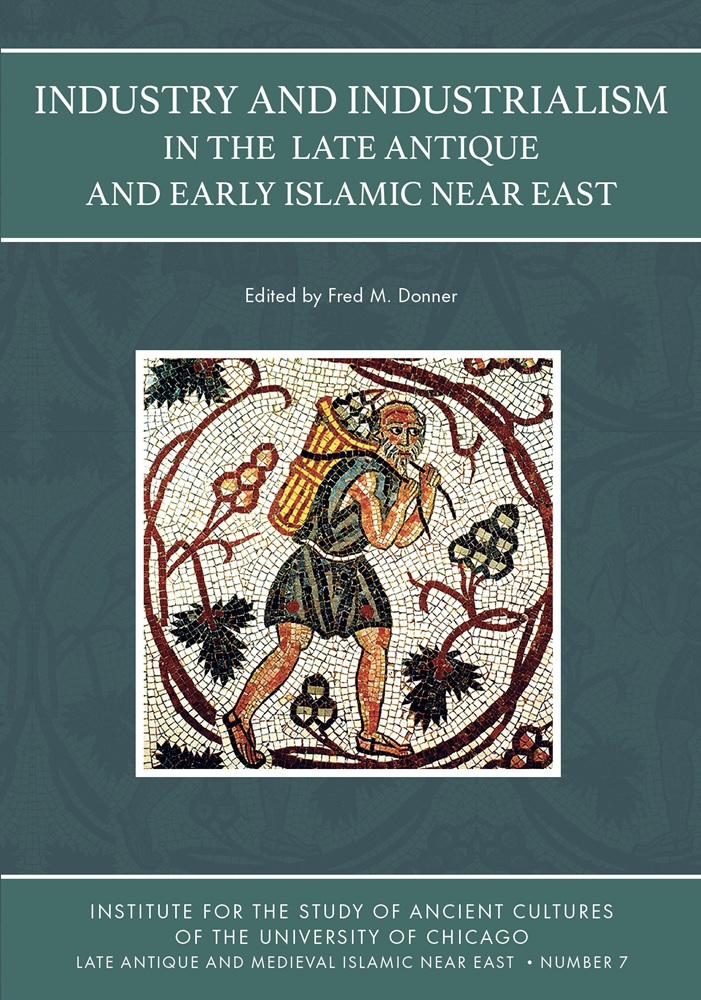

 Ismail Hakki Bursevi’s translation of and commentary on Fusus al-Hikam By Muhyiddin Ibn ‘Arabi
Volumes 1-4


 Monastic Manuscripts from the Eastern Mediterranean (Sinai, Jerusalem, Antioch)
Production, Use, and Contexts


 Punning in Odd or Elegant Constructions in Jeremiah
The Convergence of Linguistics, Rhetoric, and Textuality in the Hebrew Text of Jeremiah
 Qatar’s Societal Security
Towards the Inclusive National Concept of ‘Baladna’ Identity, Migration and External Threats Since 2017


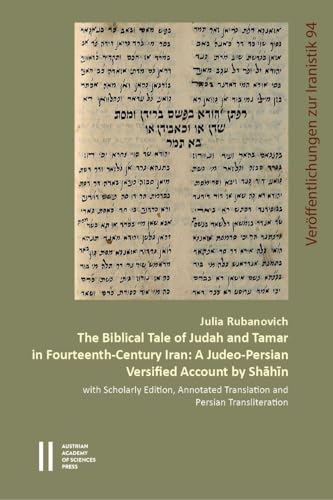 The Biblical Tale of Judah and Tamar in Fourteenth-Century Iran
A Judeo-Persian Versified Account by Shāhīn with Scholarly Edition, Annotated Translation and Persian Transliteration
Volume 94, 951
 The Discourse of Rites
Shaping and Reshaping the (Counter-)Priestly Rituals Conducted Outside the Tabernacle



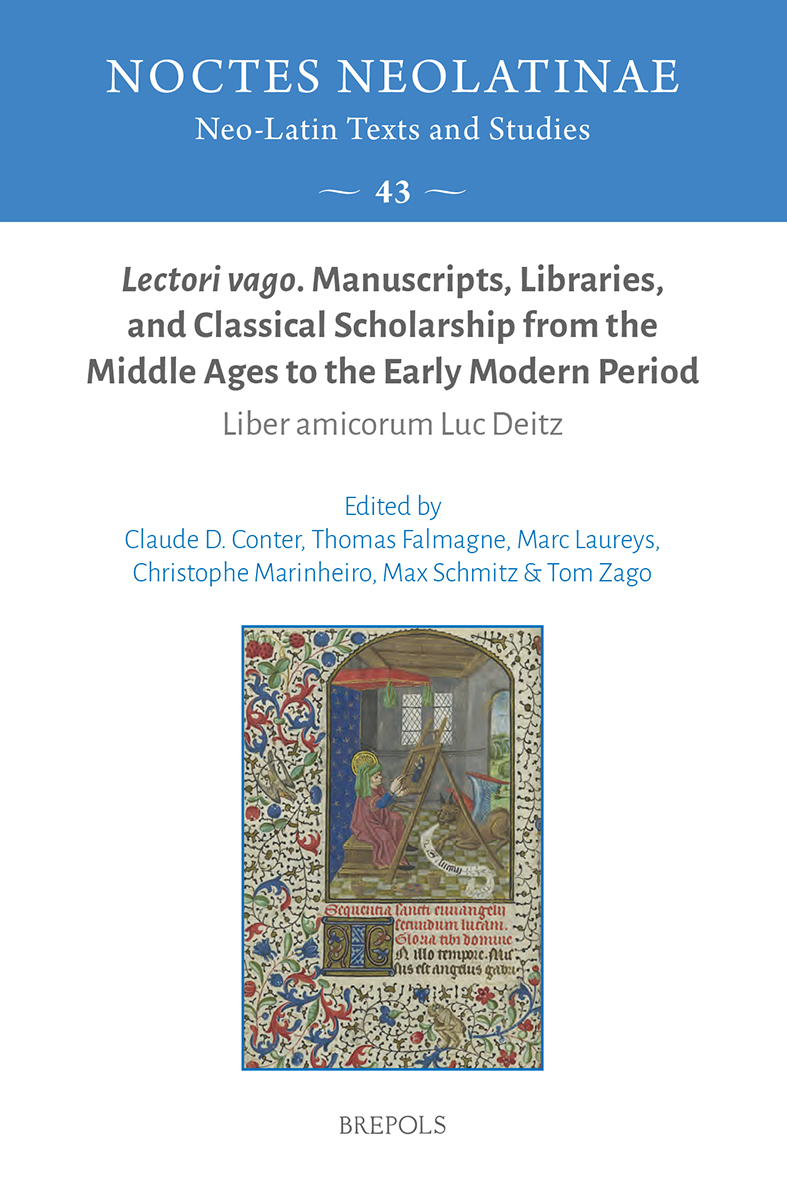 Lectori vago. Manuscripts, Libraries, and Classical Scholarship from the Middle Ages to the Early Modern Period
Liber amicorum Luc Deitz
Volume 43


 »Ein elend-schönes Land«
Gattung und Gedächtnis in Lea Goldbergs hebräischer Literatur. Aus dem Hebräischen von Rainer Wenzel
