
A New Etymological Vocabulary of Pashto
By Georg Morgenstierne. Compiled and edited by J. Elfenbein, D. N. MacKenzie and Nicholas Sims-Williams

Hardback (Published)
(November 2003)
ISBN: 9783895003646
6.69 x 9.45 inches
Price: $76.00
In stock
Pashto, one of the national languages of Afghanistan, is an archaic language of the Iranian family with a vocabulary of extraordinary variety and interest. In his New Etymological Vocabulary of Pashto, Georg Morgenstierne identifies loanwords and traces inherited words back to their origins in Old Iranian and beyond. A completely new work, it supersedes the same author’s Etymological Vocabulary of Pashto, which has been a standard work of reference ever since its publication in 1927.
Pashto is one of the national languages of Afghanistan, which is also spoken by a significant minority in Pakistan. An archaic language of the Iranian family, it offers a vocabulary of extraordinary variety and interest. As well as retaining many words inherited from Old Iranian and ultimately from proto-Indo-European, Pashto has also absorbed a great deal of foreign vocabulary, from Classical Greek to Persian and modern Indian. Georg Morgenstierne’s “Etymological Vocabulary of Pashto”, published in Oslo in 1927, was the first work to explore these multiple relationships in a systematic and comprehensive way. Soon after its publication, Morgenstierne began collecting material for a revised and expanded version, but thisremained unfinished when he died more than half a century later in 1978. After the lapse of another quarter of a century, it is at last possible to present the long-awaited “New Etymological Vocabulary of Pashto”, a completely new work compiled from Morgenstierne’s handwritten notes by three leading scholars in the field of Iranian linguistics. In all essentials it remains Morgenstierne’s work, though considerably augmented by additional references which take into account the greatly increased information available today on modern Indo-Aryan as well as on Middle Iranian languages such as Bactrian and Khwarezmian. This work supersedes Morgenstierne’s earlier “Etymological Vocabulary of Pashto” and will take its place beside the same author’s “Etymological Vocabulary of the Shughni Group” (Reichert Verlag, 1974) as a standard modern work of reference on the history of the languages of Afghanistan. Complete indexes of all words cited from Iranian, Indo-Aryan and other languages help to make the contents accessible to those who are not specialists in Pashto or other Iranian languages.
- By (author) Georg Morgenstierne
- Edited by Josef Elfenbein
- Edited by D. N. MacKenzie
- Edited by Nicholas Sims-Williams
„Summing up, the new edition of the etymological vocabulary of Pashto is a valuable and useful aid for those scholars who are interested in the Iranian, Indo-Iranian and Indo-European linguistics, etymology and philology. One can only regret that it was not given to the excellent and competent etymologist Morgenstierne himself to complete and publish the dictionary 25 years ago.“<br/><br/>In: Studia Iranica. Tome 35 (2006), fasc. 1. S. 109-122. (zwei Rezensionen)<br/>hier S. 122, von Krysztof Tomasz Witczak, Lodz<br/><br/>-----------------------<br/><br/>„Etymologische Wörterbücher sind nie abgeschlossen; so finden sich auch in diesem „Morgenstierne“ Lücken, die man in einer dritten Bearbeitung des Stoffs geschlossen wünschte. Vorerst aber steht der Dank dafür im Vordergrund, daß ein meisterliches Unternehmen des frühen 20. Jahrhunderts nach fast acht Jahrzehnten diese Erneuerung und Verbesserung gefunden hat.“<br/><br/>In: Kratylos. 50 (2005). S. 89-91.
—
Other Titles in this Series


 Vafsi Folk Tales
Twenty Four Folk Tales in the Gurchani Dialect of Vafsi as Narrated by Ghazanfar Mahmudi and Mashdi Mahdi and Collected by Lawrence P. Elwell-Sutton
 Proceedings of the Third European Conference of Iranian Studies
Held in Cambridge, 11th to 15th September 1999. Mediaeval and Modern Persian


 Tabous, interdits et obligations de langage en Afghanistan
Éléments du vocabulaire de la vie privée en terre d’Islam


 Religious themes and texts of pre-Islamic Iran and Central Asia
Studies in honour of Professor Gherardo Gnoli on the occasion of his 65th birthday on 6th December 2002
Similar Books


 Cities through Time
Glimpses into Urbanity and Community in Mediaeval to Modern West Asia and Egypt
Volume 1
 Cuneiform Artefacts from Archaeological Contexts: New Research on Ancient Iraq
Proceedings of a Conference Held at the Bavarian Academy of Sciences and Humanities, July 4–5, 2024
Volume 2
 Des mots aux actes
Traduction épistémique et littéraire. Nouvelles tendances en histoire et didactique
Volume 15


 Global Gulf
Geo-Economic, Geo-Political, and Geo-Technological Transformation in Saudi Arabia, the United Arab Emirates, and Qatar


 Ismail Hakki Bursevi’s translation of and commentary on Fusus al-Hikam By Muhyiddin Ibn ‘Arabi
Volumes 1-4


 Monastic Manuscripts from the Eastern Mediterranean (Sinai, Jerusalem, Antioch)
Production, Use, and Contexts


 Punning in Odd or Elegant Constructions in Jeremiah
The Convergence of Linguistics, Rhetoric, and Textuality in the Hebrew Text of Jeremiah
 Qatar’s Societal Security
Towards the Inclusive National Concept of ‘Baladna’ Identity, Migration and External Threats Since 2017


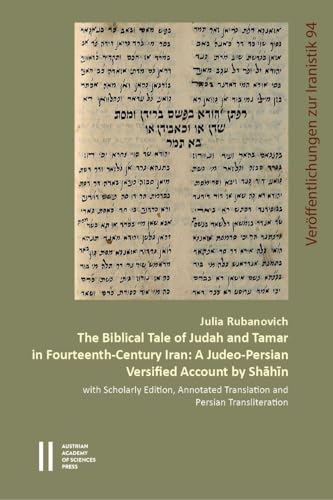 The Biblical Tale of Judah and Tamar in Fourteenth-Century Iran
A Judeo-Persian Versified Account by Shāhīn with Scholarly Edition, Annotated Translation and Persian Transliteration
Volume 94, 951
 The Discourse of Rites
Shaping and Reshaping the (Counter-)Priestly Rituals Conducted Outside the Tabernacle



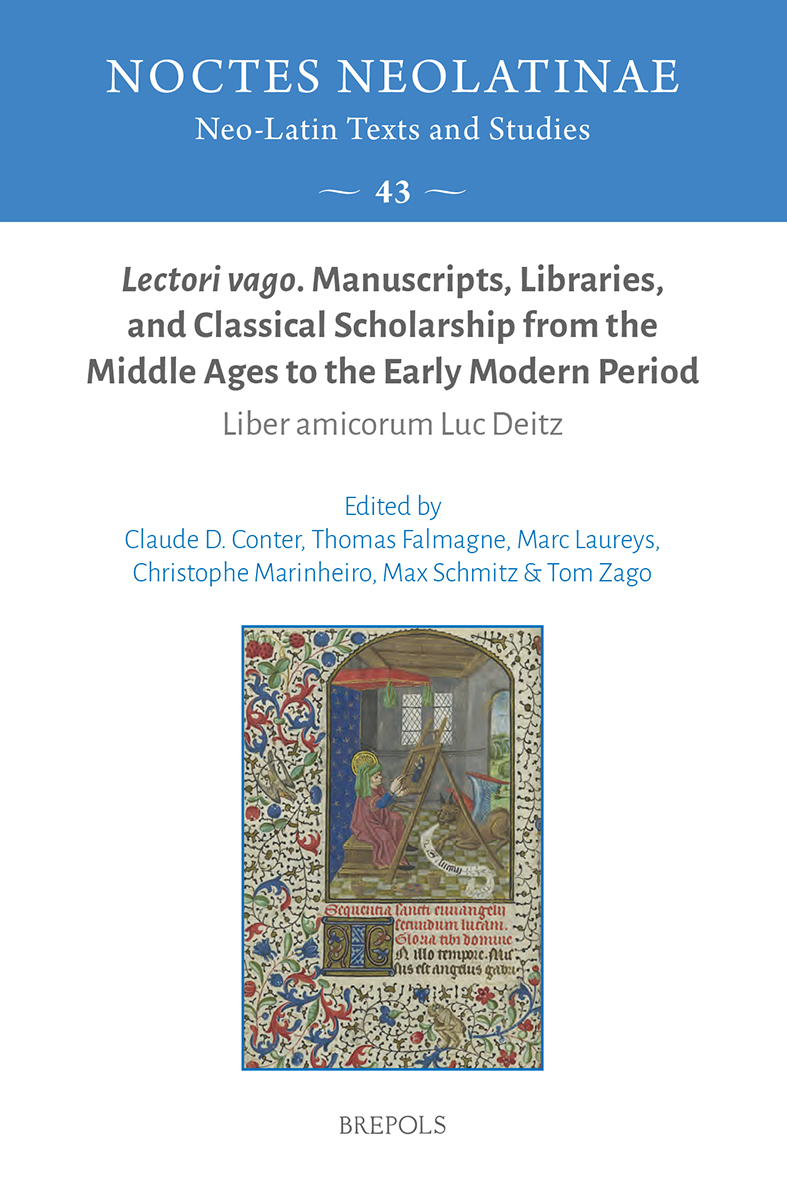 Lectori vago. Manuscripts, Libraries, and Classical Scholarship from the Middle Ages to the Early Modern Period
Liber amicorum Luc Deitz
Volume 43


 »Ein elend-schönes Land«
Gattung und Gedächtnis in Lea Goldbergs hebräischer Literatur. Aus dem Hebräischen von Rainer Wenzel

