Linguistic Fragmentation and Cultural Inclusion in the Middle Ages
Translation, Plurilingualism, Multilingualism
Edited by Davide Bertagnolli

Explores the relationship between linguistic fragmentation and cultural inclusion during the Middle Ages, with translation, multilingualism, and plurilingualism analysed as a medium for contact rather than separation.
Linguistic fragmentation contains the risk of cultural separation, while the concept of inclusion implies the recognition of the difference of the Other, who must be recognised in its specificity to develop a process of inclusion. One of the main means of overcoming the dangers hidden in linguistic fragmentation is unquestionably plurilingualism and, relatedly, translation. Translation enables the transmission of content from one linguistic-cultural system to another. Multilingualism is not just a peculiarity of the contemporary age; it is a fundamental phenomenon of the Middle Ages. The conceptual relationship between linguistic fragmentation and cultural inclusion, and the inter-relationships of these two apparently opposing poles with the communicative tool of translation, requires some reflection within the broader framework of translation studies in the Middle Ages. This collection of essays examines the seemingly paradoxical concept of linguistic fragmentation as an instrument of cultural inclusion thanks to the practice of translation. The essays explain the relationship through translations between many medieval languages and texts, from Icelandic to Italian, from English to French, and more. They examine vernacular circulation of religious texts (translation of the Bible, of hagiographic or homiletic texts, etc.); circulation, thanks to translation, of literary texts (e.g., the translation of epic-chivalric cycles); translation from a koine language to another language and vice versa; and the relationship between the choice of the target language and the socio-cultural context.
- Edited by Davide Bertagnolli
Other Titles in this Series


 Pursuing a New Order I
Religious Education in Late Medieval Central and Eastern Central Europe
Volume 17.1


 Booldly bot meekly
Essays on the Theory and Practice of Translation in the Middle Ages in Honour of Roger Ellis
Volume 14
 Vernacular Mysticism in the Charterhouse
A Study of London, British Library, MS Additional 37790
Volume 9
 The Translation of the Works of St Birgitta of Sweden into the Medieval European Vernacular
Volume 7

 Song of Songs in European Poetry (Twelfth to Seventeenth Centuries)
Translations, Appropriations, Rewritings
Volume 21

Similar Books

 A Collaborative Tapestry in Honour of Shirley Ann Brown / Une fresque brodée en l’honneur de Shirley Ann Brown
The Bayeux Tapestry Seen by her Colleagues and Friends / La Tapisserie de Bayeux vue par ses collègues et amis

 Behind the Scenes of Medieval Roofs
An Overview of the Roofing Systems of Italian Churches
Volume 90


 Des mots aux actes
Traduction épistémique et littéraire. Nouvelles tendances en histoire et didactique
Volume 15




 Innovation and Medieval Communities
The Circulation of Ideas and Practices in and out of the Town (1200-1500)
Volume 63

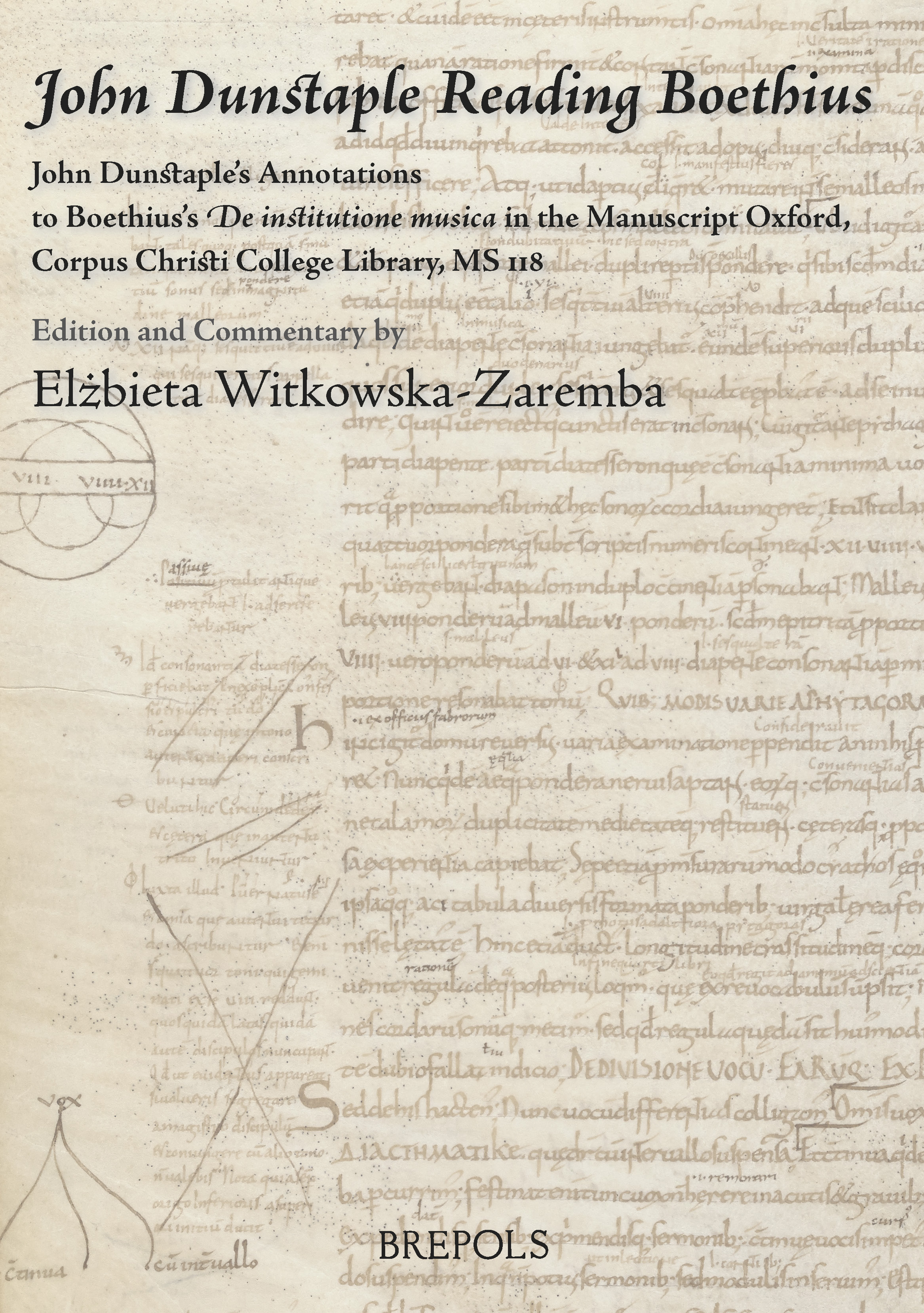 John Dunstaple Reading Boethius
John Dunstaple’s Annotations to Boethius’s “De institutione musica” in the Manuscript Oxford, Corpus Christi College Library, MS 118

 Linguistic and Cultural Dynamics in a Frontier Society
New Perspectives on Northeastern Bavaria and Western Bohemia in the Early Middle Ages
Volume 9


 Medieval Debates on Foreknowledge: Future Contingents, Prophecy, and Divination
Acts of the XXVII Annual Colloquium of the SIEPM, Trento 12-15 September 2023
Volume 31
 Medieval Yeghegis, Armenia
History, Archaeology, Society. Local Multiplicities and Global Connections of a Rural Centre on the Silk Road(s)