
Oral Narration in Iranian Cultures
Edited by Maryam Nourzaei Edited by Carina Jahani Edited by Agnes Korn

Hardback (Published)
(September 2022)
ISBN: 9783752006407
6.69 x 9.45 inches
Price: $89.00
In stock
This volume presents papers demonstrating the current state of research on oral traditions among different groups in the Iranian-speaking cultural sphere. The articles offer from a variety of perspectives, encouraging the exchange of ideas between different academic disciplines such as anthropology, sociology, linguistics, literature, religious studies and folklore studies concerning methods and models applied to studies of oral traditions in Iranian languages and cultures.
This volume presents papers demonstrating the current state of research on oral traditions among different groups in the Iranian-speaking cultural sphere. The articles offer from a variety of perspectives, encouraging the exchange of ideas between different academic disciplines such as anthropology, sociology, linguistics, literature, religious studies and folklore studies concerning methods and models applied to studies of oral traditions in Iranian languages and cultures. In the introductory part, Bo Utas discusses the use of multiple languages and diverse registers, comparing his father’s native Estonian-Swedish village in Russia to parallels in the Iranian sphere, and Ulrich Marzolph presents a survey of recent research on oral traditions in Iran and the challenges it currently faces. The second part studies the interplay of written and oral patterns of text production and transmission connected to the Shahnama and its literary and narrative traditions. Carl Erixon examines passages referring to the sun, moon and stars that, he argues, represent poetic formulae with close parallels in ancient Indo-European languages. Kumiko Yamamoto applies a model developed to study oral traits in written text to a version of the Barzunama found in an unpublished manuscript at the French national library, and Julia Rubanovich studies the perception and representation of the written text in the Iskandarnama and the Darabnama. Finally, Margaret Mills looks at the relationship of oral narrative performances from different genres in Afghanistan to written Persian texts. Concerning oral traditions in lesser-studied Iranian languages, Sara Belelli presents a comparative study of Southern Kurdish folk tales about the “Innocent Persecuted or Unfortunate Heroine”. Sabir Badalkhan compares the epic about the Baloch hero Mir Chakar to parallels in the Shahnama and the Sindhi epic tradition. The heroes from the Balochi epics are also reflected in popular sayings containing place names, as shown by Moosa Mahmoudzahi. From a more linguistic perspective, Carina Jahani and Jaroslava Obrtelova study to what extent clause-combining strategies in Balochi differ between oral and written narration, and Maryam Nourzaei compares the extent to which oral traditions survive in different Balochi-speaking areas. Erika Friedl’s account of how her long acquaintance with a Luri community influenced the way they tell their stories concludes the book.
- Edited by Maryam Nourzaei
- Edited by Carina Jahani
- Edited by Agnes Korn
Other Titles in this Series


 Zarathushtra entre l’Inde et l’Iran
Études indo-iraniennes et indo-européenes offertes à Jean Kellens à l’occasion de son 65e anniversaire


 Literarische Stoffe und ihre Gestaltung in mitteliranischer Zeit
Kolloquium anlässlich des 70. Geburtstages von Werner Sundermann

 Proceedings of the Third European Conference of Iranian Studies
Held in Cambridge, 11th to 15th September 1995. Old and Middle Iranian Studies


 Vafsi Folk Tales
Twenty Four Folk Tales in the Gurchani Dialect of Vafsi as Narrated by Ghazanfar Mahmudi and Mashdi Mahdi and Collected by Lawrence P. Elwell-Sutton


 Proceedings of the Third European Conference of Iranian Studies
Held in Cambridge, 11th to 15th September 1999. Mediaeval and Modern Persian


Similar Books


 Cities through Time
Glimpses into Urbanity and Community in Mediaeval to Modern West Asia and Egypt
Volume 1
 Cuneiform Artefacts from Archaeological Contexts: New Research on Ancient Iraq
Proceedings of a Conference Held at the Bavarian Academy of Sciences and Humanities, July 4–5, 2024
Volume 2
 Des mots aux actes
Traduction épistémique et littéraire. Nouvelles tendances en histoire et didactique
Volume 15


 Global Gulf
Geo-Economic, Geo-Political, and Geo-Technological Transformation in Saudi Arabia, the United Arab Emirates, and Qatar


 Ismail Hakki Bursevi’s translation of and commentary on Fusus al-Hikam By Muhyiddin Ibn ‘Arabi
Volumes 1-4


 Monastic Manuscripts from the Eastern Mediterranean (Sinai, Jerusalem, Antioch)
Production, Use, and Contexts


 Punning in Odd or Elegant Constructions in Jeremiah
The Convergence of Linguistics, Rhetoric, and Textuality in the Hebrew Text of Jeremiah
 Qatar’s Societal Security
Towards the Inclusive National Concept of ‘Baladna’ Identity, Migration and External Threats Since 2017


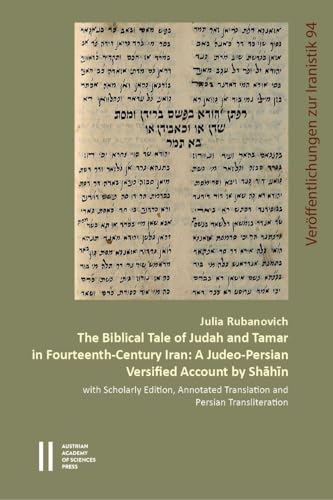 The Biblical Tale of Judah and Tamar in Fourteenth-Century Iran
A Judeo-Persian Versified Account by Shāhīn with Scholarly Edition, Annotated Translation and Persian Transliteration
Volume 94, 951
 The Discourse of Rites
Shaping and Reshaping the (Counter-)Priestly Rituals Conducted Outside the Tabernacle



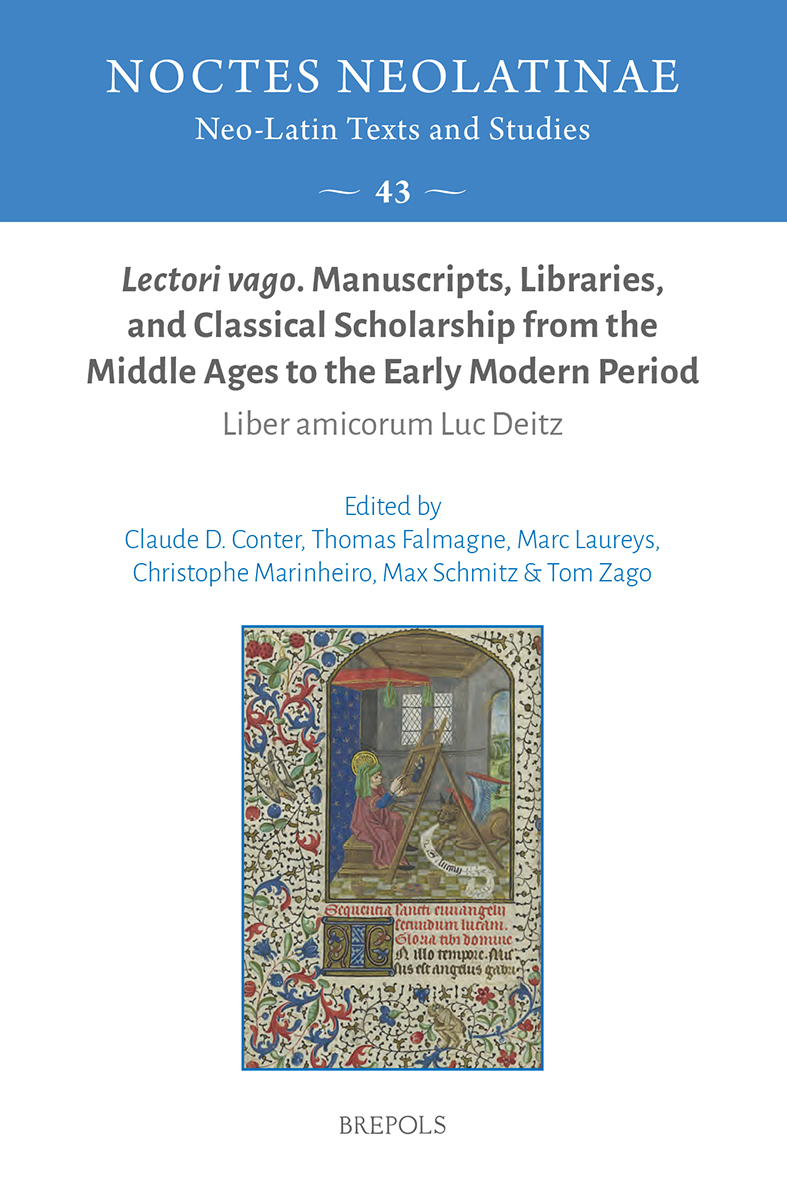 Lectori vago. Manuscripts, Libraries, and Classical Scholarship from the Middle Ages to the Early Modern Period
Liber amicorum Luc Deitz
Volume 43


 »Ein elend-schönes Land«
Gattung und Gedächtnis in Lea Goldbergs hebräischer Literatur. Aus dem Hebräischen von Rainer Wenzel

