
Topics in Iranian Linguistics
Edited by Agnes Korn Edited by Geoffrey Haig Edited by Simin Karimi Edited by Pollet Samvelian

Hardback (Published)
(October 2011)
ISBN: 9783895008269
6.69 x 9.45 inches
Price: $76.00
In stock
The 13 chapters of this volume represent a selection of the papers presented at the “Third International Conference on Iranian Linguistics”, held in September 2009 at the Université Sorbonne Nouvelle in Paris. This series of conferences brings together scholars from all theoretical persuasions has established a tradition of interdisciplinary linguistic research on Iranian languages. This volume represent the dynamic and rapidly growing nature of Iranian linguistics, a field which has united linguists of all persuasions who share a strong commitment to the scientific investigation of Iranian languages, their structure, history and use.<br/>
Up until quite recently, research on Iranian languages tended to be conducted in rather distinct disciplines, often with little interaction among them. A major turning point in bringing scholars from all theoretical persuasions together was the “First International Conference on Iranian Linguistics”, held in June 2005 at the Max Planck Institute for Evolutionary Anthropology in Leipzig. It inaugurated a tradition of interdisciplinary linguistic research on Iranian languages that we are proud to continue with the present volume. The 13 chapters of this volume represent a selection of the papers presented at the “Third International Conference on Iranian Linguistics”, held in September 2009 at the Universite Sorbonne Nouvelle in Paris. Part one, historical and comparative Iranian syntax, contains chapters by Saloumeh Gholami, Nicholas Sims-Williams, Antje Wendtland, Agnes Korn, and Arseniy Vydrin. The first three contributions treat the morpho-syntax of two extinct East Iranian languages, revealing a fruitful and innovative synthesis of philological investigations with insights from syntactic typology. Korn’s chapter covers both synchronic and diachronic aspects of a typologically unusual development in a broad range of Iranian languages, while Vydrin’s chapter surveys the expression of counterfactuality within Iranian from a largely synchronic perspective, but informed with areal-typological explanations. Part two, the morpho-syntax of lesser-know Iranian languages, contains contributions by Daniel Paul, Gregory Stump and Andrew Hippisley, and two joint contributions, Oleg Belaev and Arseniy Vydrin, and David Erschler and Vitaly Volk. They reflect a growing interest in the “smaller” Iranian languages, not only as a source for comparative and historical Iranian philology, but also for the insights they offer for general linguistic theory. Part three, the linguistics of Modern Persian, presents new insights on aspects of Modern Persian. Naderi and Oostendorp’s contribution presents an OT-based re-assessment of epenthetic consonants, while Ganjavi revisits the issue of marking vs. non-marking of direct objects. Pirooz looks at control in finite subordinate clauses, while Deravi and Dommergues present the results of an empirical investigation of code-switching by highly proficient Persian-French bilinguals. Taken together, these contributions represent the dynamic and rapidly growing nature of Iranian linguistics, a field which has united linguists of all persuasions who share a strong commitment to the scientific investigation of Iranian languages, their structure, history and use.
- Edited by Agnes Korn
- Edited by Geoffrey Haig
- Edited by Simin Karimi
- Edited by Pollet Samvelian
„The volume does, however, represent a most valuable contribution to Iranian linguistics. The range of Iranian languages studied is impressive and most of the articles demonstrate high scholarly competence. The careful editorial work has produced an attractive and cohesive volume. Maps, diagrams, and tables make it easy to get an overview of the articles, which for the most part are innovative and treat a great variety of interesting topics. In addition to answering the research questions posed in the studies, in many cases they invite further research. One veinteresting topic for further studies is presented by Sims-Williams, namely the ditransitive construction and the encoding of addressees, recipients, and benefactives. Other topics treated in this volume that would be interesting to study in a variety of Iranian languages include the development of perfect forms, deixis, consonant epenthesis, and finite control.“<br/><br/>Von Carina Jahani, Department of Linguistics and Philology, Uppsala University<br/><br/>In: Orientalia Suecana VOL. LXI (2012) S. 214- 217.
—
Other Titles in this Series

 Tabous, interdits et obligations de langage en Afghanistan
Éléments du vocabulaire de la vie privée en terre d’Islam


 Religious themes and texts of pre-Islamic Iran and Central Asia
Studies in honour of Professor Gherardo Gnoli on the occasion of his 65th birthday on 6th December 2002


 Zarathushtra entre l’Inde et l’Iran
Études indo-iraniennes et indo-européenes offertes à Jean Kellens à l’occasion de son 65e anniversaire


Similar Books


 Cities through Time
Glimpses into Urbanity and Community in Mediaeval to Modern West Asia and Egypt
Volume 1
 Cuneiform Artefacts from Archaeological Contexts: New Research on Ancient Iraq
Proceedings of a Conference Held at the Bavarian Academy of Sciences and Humanities, July 4–5, 2024
Volume 2
 Des mots aux actes
Traduction épistémique et littéraire. Nouvelles tendances en histoire et didactique
Volume 15


 Global Gulf
Geo-Economic, Geo-Political, and Geo-Technological Transformation in Saudi Arabia, the United Arab Emirates, and Qatar


 Ismail Hakki Bursevi’s translation of and commentary on Fusus al-Hikam By Muhyiddin Ibn ‘Arabi
Volumes 1-4


 Monastic Manuscripts from the Eastern Mediterranean (Sinai, Jerusalem, Antioch)
Production, Use, and Contexts


 Punning in Odd or Elegant Constructions in Jeremiah
The Convergence of Linguistics, Rhetoric, and Textuality in the Hebrew Text of Jeremiah
 Qatar’s Societal Security
Towards the Inclusive National Concept of ‘Baladna’ Identity, Migration and External Threats Since 2017


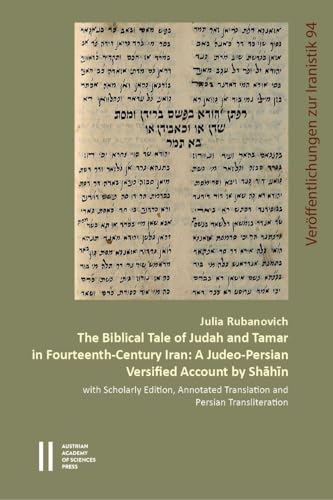 The Biblical Tale of Judah and Tamar in Fourteenth-Century Iran
A Judeo-Persian Versified Account by Shāhīn with Scholarly Edition, Annotated Translation and Persian Transliteration
Volume 94, 951
 The Discourse of Rites
Shaping and Reshaping the (Counter-)Priestly Rituals Conducted Outside the Tabernacle



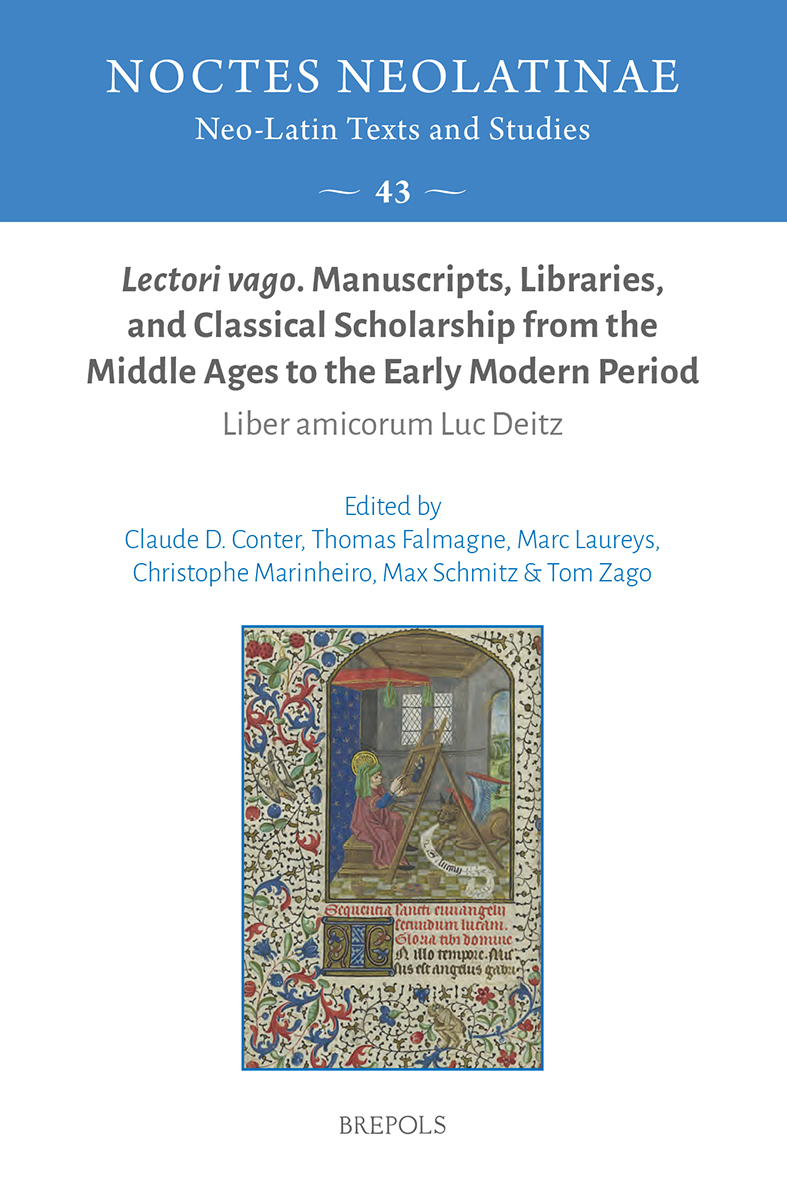 Lectori vago. Manuscripts, Libraries, and Classical Scholarship from the Middle Ages to the Early Modern Period
Liber amicorum Luc Deitz
Volume 43


 »Ein elend-schönes Land«
Gattung und Gedächtnis in Lea Goldbergs hebräischer Literatur. Aus dem Hebräischen von Rainer Wenzel

