
The evolution of the derivational verbal system in Arabic
By (author) Vera Tsukanova

Paperback (Published)
(May 2025)
ISBN: 9783447123617
5.71 x 8.66 inches
Price: $82.00
In stock
This volume explores the development of derived verb stems in Arabic over different periods, from pre-Islamic North Arabic to modern dialects. This comprehensive work combines diachronic and comparative methods, contributing to both linguistic history and dialectology of Arabic.
The evolution of the derivational verbal system in Arabic by Vera Tsukanova explores the development of derived verb stems in Arabic over different periods, from pre-Islamic North Arabic to modern dialects. This comprehensive work combines diachronic and comparative methods, contributing to both linguistic history and dialectology of Arabic. Tsukanova defines the typological parameters necessary to describe Arabic verbal derivation and, based on these, systematically examines the morphology, semantics, and productivity of verb stems, analyzing inherited and innovative forms, as well as the impact of language and dialectal contact. The two main chapters address the historical development of verb stems in pre-classical to classical and Modern Standard Arabic and their evolution in contemporary Arabic dialects respectively. The four dialect groups, Levantine, Egyptian-Sudanese, Tunisian and Hassaniya, are selected for the in-depth semantic analysis, whereas other dialects are briefly described, focussing on their formal features. The main findings of the book are summarized in numerous tables and diagrams. Tsukanova uses statistical analysis of verb stems across various dictionaries in order to draw conclusions about changes in productivity. The work is recommended for specialists in Semitic linguistics, Arabic dialectology and linguistic typology and can be used in university courses on the theoretical and historical grammar of Arabic.
- By (author) Vera Tsukanova
Other Titles in this Series

 Verbal Festivity in Arabic and Other Semitic Languages
Proceedings of the Workshop at the Universitatsclub Bonn on January 16, 2009
Volume 72
 The morphological-to-analytic causative continuum in Hausa
New insights and analyses in a typological perspective
Volume 109
 Ahmad ibn Yusuf at-Tifasis ‘Buch der koniglichen Steine’
Eine Mineralienkunde fur die arabischen Herrscher des 7./13. Jahrhunderts Eingeleitet, ubersetzt und mit Anmerkungen versehen von Armin Schopen und Karl W. Strauss Mit 38 Abbildungen von Alfred K. Schuster
Volume 92


 The Lexical Field of the Substantives of ‘Word’ in Ancient Hebrew
From the Bible to the Mishnah
Volume 124

 Hochsprache und Dialekt im Arabischen
Untersuchungen zur heutigen arabischen Zweisprachigkeit
Volume 41.1


 Arabische Kerzendichtung des 10.-15. Jahrhunderts
Eine Studie zur arabischen ekphrastischen Poesie
Volume 131
 The Rhetorical Fabric of the Traditional Arabic Qasida in Its Formative Stages
A Comparative Study of the Rhetoric in Two Traditional Poems by 'Alqama l-Fahl and Bashshar b. Burd
Volume 98
 Islamic Art and Architecture in the European Periphery
Crimea, Caucasus, and the Volga-Ural Region
Volume 63

 Founders of Western Indology
August Wilhelm von Schlegel and Henry Thomas Colebrooke in Correspondence 1820-1837
Volume 84


 Early Ibadi Literature
Abu l-Mundhir Bashir b. Muhammad b. Mahbub. Kitab al-Rasf fi l-Tawhid, Kitab al-Muharaba and Sira. Introduced and edited by Abdulrahman al-Salimi and Wilferd Madelung
Volume 75
 Spirit-Writing Cults in the Chaozhou Region between 1860 and 1949
Local Religion and Translocal Religious Movements
Volume 125
 Schriftliche mandschurische Quellen zur Geschichte und Kultur des Qing-Reiches des 17. und 18. Jahrhunderts
Aus dem Russischen ubersetzt, bearbeitet und herausgegeben von Giovanni Stary und Hartmut Walravens
Volume 100
Similar Books


 Cities through Time
Glimpses into Urbanity and Community in Mediaeval to Modern West Asia and Egypt
Volume 1
 Cuneiform Artefacts from Archaeological Contexts: New Research on Ancient Iraq
Proceedings of a Conference Held at the Bavarian Academy of Sciences and Humanities, July 4–5, 2024
Volume 2
 Des mots aux actes
Traduction épistémique et littéraire. Nouvelles tendances en histoire et didactique
Volume 15


 Global Gulf
Geo-Economic, Geo-Political, and Geo-Technological Transformation in Saudi Arabia, the United Arab Emirates, and Qatar


 Ismail Hakki Bursevi’s translation of and commentary on Fusus al-Hikam By Muhyiddin Ibn ‘Arabi
Volumes 1-4


 Monastic Manuscripts from the Eastern Mediterranean (Sinai, Jerusalem, Antioch)
Production, Use, and Contexts


 Punning in Odd or Elegant Constructions in Jeremiah
The Convergence of Linguistics, Rhetoric, and Textuality in the Hebrew Text of Jeremiah
 Qatar’s Societal Security
Towards the Inclusive National Concept of ‘Baladna’ Identity, Migration and External Threats Since 2017


 The Biblical Tale of Judah and Tamar in Fourteenth-Century Iran
A Judeo-Persian Versified Account by Shāhīn with Scholarly Edition, Annotated Translation and Persian Transliteration
Volume 94, 951
 The Discourse of Rites
Shaping and Reshaping the (Counter-)Priestly Rituals Conducted Outside the Tabernacle



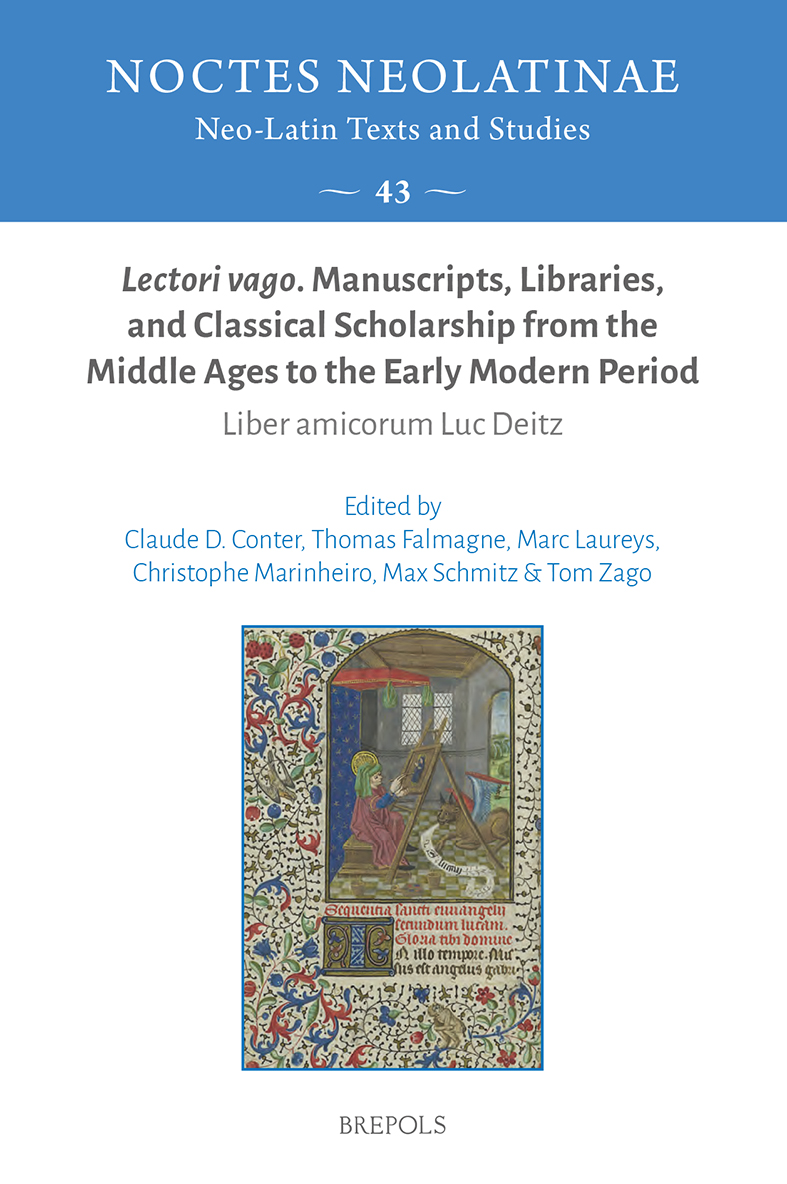 Lectori vago. Manuscripts, Libraries, and Classical Scholarship from the Middle Ages to the Early Modern Period
Liber amicorum Luc Deitz
Volume 43


 »Ein elend-schönes Land«
Gattung und Gedächtnis in Lea Goldbergs hebräischer Literatur. Aus dem Hebräischen von Rainer Wenzel

