
Studies in the Historical Development of the Ossetic Vocalism
By (author) Johnny Cheung

Hardback (Published)
(May 2002)
ISBN: 9783895002670
6.69 x 9.45 inches
Price: $123.00
In stock
Ever since Ossetic was extensively researched by eminent Iranists like Abaev, Bailey, Gershevitch and Benveniste, the language has earned a prominent place in (Indo-)Iranian and Indo-European Linguistics. Dealing with phonology together with etymological and morphological considerations, this study is the latest comprehensive treatment of the Ossetic language, since E. Benveniste, Études sur la langue ossète, in 1959.
Ossetic is an archaic Iranian language, which is primarily spoken by roughly a half million people in the Caucasus. Nowadays fully surrounded by non-Iranian peoples, the speakers of Ossetic are the last descendants of those North Iranian tribes, such as Cimmerians, Scythians, Saka, Sarmatians and Alans, who used to roam the vast Eurasian steppes. It is for this reason that Ossetic contains a wealth of information which attests to their historical contacts with many and ethnically very diverse groups, like Caucasians, Finno-Ugrians, Slavs, Goths, Greeks, Turks and Mongols. Despite its isolation and recent attestation, the language has essentially kept its Iranian character, moreover, being in appearance at least as conservative as a Middle Iranian language, such as Sogdian, Chorasmian or Khotanese. In the present work a comprehensive account of some important developments which took place in the phonology of that language is given. The developments comprise apocope (loss of final vowel), syncope (loss of medial vowel), aphaeresis (loss of initial vowel), i-epenthesis (insertion of *i) and accompanying palatalization, and finally, the fate of *u. Also the role of the accent in these cases is addressed. None of these developments has been subjected to a systematic treatment before. The book also contains a valuable contribution to etymology, as for this research Ossetic words are gleaned and assessed from the monumental work of the eminent scholar Vasilij Abaev, Historical-Etymological Dictionary of the Ossetic language. Finally, morphology is also touched upon in an extensive appendix, in which several nominal suffixes and the verbal endings are treated. The book is a contribution not only to our understanding of Ossetic itself but also to the advancement of Iranian and Caucasian studies.
- By (author) Johnny Cheung
"The volume under review is one of the most successfull attempts to systematize and synthesize the aforementioned results of linguistic studies on Ossetic vocalism and etymology." Studia Etymologica Cracoviensia (SEC). 12 (2007) "(...) muss man Cheungs Buch aber bescheinigen, dass es sehr benutzerfreundlich ist. Schon der etymologische Index, der so etwas wie ein kleines Etymologikon des Ossetischen darstellt, ist sehr hilfreich, und der ausfuhrliche Index of Words erleichtert das Auffinden der angefuhrten Wortformen ganz ungemein." Kratylos. 49 (2004). S. 86-91
—
„The volume under review is one of the most successfull attempts to systematize and synthesize the aforementioned results of linguistic studies on Ossetic vocalism and etymology.“<br/><br/>In: Studia Etymologica Cracoviensia (SEC). 12 (2007)<br/><br/>--------------------------<br/><br/>„(...) muß man Cheungs Buch aber bescheinigen, daß es sehr benutzerfreundlich ist. Schon der etymologische Index, der so etwas wie ein kleines Etymologikon des Ossetischen darstellt, ist sehr hilfreich, und der ausführliche Index of Words erleichtert das Auffinden der angeführten Wortformen ganz ungemein.“<br/><br/>In: Kratylos. 49 (2004). S. 86-91.
—
Other Titles in this Series


 Vafsi Folk Tales
Twenty Four Folk Tales in the Gurchani Dialect of Vafsi as Narrated by Ghazanfar Mahmudi and Mashdi Mahdi and Collected by Lawrence P. Elwell-Sutton
 Proceedings of the Third European Conference of Iranian Studies
Held in Cambridge, 11th to 15th September 1999. Mediaeval and Modern Persian


 Tabous, interdits et obligations de langage en Afghanistan
Éléments du vocabulaire de la vie privée en terre d’Islam


 Religious themes and texts of pre-Islamic Iran and Central Asia
Studies in honour of Professor Gherardo Gnoli on the occasion of his 65th birthday on 6th December 2002
Similar Books


 Cities through Time
Glimpses into Urbanity and Community in Mediaeval to Modern West Asia and Egypt
Volume 1
 Cuneiform Artefacts from Archaeological Contexts: New Research on Ancient Iraq
Proceedings of a Conference Held at the Bavarian Academy of Sciences and Humanities, July 4–5, 2024
Volume 2
 Des mots aux actes
Traduction épistémique et littéraire. Nouvelles tendances en histoire et didactique
Volume 15


 Global Gulf
Geo-Economic, Geo-Political, and Geo-Technological Transformation in Saudi Arabia, the United Arab Emirates, and Qatar


 Ismail Hakki Bursevi’s translation of and commentary on Fusus al-Hikam By Muhyiddin Ibn ‘Arabi
Volumes 1-4


 Monastic Manuscripts from the Eastern Mediterranean (Sinai, Jerusalem, Antioch)
Production, Use, and Contexts


 Punning in Odd or Elegant Constructions in Jeremiah
The Convergence of Linguistics, Rhetoric, and Textuality in the Hebrew Text of Jeremiah
 Qatar’s Societal Security
Towards the Inclusive National Concept of ‘Baladna’ Identity, Migration and External Threats Since 2017


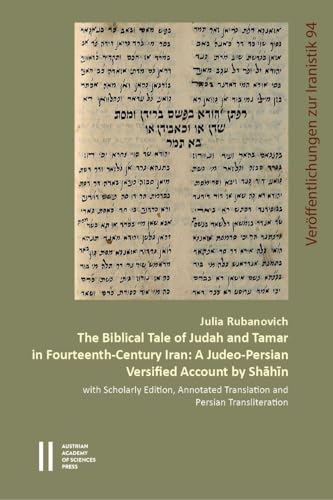 The Biblical Tale of Judah and Tamar in Fourteenth-Century Iran
A Judeo-Persian Versified Account by Shāhīn with Scholarly Edition, Annotated Translation and Persian Transliteration
Volume 94, 951
 The Discourse of Rites
Shaping and Reshaping the (Counter-)Priestly Rituals Conducted Outside the Tabernacle



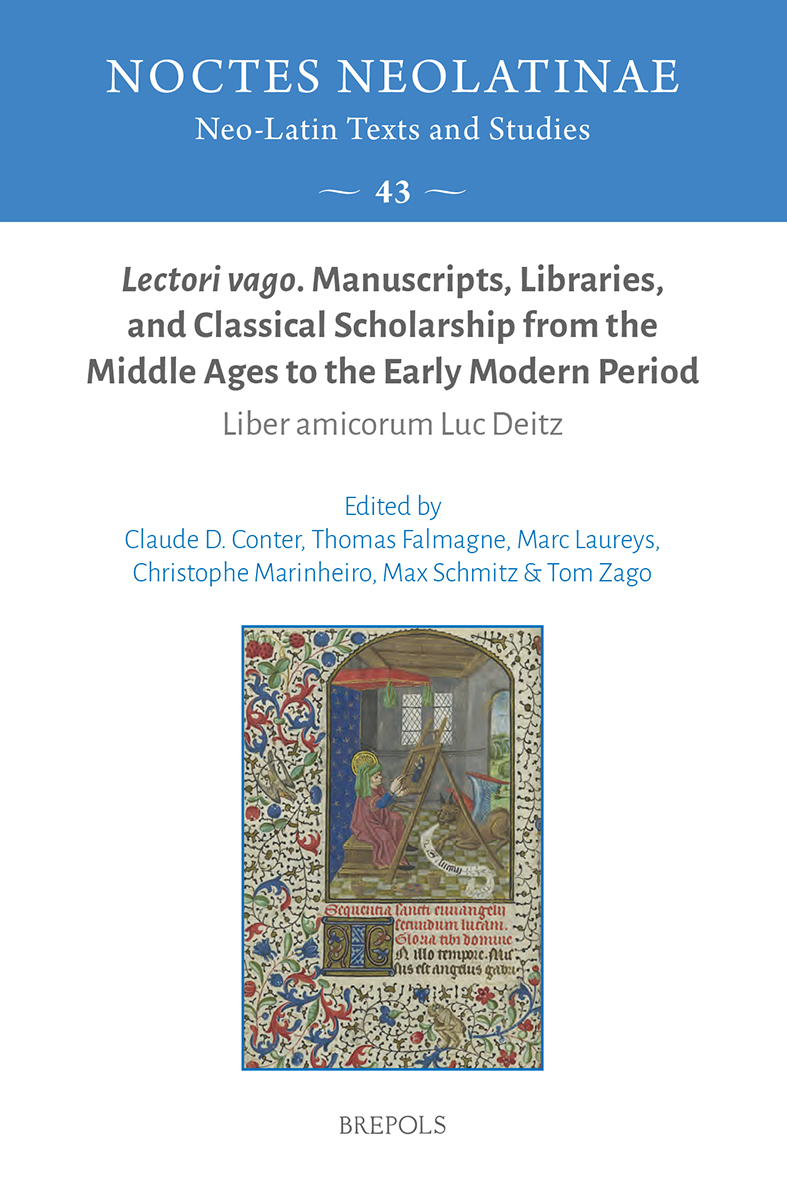 Lectori vago. Manuscripts, Libraries, and Classical Scholarship from the Middle Ages to the Early Modern Period
Liber amicorum Luc Deitz
Volume 43


 »Ein elend-schönes Land«
Gattung und Gedächtnis in Lea Goldbergs hebräischer Literatur. Aus dem Hebräischen von Rainer Wenzel

