
Le verbe simple en pashto
État des lieux
By (author) Matteo De Chiara By (author) Daniel Septfonds

Hardback (Published)
(March 2022)
ISBN: 9783752006384
6.69 x 9.45 inches
Price: $179.00
In stock
In this work, the Authors provide a detailed analysis of the Pashto Simple “Naked” Verbs, i.e. all not suffixed simple verbs, and the linguistic dynamics at work still nowadays. The classification of used Simple “Naked” Verbs in three main groups (those belonging to the “norm”; those whose position is changing and can be located in a “zone frontière”; those showing a complexification linked to the aspect) will be useful and helpful for Pashto students and scholars, for researchers in the field of Iranian philology and for linguists. <br/>
Pashto is an Iranian language spoken by almost 50 million speakers in eastern Afghanistan, western Pakistan, as well as in an important diaspora. Pashto, official language of the Afghan refugees along with Dari (Afghan Persian), is nowadays the focus of a growing interest, not only in the humanitarian field but also in linguistic studies. In this work, following the preceding volume on the Pashto verbal system, the Authors provide a detailed analysis of the Pashto Simple “Naked” Verbs, i.e. all not suffixed simple verbs, and the linguistic dynamics at work still nowadays. Used Simple “Naked” Verbs may be distributed among three main groups: a) those belonging to the “norm”, i.e. irregular and regular verbs; b) those whose position is changing and can be located in a “zone frontiere”; c) those showing a complexification linked to the aspect, i.e. the two verbalizers and the mixed verbs. After the long and in-depth introduction, the fiches of all Simple “Naked” Verbs are presented and offer complete dialectological, typological and lexicographical information, as well as ample phraseologies. The verbs are organized in two main chapters, if the verb is used or only appears in the dictionaries. The appendixes provide indexes of all Simple “Naked” Verbs and of the French meanings. A final glossary allows the reader full understanding of the grammatical definitions. The manifold audience to which this work addresses is composed principally by scholars and researchers involved in the fields of linguistics and Pashto and Iranian studies, but also by students of Pashto language and by all those working in the humanitarian field and with refugees.
- By (author) Matteo De Chiara
- By (author) Daniel Septfonds
Other Titles in this Series


 Tabous, interdits et obligations de langage en Afghanistan
Éléments du vocabulaire de la vie privée en terre d’Islam


 Religious themes and texts of pre-Islamic Iran and Central Asia
Studies in honour of Professor Gherardo Gnoli on the occasion of his 65th birthday on 6th December 2002


Similar Books


 Cities through Time
Glimpses into Urbanity and Community in Mediaeval to Modern West Asia and Egypt
Volume 1
 Cuneiform Artefacts from Archaeological Contexts: New Research on Ancient Iraq
Proceedings of a Conference Held at the Bavarian Academy of Sciences and Humanities, July 4–5, 2024
Volume 2
 Des mots aux actes
Traduction épistémique et littéraire. Nouvelles tendances en histoire et didactique
Volume 15


 Global Gulf
Geo-Economic, Geo-Political, and Geo-Technological Transformation in Saudi Arabia, the United Arab Emirates, and Qatar


 Ismail Hakki Bursevi’s translation of and commentary on Fusus al-Hikam By Muhyiddin Ibn ‘Arabi
Volumes 1-4


 Monastic Manuscripts from the Eastern Mediterranean (Sinai, Jerusalem, Antioch)
Production, Use, and Contexts


 Punning in Odd or Elegant Constructions in Jeremiah
The Convergence of Linguistics, Rhetoric, and Textuality in the Hebrew Text of Jeremiah
 Qatar’s Societal Security
Towards the Inclusive National Concept of ‘Baladna’ Identity, Migration and External Threats Since 2017


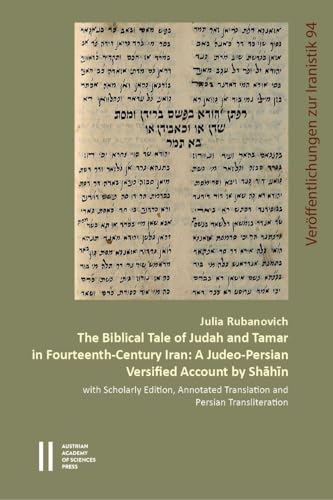 The Biblical Tale of Judah and Tamar in Fourteenth-Century Iran
A Judeo-Persian Versified Account by Shāhīn with Scholarly Edition, Annotated Translation and Persian Transliteration
Volume 94, 951
 The Discourse of Rites
Shaping and Reshaping the (Counter-)Priestly Rituals Conducted Outside the Tabernacle



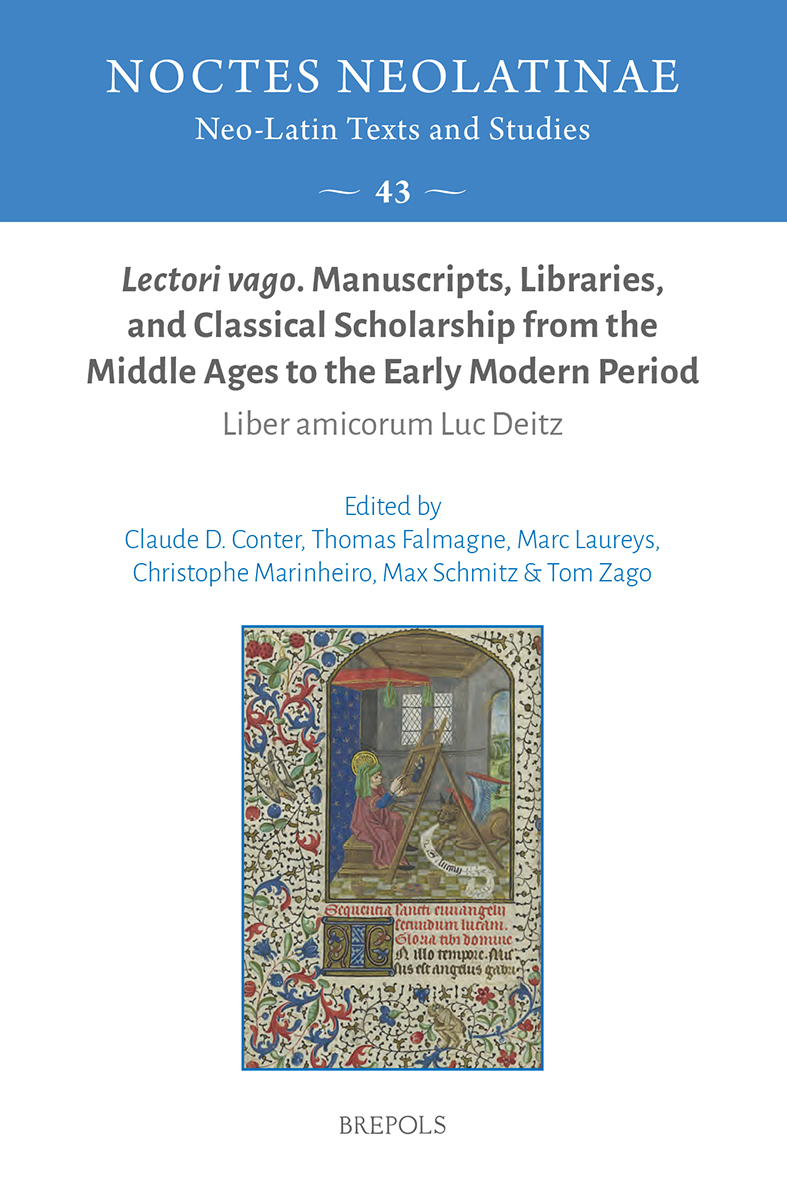 Lectori vago. Manuscripts, Libraries, and Classical Scholarship from the Middle Ages to the Early Modern Period
Liber amicorum Luc Deitz
Volume 43


 »Ein elend-schönes Land«
Gattung und Gedächtnis in Lea Goldbergs hebräischer Literatur. Aus dem Hebräischen von Rainer Wenzel

