
Grammaire de l’ormuri de Baraki-Barak (Lôgar, Afghanistan)
By (author) Charles M. Kieffer

Hardback (Published)
(July 2003)
ISBN: 9783895003288
6.69 x 9.45 inches
Price: $104.00
In stock
English description: Charles M. Kieffer has devoted his life to the study of some of the least known languages of the Iranian family, in particular Ormuri and Parachi, on which he carried out fieldwork in Afghanistan during the years 1959-1971 and on which he has published many important articles. As a result of these publications he is universally recognized as the world’s leading expert in these languages. The present volume represents the culmination of Charles M. Kieffer’s life’s work. Originally presented as a Paris these de doctorat d’etat in 1975, it was recommended for immediate publication by a very distinguished jury (G. Fussman, G. Lazard, G. Morgenstierne, G. Redard). Since then, the manuscript has lost nothing of its value: apart form one book in Russian, and the articles of Charles M. Kieffer himself, hardly anything has been published on the Ormuri language during the last 25 years. The Ormri language belongs to the Iranian family of languages, but within this family it is an isolate without close relatives, giving it a particularly significant role in historical linguistics. It must be regarded as certain that Ormuri will die out completely in the near future, therefore this book is not merely a work of scholarship but virtually a primary source, containing the most reliable and detailed information on a dying language. German description: Ormuri wird in Afghanistan, im Logar-Tal, in einer pashto- und persischsprechenden Umgebung gesprochen. Es handelt sich um eine Relikt-Sprache, die nur noch von einer kleinen Zahl von Ormuren verwendet wird, die rund um Baraki-Barak in einigen qal’a, befestigten Bauernhausern, ansassig sind. Die Sprache galt bis 1959 als verschollen, als der Autor im Logar-Tal Ormuri-Sprechern begegnete und einige Satze dieser als ausgestorben betrachteten Sprache aufnehmen konnte. Georg Morgenstierne, der die Sprache 1924 bei einem nach Kabul bestellten Ormuri-Sprecher untersucht hatte, bestatigte die Wiederentdeckung dieser Klansprache. Bei Ormuri handelt es sich um eine Klansprache, die unter anderem deshalb uberleben konnte, weil sie in den Bazaren der Umgebung als Geheimsprache diente, und auch weil sie mit der religiosen, spatzoroastrischen Tradition eng verbunden ist, die die Ormuren noch bis ins 17. Jh. als “Feueranbeter” pflegten. Wie die Frage nach der Herkunft der Ormuren, so blieb auch die sprachhistorische Einordnung der Sprache unter die iranischen Sprachen lange ungeklart. Um Geschichte und Struktur des heutigen Ormuri grundlich zu erforschen, ist eine deskriptive Grammatik des Dialekts unabdingbar. Diese Grammatik liegt mit dieser Publikation nun vor; ein phraseologisches Worterbuch und Texte von Baraki-Barak sind zur Vervollstandigung geplant.
- By (author) Charles M. Kieffer
„Besondere Bedeutung kommt dieser Grammatik (deren typographische Herstellung allerdings nicht immer einen professionellen Eindruck macht) auch deshalb zu, weil sie einen Dialekt vorstellt, der in allernächster Zukunft zum Aussterben verdammt ist und der schon heute seine wesentliche Aufgabe nicht mehr erfüllt, der Kommunikation zwischen Menschen zu dienen. Charles Kieffer, der dieses Werk kurz vor seinem 80. Geburtstag vollendete, hat damit sich selbst, vor allem aber die iranistische Fachwelt reich beschenkt, die ihm dafür Dank schuldet.“<br/><br/>In: Kratylos. 50 (2005). S. 204-206.
—
Other Titles in this Series
 Literarische Stoffe und ihre Gestaltung in mitteliranischer Zeit
Kolloquium anlässlich des 70. Geburtstages von Werner Sundermann


 Vafsi Folk Tales
Twenty Four Folk Tales in the Gurchani Dialect of Vafsi as Narrated by Ghazanfar Mahmudi and Mashdi Mahdi and Collected by Lawrence P. Elwell-Sutton
 Proceedings of the Third European Conference of Iranian Studies
Held in Cambridge, 11th to 15th September 1999. Mediaeval and Modern Persian


 Tabous, interdits et obligations de langage en Afghanistan
Éléments du vocabulaire de la vie privée en terre d’Islam


Similar Books


 Cities through Time
Glimpses into Urbanity and Community in Mediaeval to Modern West Asia and Egypt
Volume 1
 Cuneiform Artefacts from Archaeological Contexts: New Research on Ancient Iraq
Proceedings of a Conference Held at the Bavarian Academy of Sciences and Humanities, July 4–5, 2024
Volume 2
 Des mots aux actes
Traduction épistémique et littéraire. Nouvelles tendances en histoire et didactique
Volume 15


 Global Gulf
Geo-Economic, Geo-Political, and Geo-Technological Transformation in Saudi Arabia, the United Arab Emirates, and Qatar


 Ismail Hakki Bursevi’s translation of and commentary on Fusus al-Hikam By Muhyiddin Ibn ‘Arabi
Volumes 1-4


 Monastic Manuscripts from the Eastern Mediterranean (Sinai, Jerusalem, Antioch)
Production, Use, and Contexts


 Punning in Odd or Elegant Constructions in Jeremiah
The Convergence of Linguistics, Rhetoric, and Textuality in the Hebrew Text of Jeremiah
 Qatar’s Societal Security
Towards the Inclusive National Concept of ‘Baladna’ Identity, Migration and External Threats Since 2017


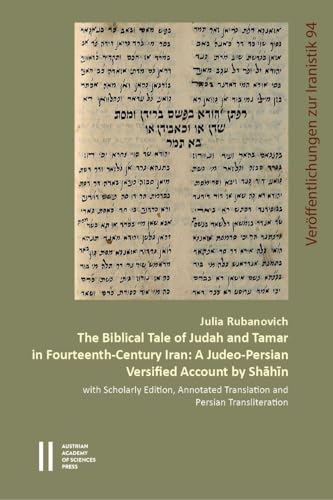 The Biblical Tale of Judah and Tamar in Fourteenth-Century Iran
A Judeo-Persian Versified Account by Shāhīn with Scholarly Edition, Annotated Translation and Persian Transliteration
Volume 94, 951
 The Discourse of Rites
Shaping and Reshaping the (Counter-)Priestly Rituals Conducted Outside the Tabernacle



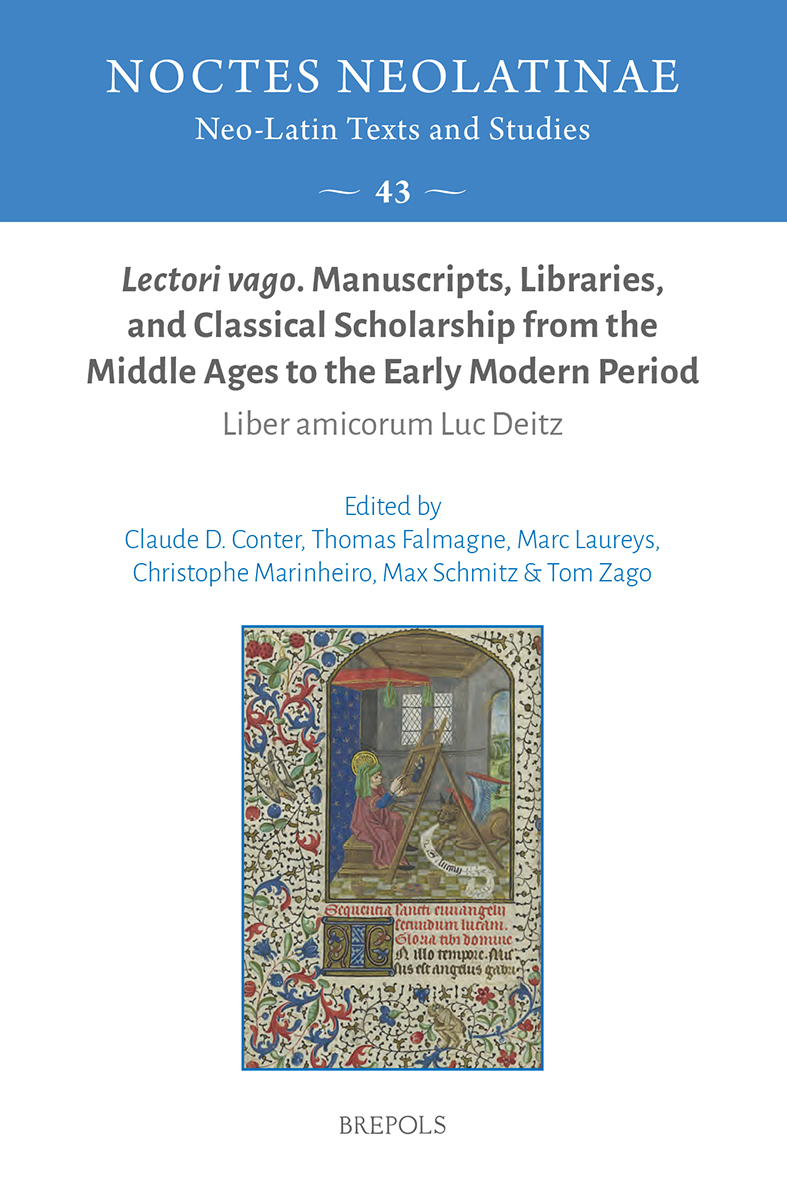 Lectori vago. Manuscripts, Libraries, and Classical Scholarship from the Middle Ages to the Early Modern Period
Liber amicorum Luc Deitz
Volume 43


 »Ein elend-schönes Land«
Gattung und Gedächtnis in Lea Goldbergs hebräischer Literatur. Aus dem Hebräischen von Rainer Wenzel

