
Iranian Loanwords in Syriac
By (author) Claudia Ciancaglini

Hardback (Published)
(April 2008)
ISBN: 9783895006241
6.69 x 9.45 inches
Price: $102.00
On back order
The book investigates the deep linguistic contact between Iranians and Arameans from the formation of the Achaemenid empire onwards, and focuses especially on the linguistic relationship between Middle Persian and Classical Syriac during the Sasanian empire, a subject on which a modern systematic study was still missing. <br/>The first part of the book is a detailed study of the historical and linguistic conditions which favoured the entry of a great number of Iranian words into Syriac and the linguistic consequences of such borrowings. The second part contains, in dictionary form, hundreds of entries in which each single Iranian loanword is considered, together with its etymon, alternative forms, and derivatives. Each entry also includes a list of occurrences and the relevant bibliography. A complete index of words closes the volume.<br/>The study of the prolonged contact between such prestigious languages as Syriac and Middle Persian, that are only attested in written records, enriches our knowledge of the typologies of language interference and bilingualism in ancient society. More specifically, it allows to recover a considerable amount of otherwise unattested Middle Persian vocabulary and provides new insights into the linguistic systems of both Syriac and Middle Persian.<br/>
The book investigates the deep linguistic contact between Iranians and Arameans from the formation of the Achaemenid empire onwards, and focuses especially on the linguistic relationship between Middle Persian and Classical Syriac during the Sasanian empire, a subject on which a modern systematic study was still missing. The first part of the book is a detailed study of the historical and linguistic conditions which favoured the entry of a great number of Iranian words into Syriac and the linguistic consequences of such borrowings. The second part contains, in dictionary form, hundreds of entries in which each single Iranian loanword is considered, together with its etymon, alternative forms, and derivatives. Each entry also includes a list of occurrences and the relevant bibliography. A complete index of words closes the volume. The study of the prolonged contact between such prestigious languages as Syriac and Middle Persian, that are only attested in written records, enriches our knowledge of the typologies of language interference and bilingualism in ancient society. More specifically, it allows to recover a considerable amount of otherwise unattested Middle Persian vocabulary and provides new insights into the linguistic systems of both Syriac and Middle Persian.
- By (author) Claudia Ciancaglini
"This is certainly one of the most remarkable works in Iranian philology, particularly in Irano-Semitic linguistic interrelations, published in the recent times. It will definitely rank among the important reference book in Iranian Studies in decades ahead." Garnik Asatrian, Iran and the Caucasus. 15 (2011). pp. 322-325
—
“This is certainly one of the most remarkable works in Iranian philology, particularly in Irano-Semitic linguistic interrelations, published in the recent times. It will definitely rank among the important reference book in Iranian Studies in decades ahead.”<br/><br/>Garnik Asatrian<br/><br/>In: Iran and the Caucasus. 15 (2011). pp. 322-325.<br/>
—
Other Titles in this Series


 Tabous, interdits et obligations de langage en Afghanistan
Éléments du vocabulaire de la vie privée en terre d’Islam


 Religious themes and texts of pre-Islamic Iran and Central Asia
Studies in honour of Professor Gherardo Gnoli on the occasion of his 65th birthday on 6th December 2002


 Zarathushtra entre l’Inde et l’Iran
Études indo-iraniennes et indo-européenes offertes à Jean Kellens à l’occasion de son 65e anniversaire


 Literarische Stoffe und ihre Gestaltung in mitteliranischer Zeit
Kolloquium anlässlich des 70. Geburtstages von Werner Sundermann

Similar Books


 Cities through Time
Glimpses into Urbanity and Community in Mediaeval to Modern West Asia and Egypt
Volume 1
 Cuneiform Artefacts from Archaeological Contexts: New Research on Ancient Iraq
Proceedings of a Conference Held at the Bavarian Academy of Sciences and Humanities, July 4–5, 2024
Volume 2
 Des mots aux actes
Traduction épistémique et littéraire. Nouvelles tendances en histoire et didactique
Volume 15


 Global Gulf
Geo-Economic, Geo-Political, and Geo-Technological Transformation in Saudi Arabia, the United Arab Emirates, and Qatar


 Ismail Hakki Bursevi’s translation of and commentary on Fusus al-Hikam By Muhyiddin Ibn ‘Arabi
Volumes 1-4


 Monastic Manuscripts from the Eastern Mediterranean (Sinai, Jerusalem, Antioch)
Production, Use, and Contexts


 Punning in Odd or Elegant Constructions in Jeremiah
The Convergence of Linguistics, Rhetoric, and Textuality in the Hebrew Text of Jeremiah
 Qatar’s Societal Security
Towards the Inclusive National Concept of ‘Baladna’ Identity, Migration and External Threats Since 2017


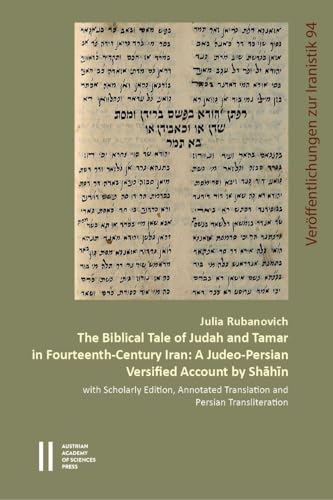 The Biblical Tale of Judah and Tamar in Fourteenth-Century Iran
A Judeo-Persian Versified Account by Shāhīn with Scholarly Edition, Annotated Translation and Persian Transliteration
Volume 94, 951
 The Discourse of Rites
Shaping and Reshaping the (Counter-)Priestly Rituals Conducted Outside the Tabernacle



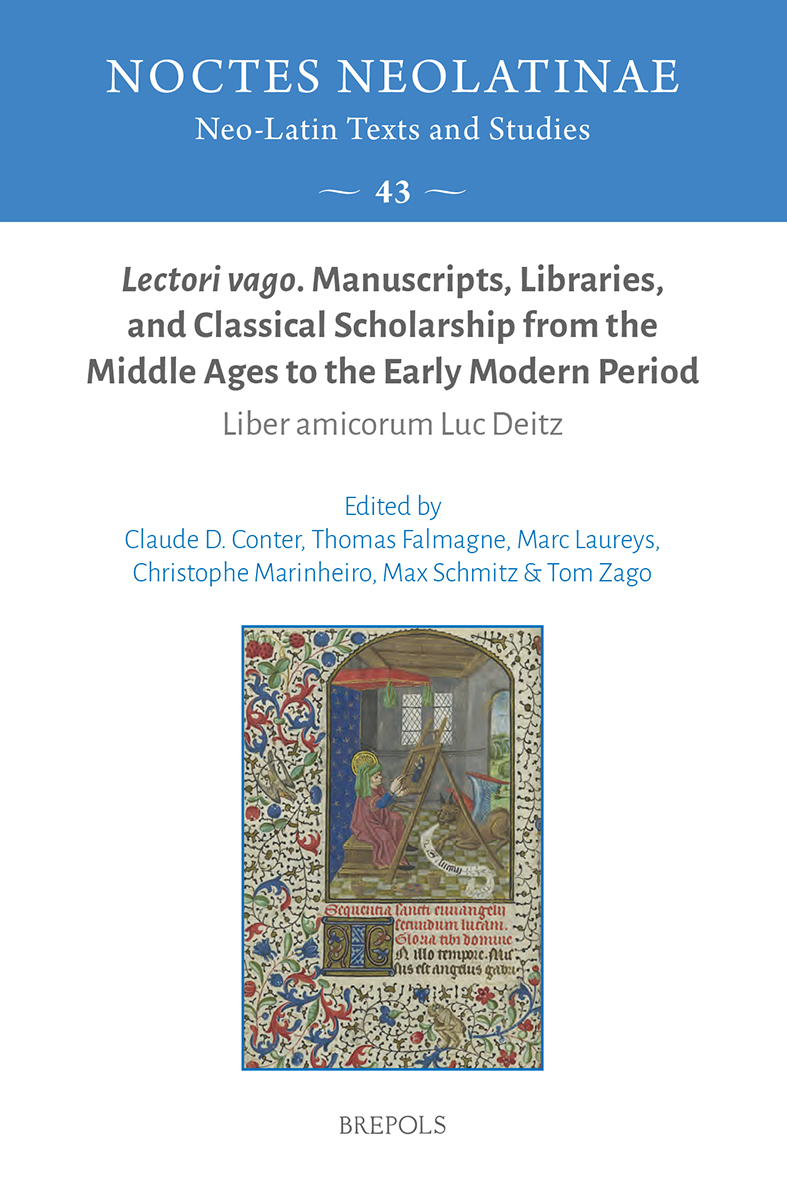 Lectori vago. Manuscripts, Libraries, and Classical Scholarship from the Middle Ages to the Early Modern Period
Liber amicorum Luc Deitz
Volume 43


 »Ein elend-schönes Land«
Gattung und Gedächtnis in Lea Goldbergs hebräischer Literatur. Aus dem Hebräischen von Rainer Wenzel

