
Grammaire juhuri, ou judéo-tat, langue iranienne des Juifs du Caucase de l’est
By (author) Gilles Authier

Hardback (Published)
(February 2013)
ISBN: 9783895009358
6.69 x 9.45 inches
Price: $136.00
In stock
Juhuri (Judeo-Tat), the language of the so-called “Mountain Jews” of Daghestan and Azerbaijan, belongs to the Caucasian Tat group of South-Western Iranian. Its Iranian heritage, reflected by noteworthy archaisms, constitutes an important component of the language, but Juhuri has also been under the influence of Turkic and indigenous Caucasian languages since it arrived in the Caucasus more than a millenium ago. Owing to its unique history as the language of an Iranian Jewish community in the Caucasus, Juhuri exhibits many unusual and typologically rather remarkable characteristics. The book, based on written sources complemented by the author’s fieldwork, offers a comprehensive description of the language, each feature illustrated by numerous example sentences, and concludes with sample texts and a full glossary.
Juhuri (Judeo-Tat), the language of the so-called “Mountain Jews” of Daghestan and Azerbaijan, belongs to the Caucasian Tat group of South-Western Iranian. Its Iranian heritage, reflected by noteworthy archaisms, constitutes an important component of the language, but Juhuri has also been under the influence of Turkic and indigenous Caucasian languages since it arrived in the Caucasus more than a millenium ago. Owing to its unique history as the language of an Iranian Jewish community in the Caucasus, Juhuri exhibits many unusual and typologically rather remarkable characteristics. The book, based on written sources complemented by the author’s fieldwork, offers a comprehensive description of the language, each feature illustrated by numerous example sentences, and concludes with sample texts and a full glossary.
- By (author) Gilles Authier
"Nevertheless, all in all, this rich grammar of Judeo-Tat serves as a welcome tool in future studies of a language that has not received sufficient scholarly attention. By utilizing asound methodology to process a wealth of linguistic material, Authier has succeeded in offering new insights into various topies of morphosyntax of the language" Von Habib Borjian, JAOS, 135, 3, S. 623-625
—
„Nevertheless, all in all, this rich grammar of Judeo-Tat serves as a welcome tool in future studies of a language that has not received sufficient scholarly attention. By utilizing asound methodology to process a wealth of linguistic material, Authier has succeeded in offering new insights into various topies of morphosyntax of the language“<br/><br/>Von Habib Borjian<br/><br/>In: JAOS, 135, 3, S. 623-625.
—
Other Titles in this Series

 Tabous, interdits et obligations de langage en Afghanistan
Éléments du vocabulaire de la vie privée en terre d’Islam


 Religious themes and texts of pre-Islamic Iran and Central Asia
Studies in honour of Professor Gherardo Gnoli on the occasion of his 65th birthday on 6th December 2002


 Zarathushtra entre l’Inde et l’Iran
Études indo-iraniennes et indo-européenes offertes à Jean Kellens à l’occasion de son 65e anniversaire


Similar Books


 Cities through Time
Glimpses into Urbanity and Community in Mediaeval to Modern West Asia and Egypt
Volume 1
 Cuneiform Artefacts from Archaeological Contexts: New Research on Ancient Iraq
Proceedings of a Conference Held at the Bavarian Academy of Sciences and Humanities, July 4–5, 2024
Volume 2
 Des mots aux actes
Traduction épistémique et littéraire. Nouvelles tendances en histoire et didactique
Volume 15


 Global Gulf
Geo-Economic, Geo-Political, and Geo-Technological Transformation in Saudi Arabia, the United Arab Emirates, and Qatar


 Ismail Hakki Bursevi’s translation of and commentary on Fusus al-Hikam By Muhyiddin Ibn ‘Arabi
Volumes 1-4


 Monastic Manuscripts from the Eastern Mediterranean (Sinai, Jerusalem, Antioch)
Production, Use, and Contexts


 Punning in Odd or Elegant Constructions in Jeremiah
The Convergence of Linguistics, Rhetoric, and Textuality in the Hebrew Text of Jeremiah
 Qatar’s Societal Security
Towards the Inclusive National Concept of ‘Baladna’ Identity, Migration and External Threats Since 2017


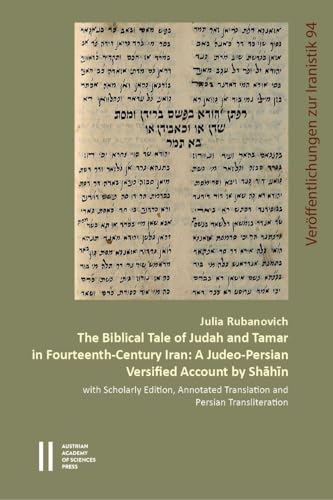 The Biblical Tale of Judah and Tamar in Fourteenth-Century Iran
A Judeo-Persian Versified Account by Shāhīn with Scholarly Edition, Annotated Translation and Persian Transliteration
Volume 94, 951
 The Discourse of Rites
Shaping and Reshaping the (Counter-)Priestly Rituals Conducted Outside the Tabernacle



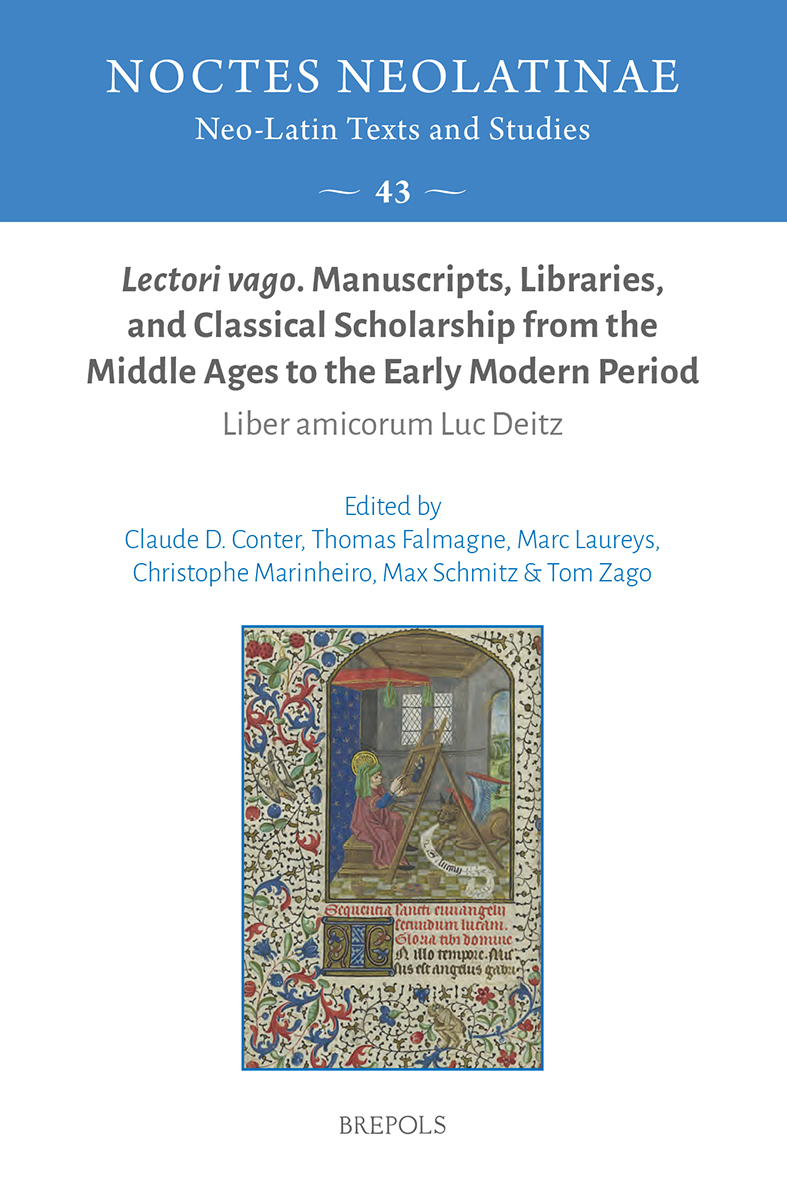 Lectori vago. Manuscripts, Libraries, and Classical Scholarship from the Middle Ages to the Early Modern Period
Liber amicorum Luc Deitz
Volume 43


 »Ein elend-schönes Land«
Gattung und Gedächtnis in Lea Goldbergs hebräischer Literatur. Aus dem Hebräischen von Rainer Wenzel

