
Towards a Historical Grammar of Balochi
Studies in Balochi Historical Phonology and Vocabulary
By (author) Agnes Korn

Hardback (Published)
(December 2005)
ISBN: 9783895003677
6.69 x 9.45 inches
Price: $104.00
On back order
The main part of the book is a new systematic treatment of the historical phonology of Balochi. Comparing important related languages (chiefly Avestan, New Persian and Parthian), the book analyses the development of Old Iranian sounds to the stage of Common Balochi and the changes leading from that stage to the variants spoken today in Pakistan, Iran, Afghanistan and some other countries. The diversity and intensity of contacts with neighbouring languages are reflected in the Balochi lexicon of which selected fields are presented and discussed.
The aim of the present work is to contribute to the knowledge of Balochi historical grammar. The main part of the book is a new discussion of the historical phonology of Balochi, the only comprehensive treatment of which existing so far dates from the end of the 19th century. Meanwhile, new material from a wide range of Balochi dialects and varieties has come to light. This makes it possible to distinguish between sound changes affecting the Balochi language as a whole and those that operate only in some variety; the approach to do so systematically is attempted here for the first time. Reassessing previous treatments and comparing important related languages (chiefly New Persian, Parthian and Avestan), the book analyses the development of Old Iranian sounds to the stage of Common Balochi and the changes leading from that stage to the variants spoken today in Pakistan, Iran, Afghanistan and some other countries. The results indicate contact with other languages, specifically with Persian, as several Balochi sound changes are not such as we might expect in a North Western Iranian language. Concerning other sound changes, Balochi differs from all attested Middle Iranian languages. The predecessor of contemporary Balochi seems to have been a dialect rather similar to Parthian, but differing from it in a number of details. So the study of Balochi sound changes provides evidence for Middle Iranian dialectal variation. The diversity and intensity of contacts with neighbouring languages is also reflected in the Balochi lexicon of which selected fields are presented and discussed. The layers of loanwords show a continuing influence of Persian from the earliest times to the present day, relationships to Kurdish, Pashto and Brahui, and, particularly in the field of kinship terminology, intense contact with speakers of Modern Indic languages. The book is complemented by a morphological appendix and a comprehensive etymological index. It is intended as a contribution in the fields of New Iranian languages and historical Iranian linguistics.
- By (author) Agnes Korn
„Mit der überarbeiteten Version ihrer Frankfurter Dissertation von 2003 legt Korn eine wichtige Untersuchung zur historischen Lautlehre und Lexikologie des Baluchi vor. Die Arbeit ist gekennzeichnet durch methodische Klarheit und Strenge und Beherrschung des Materials. (...)<br/>Korns Buch wird für die weitere Erforschung des Baluchi und für die westiranische Dialektologie für einige Zeit als solides Nachschlagewerk dienen.“<br/><br/>Ludwig Paul<br/><br/>In: Orientalistische Literaturzeitung. 105 (2010) 3. Sp. 362-366.<br/><br/>--------------------------<br/><br/>„(...) this handsome book is a very convenient reference book, which sums up in a very convenient way the current state of Balochi research, dealing with problems that have been discussed in often quite inaccessible articles for the non-specialist. (...) Korn’s work also serves as an excellent reminder not to belittle or even ignore the ongoing research on modern (West) Iranian languages, as if they are of little or no value to our understanding of Old Iranian. Some of them may yield archaic surprises, having preserved forms that were thought to be attested in a few Old or Middle (Indo-) Iranian languages only.“<br/><br/>Johnny Cheung<br/><br/>In: Kratylos. 53 (2008). S. 93-98.<br/><br/>--------------------------<br/><br/>„Issue d’une thèse soutenue à Francfort-sur-le-Main en 2003, ce travail s’inscrit dans le mouvement actuel de résurgence des études baloutches et se propose d’établir les bases d’une grammaire historique du baloutche. Pour cela, l’A. réexamine d’abord à la lumière des travaux récents la phonétique historique de la langue telle que l’avait établie Geiger à la fin du XIXe s., en décrivant dans une première partie les évolutions qui mènent de l’iranien ancien au « baloutche commun » (pp. 53-170), puis celles qui produisent à partir de celui-ci les différents formes attestées dans les variétés contemporaines (pp. 171-286). Une partie plus brève est consacrée à la lexicographie historique à travers quelques cas particuliers : noms de parties du corps, de parenté, de couleurs, et verbes simples. Un brève esquisse morphologique du baloutche (pp. 331-342) et un index étymologique (pp. 343-416) sont joints en appendice. L’A. nous livre ici un ouvrage important, dans lequel on voit les méthodes diachroniques confrontées à l’exubérance des formes du baloutche. Les évolutions phonétiques observées empêchent de situer le baloutche comme un descendant direct du parthe et le positionnent donc, à l’instar du kurde, non comme une langue iranienne purement du nord-ouest, mais plutôt comme un parler « iranien occidental de transition » (p. 330). La raison en est sans doute l’influence continue que le persan a exercée sur ces langues tout au long de leur histoire, et que confirme aussi le vocabulaire examiné. Cette hypothèse mériterait d’être envisagée sous un dernier angle, celui de la morphologie diachronique. Le travail reste à faire, et l’A. l’appelle de ses vœux. Il est à souhaiter qu’elle le réalise après cette « introduction » prometteuse.“<br/><br/>Vincent Hachard<br/><br/>In: Abstracta Iranica. Vol. 28 (2007). <br/>URL <a target="_blank" href="http://abstractairanica.revues.org/document10592.html">http://abstractairanica.revues.org/document10592.html</a> (24. Oktober 2011) <br/><br/>--------------------------<br/><br/>„Il volume ricostruisce l'intero impianto della grammatica storica del balochi nella sua fasa unitaria e nei rivoli derivati dalla sua differenziazione in varietà > dialettali attraverso quadri di grande limpidità. Essi favoriscono da un lato una piena comprensione dello sviluppo diacronico che attraversa i secoli e le aree di distribuzione, dall'altra una sistematizione organica e una più facile memorizzazione dei dati acquisiti. Il manuale può essere consigliato in particolare agli studiosi di iranistica, ma sarà consultato con non pochi vantaggi anche da parte di studiosi di indoeuropeistica in generale e da linguisti di ogni indirizzo. La metodologia adottata si impone per la sua essenzialità, la sua sistematicità, la ricchezza della documentazione.“<br/><br/>Remo Bracchi<br/><br/>In: Salesianum 69 (2007), S. 812-813.<br/><br/>--------------------------<br/><br/>“Very interesting are Korn's studies in the Balochi lexicon (pp. 287-322) with, amongst other important matters, a list of kinship terms in various dialects and an extensive commentary: it is the best I have seen, ordering and making sense of the rich material from Morgenstierne and Pehrson.<br/>(...) I have no hesitation in commending this study, which is a model of careful scholarship deserving a place amongst the serious and valuable studies of the Balochi language.“<br/><br/>Josef Elfenbein<br/><br/>In: Journal of the Royal Asiatic Society 18 (2008), S. 85-88.<br/><br/>
—
Other Titles in this Series


 Religious themes and texts of pre-Islamic Iran and Central Asia
Studies in honour of Professor Gherardo Gnoli on the occasion of his 65th birthday on 6th December 2002


 Zarathushtra entre l’Inde et l’Iran
Études indo-iraniennes et indo-européenes offertes à Jean Kellens à l’occasion de son 65e anniversaire

 Proceedings of the Third European Conference of Iranian Studies
Held in Cambridge, 11th to 15th September 1995. Old and Middle Iranian Studies


 Literarische Stoffe und ihre Gestaltung in mitteliranischer Zeit
Kolloquium anlässlich des 70. Geburtstages von Werner Sundermann


Similar Books


 Cities through Time
Glimpses into Urbanity and Community in Mediaeval to Modern West Asia and Egypt
Volume 1
 Cuneiform Artefacts from Archaeological Contexts: New Research on Ancient Iraq
Proceedings of a Conference Held at the Bavarian Academy of Sciences and Humanities, July 4–5, 2024
Volume 2
 Des mots aux actes
Traduction épistémique et littéraire. Nouvelles tendances en histoire et didactique
Volume 15


 Global Gulf
Geo-Economic, Geo-Political, and Geo-Technological Transformation in Saudi Arabia, the United Arab Emirates, and Qatar


 Ismail Hakki Bursevi’s translation of and commentary on Fusus al-Hikam By Muhyiddin Ibn ‘Arabi
Volumes 1-4


 Monastic Manuscripts from the Eastern Mediterranean (Sinai, Jerusalem, Antioch)
Production, Use, and Contexts


 Punning in Odd or Elegant Constructions in Jeremiah
The Convergence of Linguistics, Rhetoric, and Textuality in the Hebrew Text of Jeremiah
 Qatar’s Societal Security
Towards the Inclusive National Concept of ‘Baladna’ Identity, Migration and External Threats Since 2017


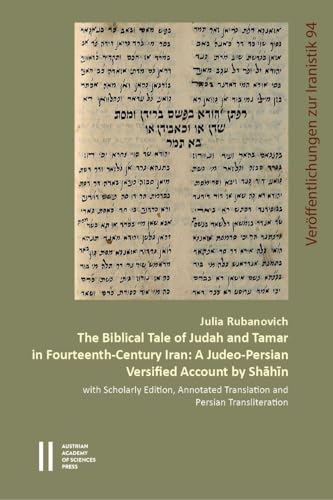 The Biblical Tale of Judah and Tamar in Fourteenth-Century Iran
A Judeo-Persian Versified Account by Shāhīn with Scholarly Edition, Annotated Translation and Persian Transliteration
Volume 94, 951
 The Discourse of Rites
Shaping and Reshaping the (Counter-)Priestly Rituals Conducted Outside the Tabernacle



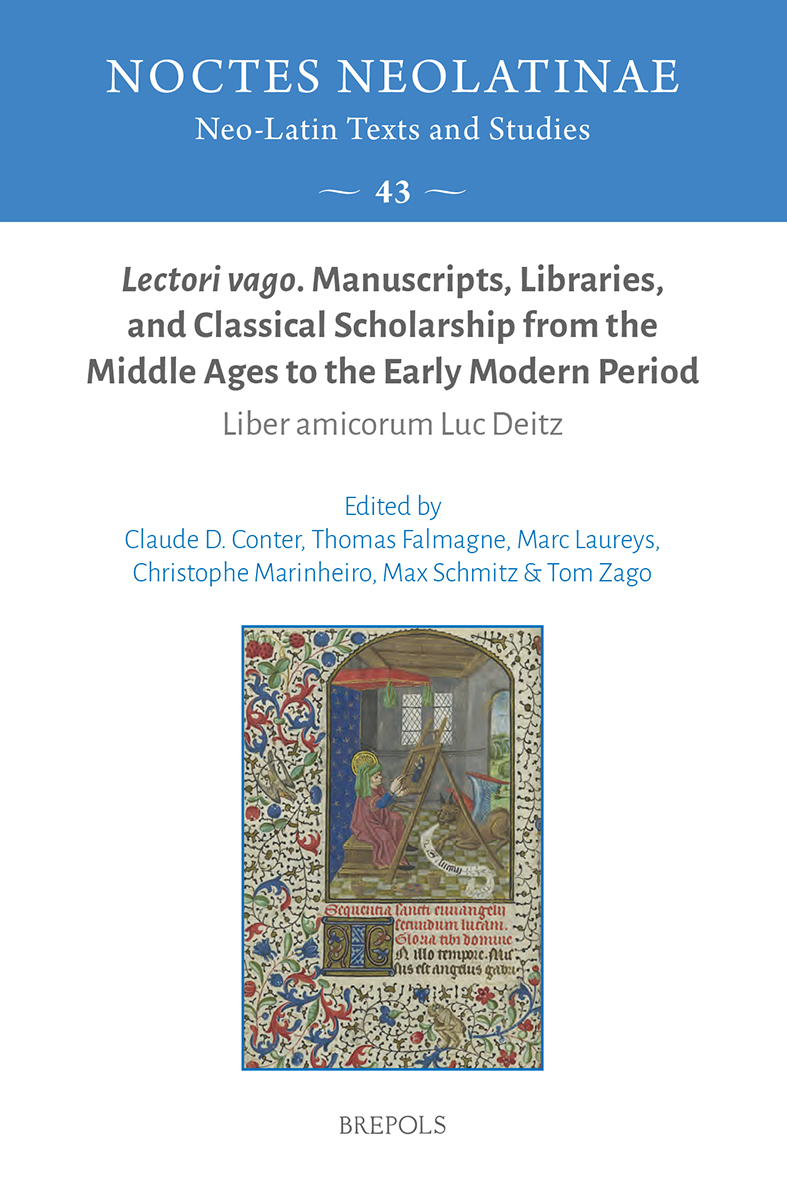 Lectori vago. Manuscripts, Libraries, and Classical Scholarship from the Middle Ages to the Early Modern Period
Liber amicorum Luc Deitz
Volume 43


 »Ein elend-schönes Land«
Gattung und Gedächtnis in Lea Goldbergs hebräischer Literatur. Aus dem Hebräischen von Rainer Wenzel

