
Pseudo-Aristote, Du Monde ; Positions et denominations des vents ; Des plantes
translated with commentary by Michel Federspiel and Jean-Pierre Levet

Paperback (Published)
(November 2018)
ISBN: 9782251448749
5.28 x 8.27 inches
Price: $35.00
On back order
English Summary: The three booklets in this volume concern the earth sciences. The most famous, of the world, centered on the organization of the cosmos, is in the form of a letter to Alexander, undoubtedly the king of Macedonia. The authenticity of this text has long been called into question by many specialists, but the scholarly agitation resurfaced in the 1970s has made it gain notoriety. The treatise on the winds, a short preserved fragment of the abundant anemological literature of the Greeks, is also pseudo-Aristotelian. It is the treatise “On Plants” which has known the most eventful history, to the great amusement of the philologists: it was composed in Greek, probably by the peripatetic Nicolaus of Damascus (1st century BC). It was lost in this form, but it was translated into Syriac, then Arabic, then Hebrew and Latin, and then Greek. This version reflects the Latin of Alfred de Sareshel (twelfth-thirteenth century), which played a fundamental role in spreading the thought of Aristotle in the West. French Description: Les trois opuscules reunis dans ce volume concernent les sciences de la terre. Le plus celebre, Du monde, centre sur l’organisation du cosmos, se presente sous la forme d’une lettre a Alexandre, sans doute le roi de Macedoine. L’authenticite de ce texte a depuis longtemps ete mise en cause par nombre de specialistes, mais l’agitation savante ressurgie dans les annees 1970 lui a fait gagner en notoriete. Le traite sur les vents, bref fragment conserve de l’abondante litterature anemologique des Grecs, est lui aussi pseudo-aristotelicien. C’est le traite Des plantes qui a connu l’histoire la plus mouvementee, au grand amusement des philologues: il fut compose en grec, sans doute par le peripateticien Nicolas de Damas (1er s. av. J.-C.). On l’a perdu sous cette forme, mais il fut traduit en syriaque, puis en arabe, puis en hebreu et en latin, puis en grec. Cette version traduit le latin d’Alfred de Sareshel (XIIe-XIIIe s.), qui joua un role fondamental dans la diffusion de la pensee d’Aristote en Occident.
- With Marie Cronier
- Preface by Aude Cohen-Skalli
- Introduction by Michel Federspiel
- Introduction by Jean-Pierre Levet
- Translated with commentary by Michel Federspiel
- Translated with commentary by Jean-Pierre Levet
Other Titles in this Series

 Galien, L’Ame et ses passions
Les Passions et les erreurs de l'ame. Les Facultes de l'ame suivent les temperaments du corps.
Volume 26
 Naissance de la Bible grecque
Lettre d'Aristee a Philocrate. Traite des Poids et Mesures. Temoignages antiques et medievaux.
Volume 80


 Bede le Venerable, Histoire ecclesiastique du peuple anglais. Tome II
Miracles et missions
Volume 37


Similar Books


 Drunk the Potion, No Whit Charmed
The Doctrine of Pure and Perfect Souls from Iamblichus to Damascius

 Epiphanies of the Divine in the Septuagint and the New Testament
Fifth International Symposium of the Corpus Judaeo-Hellenisticum Novi Testamenti (CJHNT), 14-17 May 2015, Nottingham


 Language and Power in the Roman Empire and Early India
Hierarchy, Ambiguity, and the Art of Reading the Signs in Cosmopolitan Cultures
 Late Antique villae in the Balkans (3rd–7th c. AD): Current Research Questions and Perspectives
HAEMUS Companion to the Late Antique Balkans 1
Volume 4
 Libertinage et philosophie à l’époque classique (XVIe-XVIIIe siècle)
Athéisme, Modernité et Sécularisation / Atheism, Modernity and Secularization
Volume 23
 Nurturing the Elite
Representations of Drinking, Eating, and Religious Vessels in Palmyrene Funerary Iconography
Volume 13


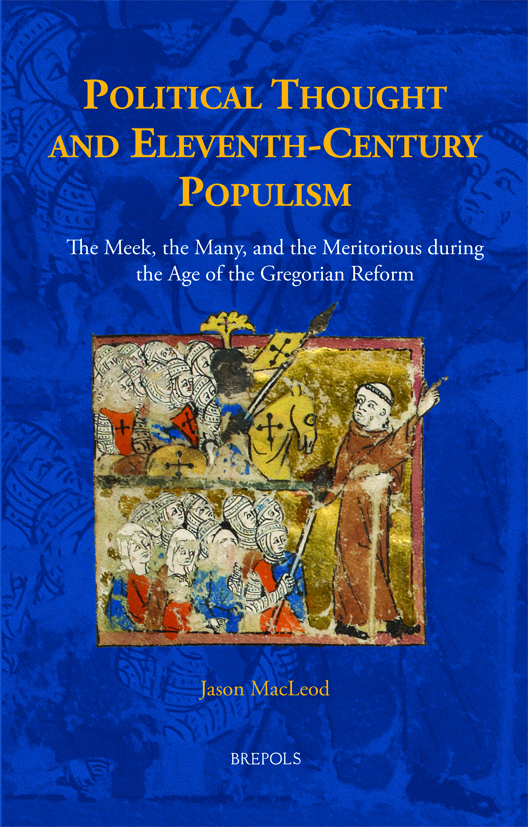 Political Thought and Eleventh-Century Populism
The Meek, the Many, and the Meritorious during the Age of the Gregorian Reform
Volume 38


 The Compositional History of the Book of Kings
An Analysis of the Evaluative Frameworks in 1 Kings 14–2 Kings 25

 The Latin Hermes in Translation
Asclepius, Glosses on Trismegistus, Book of Six Principles of Things, Book of 24 Philosophers
Volume 50


![Book cover: Transitive Media [Philosophy]](https://isd.stisonbooks.com/images/books/native/9781804132333.jpg?asset_id=66970)

 Contesting Labeled Identities
The Sociology of Gentilics in Biblical and Northwest Semitic Literature


 After Life in Roman Paganism. L’Égypte des astrologues. Les Mages hellénisés
Introductions historiographiques
Volume 7


 Diodor über den ersten Sklavenaufstand auf Sizilien
Ein philologischer und historischer Kommentar
Volume 67