
Resurrecting Berytus
A Contextual Analysis of Burials from Roman Beirut
By (author) Vana Kalenderian

Hardback (Published)
(October 2026)
ISBN: 9781805833222
8.07 x 11.46 inches
Price: $105.00
On back order
This book examines burial practices in Roman Berytus (modern Beirut) from the 1st century BC to the 4th century AD. Using archaeological, osteological and isotopic evidence, it explores identity, migration, social status and cultural change, revealing how Roman colonialism shaped life, death and tradition in the eastern Mediterranean.
In the late 1st century BC, the first Roman colony in the Near East was founded in Berytus – modern-day Beirut, Lebanon. The city’s transformation following Roman annexation and colonization marked a pivotal period of administrative, economic, and demographic change. Yet the social and cultural impact of this transition remains largely understudied. This book examines how burial practices in Roman Berytus evolved during this formative phase of colonial rule. Mortuary customs off er a unique window into the cultural norms, identities, and social structures of past communities. In imperial and colonial settings, funerary spaces also served as arenas for expressing power, asserting status, and negotiating social standing within rapidly changing societies. Focusing primarily on the period from the late 1st century BC to the 1st century AD, but also extending through to the 4th century AD, this study investigates different aspects of ancient burial practice and their patterns of change and continuity over time. Drawing on material culture, human osteology, and isotopic data, it applies an interdisciplinary approach to reconstruct life, death, and identity within a shifting provincial landscape. This contextual analysis offers new insights into burial practices linked to age, gender, mobility, kinship, and social differentiation. Addressing a significant gap in the scholarship on Roman colonialism in the eastern Mediterranean, this research explores how broader processes of imperialism, migration, and cultural interaction impacted the lived – and buried – sociocultural realities of Roman Berytus, and whether deeply-rooted traditions were renegotiated in death, as they may have been in life.
List of Figures and Plates
List of Tables
Acknowledgements
Glossary of Terms and Abbreviations
PART I INTRODUCING THE STUDY
Chapter 1: Introduction
Chapter 2: Historical Background
PART II MATERIAL AND METHODS
Chapter 3: The Dataset
Chapter 4: Methodology
PART III INTRA-SITE ANALYSIS
Introduction to Part III
Chapter 5: SFI 655
Chapter 6: RML 2385
Chapter 7: SFI 645
Chapter 8: MDWR 02
Chapter 9: ASH 163
Chapter 10: MDWR 466/468
Chapter 11: ASH 002
PART IV INTER-SITE ANALYSIS
Introduction to Part IV
Chapter 12: The Buried Cohort: Makeup of the Berytian Assemblage
Chapter 13: The Physical Body within the Grave
Chapter 14: The Burial Grounds
Chapter 15: Burial Architecture
Chapter 16: Spatial Organization of the Burial Grounds
Chapter 17: Grave Goods
Chapter 18: Migration and Mobility: Isotope Analysis
PART V CONCLUSIONS
Chapter 19: Contextualizing the Findings
Chapter 20: Conclusion
Plates
Appendices
References
- By (author) Vana Kalenderian
Other Titles in this Series


 Late Roman Dorset Black-Burnished Ware (BB1)
A Corpus of Forms and Their Distribution in Southern Britain, on the Continent and in the Channel Islands

 Roman Copies, Collecting, and Culture in the Bay of Naples and Beyond
Papers in Honor of Eugene J. Dwyer


 Ländliche Siedlungsstrukturen im römischen Spanien
Das Becken von Vera und das Camp de Tarragona –zwei Mikroregionen im Vergleich
 The Arverni and Roman Wine
Roman Amphorae from Late Iron Age sites in the Auvergne (Central France): Chronology, fabrics and stamps

 Life, Death and Rubbish Disposal in Roman Norton, North Yorkshire
Excavations at Brooklyn House 2015-16


 Die Bleifunde der römisch-republikanischen Anlage von Sanisera, Menorca
Archäologische und archäometrische Analyse

 Corpus des amphores romaines produites dans les centres de mer Noire
Collections des musées de la côte turque de la mer Noire (Ereğli, Amasra, Sinop, Samsun, Giresun, Ordu, Trabzon et Amasya)


 Rus Africum IV: La fattoria Bizantina di Aïn Wassel, Africa Proconsularis (Alto Tell, Tunisia)
Lo scavo stratigrafico e i materiali
 Roman Frontier Studies 2009
Proceedings of the XXI International Congress of Roman Frontier Studies (Limes Congress) held at Newcastle upon Tyne in August 2009

 Visualising Glocalization
Villas, Architectural Spaces and Pavements in Hispania Baetica (2nd century AD – 4th century AD)

Similar Books

 Caesar’s Visions and Impact on the Roman Empire
Revisiting the Archaeological and Historical Record of the 40s BC
Volume 2



 Drunk the Potion, No Whit Charmed
The Doctrine of Pure and Perfect Souls from Iamblichus to Damascius

 Epiphanies of the Divine in the Septuagint and the New Testament
Fifth International Symposium of the Corpus Judaeo-Hellenisticum Novi Testamenti (CJHNT), 14-17 May 2015, Nottingham


 Etruscan and Roman Hellenistic Anatomical ex votos
Reassessing Popular Religious Expressions in Central Italy
Volume 8



 Invisible Labour in Antiquity
Visualizing Obscure Work in the Ancient Mediterannean and West Asia
Volume 1
 Language and Power in the Roman Empire and Early India
Hierarchy, Ambiguity, and the Art of Reading the Signs in Cosmopolitan Cultures
 Late Antique villae in the Balkans (3rd–7th c. AD): Current Research Questions and Perspectives
HAEMUS Companion to the Late Antique Balkans 1
Volume 4

 Nurturing the Elite
Representations of Drinking, Eating, and Religious Vessels in Palmyrene Funerary Iconography
Volume 13


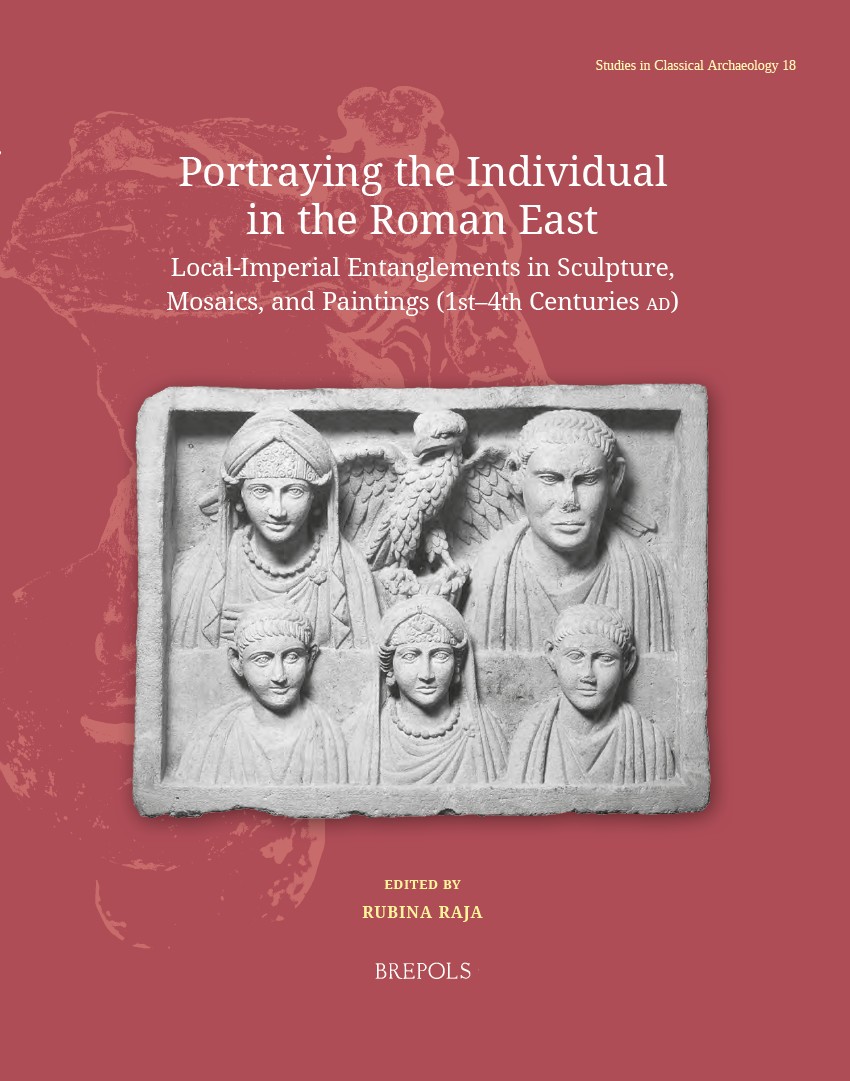 Portraying the Individual in the Roman East
Local–Imperial Entanglements in Sculpture, Mosaics, and Paintings (First–Fourth Centuries AD)
Volume 18
 Small Worlds and Relational Agencies: Local Societies in Early Medieval Iberia
Pequeños mundos y Agencias relacionales: Sociedades locales altomedievales en la Península Ibérica
 The Compositional History of the Book of Kings
An Analysis of the Evaluative Frameworks in 1 Kings 14–2 Kings 25

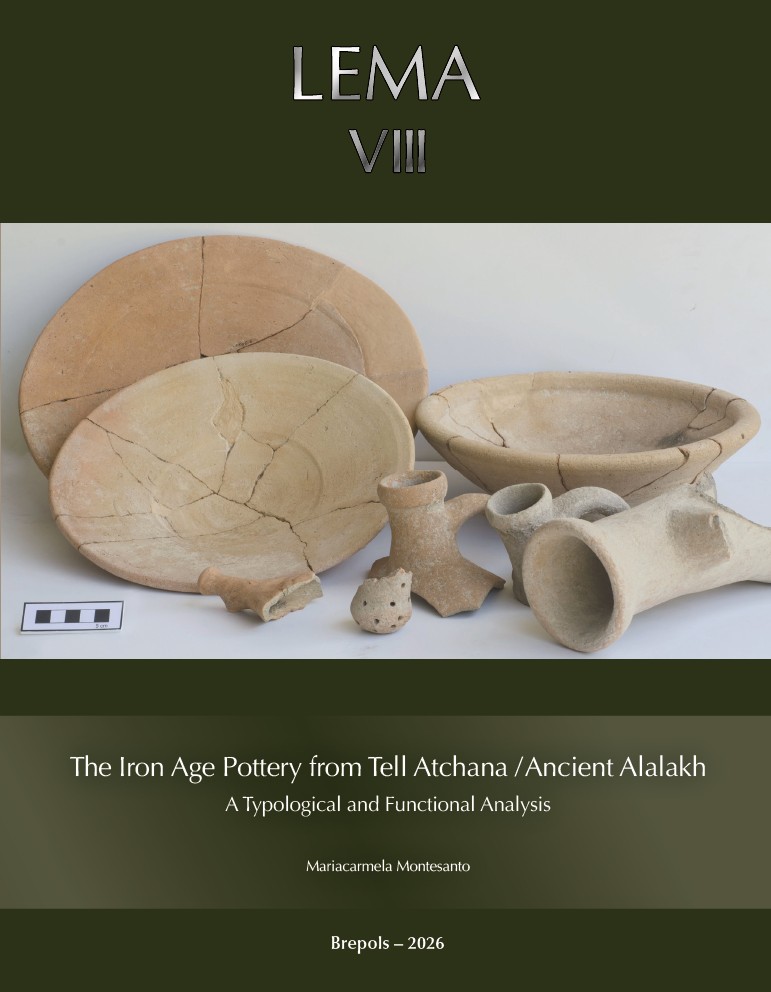 The Iron Age Pottery from Tell Atchana / Ancient Alalakh
A Typological and Functional Analysis
Volume 8

 Writing in the Church of the Nativity in Bethlehem
Inscription and Graffiti in a Multilingual and Multigraphic Perspective
Volume 45
 Contesting Labeled Identities
The Sociology of Gentilics in Biblical and Northwest Semitic Literature


 After Life in Roman Paganism. L’Égypte des astrologues. Les Mages hellénisés
Introductions historiographiques
Volume 7