
Another Tract for the Buryats
including I. J. Schmidt's recentlly identified Kalmuck Originals
by Charles R. Bawden and edited by Hartmut Walravens, preface by Hartmut Walravens

Paperback (Published)
(December 2012)
ISBN: 9783447068314
5.71 x 8.62 inches
Price: $55.00
On back order
The present study focuses on a second tract (probably also 1818) by Schmidt, so far unknown, from the collections of Vilnius University, and includes two of the original versions in Kalmuck which were also tracked down. These tracts allow a closer look at the difficult work of the translator, a glimpse at his workshop, in his efforts to find a congenial rendering for Christian terms. In the light of the results of this study the roles of the translators may have to be reevaluated.
Christian mission among the Mongols and the beginning of Mongolian Studies were closely affiliated. Europe’s first Mongolist, Isaak Jakob Schmidt (1779-1847), rose from the humble position of a clerk at the Moravian Mission settlement at Sarepta (Russia) to a member of the St. Petersburg Academy of Sciences. Author of a Mongolian dictionary, a Mongolian grammar and translator of the Geser epic and the chronicle Erdeni-yin tobci, he was also the translator of the New Testament into Mongolian. So far it was assumed that Schmidt had mainly translated into Kalmuck, and two Mongolian nobles had then continued with the further translation into Eastern Mongol. A few years ago Charles Bawden edited and translated a new document found in the library of the German Oriental Society at Halle, the first Christian tract printed in Mongol in St. Petersburg in 1818. The present study focuses on a second tract (probably also 1818) by Schmidt, so far unknown, from the collections of Vilnius University, and includes two of the original versions in Kalmuck which were also tracked down. These tracts allow a closer look at the difficult work of the translator, a glimpse at his workshop, in his efforts to find a congenial rendering for Christian terms. In the light of the results of this study the roles of the translators may have to be reevaluated. There is also an essay to investigate the creation of Kalmuck and Mongolian fonts and the part that the publisher and printer Grec and the Orientalist printing pioneer Schilling von Canstadt (1786-1837) played in it. Transliteration and reproduction of the (Mongol and Kalmuck) tracts and an annotated translation of the second Tract for the Buryats are given as well.
- By (author) Charles R Bawden
- Preface by Hartmut Walravens
- Edited by Hartmut Walravens
Other Titles in this Series

 Hochsprache und Dialekt im Arabischen
Untersuchungen zur heutigen arabischen Zweisprachigkeit
Volume 41.1
 The morphological-to-analytic causative continuum in Hausa
New insights and analyses in a typological perspective
Volume 109
 Ahmad ibn Yusuf at-Tifasis ‘Buch der koniglichen Steine’
Eine Mineralienkunde fur die arabischen Herrscher des 7./13. Jahrhunderts Eingeleitet, ubersetzt und mit Anmerkungen versehen von Armin Schopen und Karl W. Strauss Mit 38 Abbildungen von Alfred K. Schuster
Volume 92


 The Lexical Field of the Substantives of ‘Word’ in Ancient Hebrew
From the Bible to the Mishnah
Volume 124


 Islamic Art and Architecture in the European Periphery
Crimea, Caucasus, and the Volga-Ural Region
Volume 63


 Arabische Kerzendichtung des 10.-15. Jahrhunderts
Eine Studie zur arabischen ekphrastischen Poesie
Volume 131
 The Rhetorical Fabric of the Traditional Arabic Qasida in Its Formative Stages
A Comparative Study of the Rhetoric in Two Traditional Poems by 'Alqama l-Fahl and Bashshar b. Burd
Volume 98


 Founders of Western Indology
August Wilhelm von Schlegel and Henry Thomas Colebrooke in Correspondence 1820-1837
Volume 84
 Poetae docti. Grammatische Verse in der arabischen Poesie des 9.-14. Jahrhunderts
Eine poetische Grammatik
Volume 135

 Early Ibadi Literature
Abu l-Mundhir Bashir b. Muhammad b. Mahbub. Kitab al-Rasf fi l-Tawhid, Kitab al-Muharaba and Sira. Introduced and edited by Abdulrahman al-Salimi and Wilferd Madelung
Volume 75
 Spirit-Writing Cults in the Chaozhou Region between 1860 and 1949
Local Religion and Translocal Religious Movements
Volume 125
 Schriftliche mandschurische Quellen zur Geschichte und Kultur des Qing-Reiches des 17. und 18. Jahrhunderts
Aus dem Russischen ubersetzt, bearbeitet und herausgegeben von Giovanni Stary und Hartmut Walravens
Volume 100
Similar Books
 ‘For You I Study, For You I Work, For You I Live, For You I Am Ready To Even Give My Life’
Essays in Honour of Francis (Frank) J Moloney, SDB




 Ars Prophetica
Theology in the Poetry of Twentieth-Century Hebrew Poets Avraham Halfi, Shin Shalom, Amir Gilboa, and T. Carmi
 As Messianism Turns to Heresy
The Regenstein Chair Lectures On Lurianic Kabbalah and Shabbatai Tzevi at Hebrew Union College - Cincinnati


 Creating the Woman in Antiquity
Proceedings of the 16th Melammu Workshop, Innsbruck, 2–3 June 2022
Volume 13

 Drunk the Potion, No Whit Charmed
The Doctrine of Pure and Perfect Souls from Iamblichus to Damascius



 Extracanonical Traditions and the Holy Land
Texts, Rituals, and Material Culture in Late Antique Palestine
 Fear, Fear of God, God-Fearers
Philological and Historical Perspectives on the World of Ancient Judaism and Christianity




 Legal Visuality
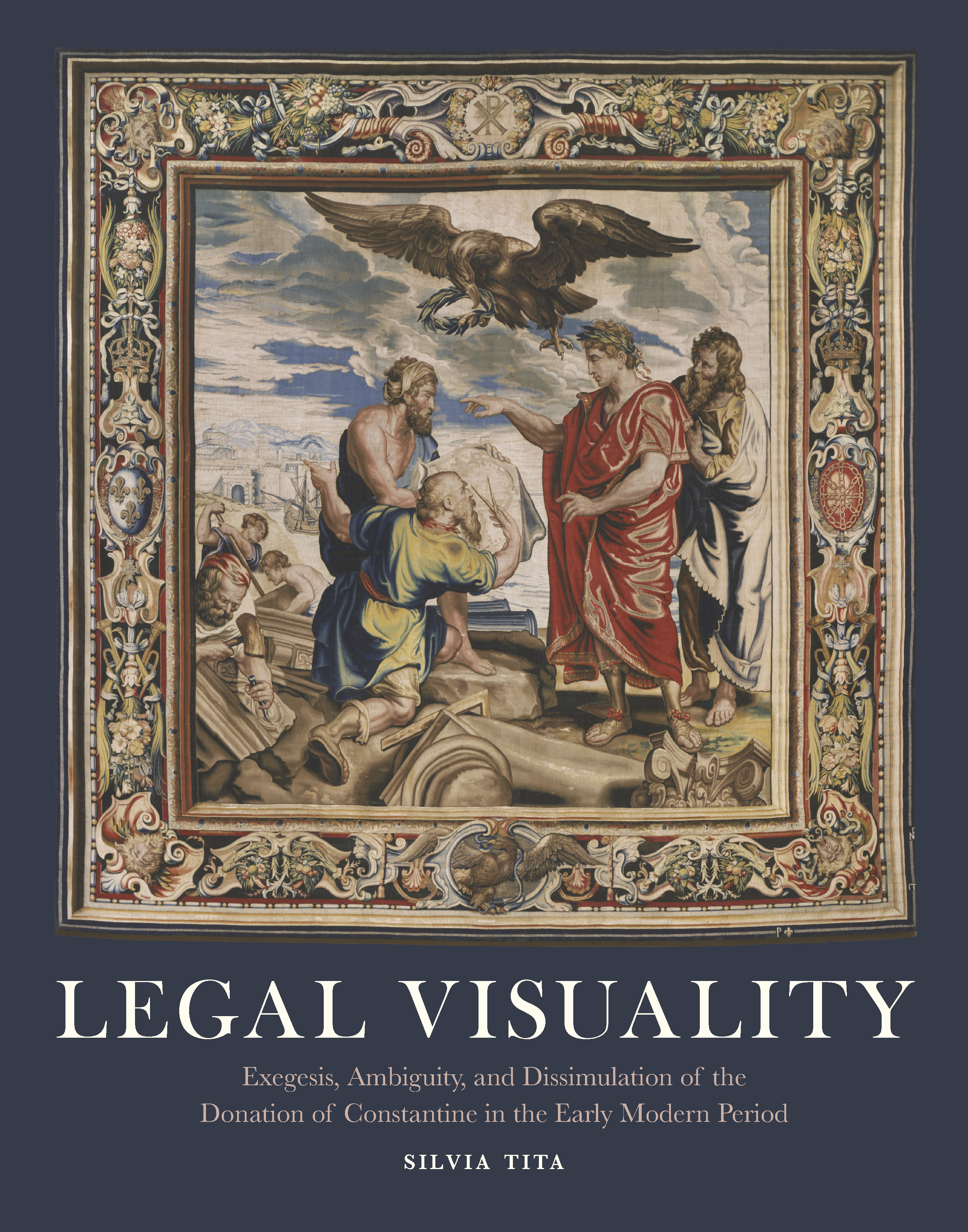
Exegesis, Ambiguity, and Dissimulation of the Donation of Constantine in the Early Modern Period
 Liturgia semper reformanda
Adaptations and accommodations in the liturgy in light of canon 838 of the Code of Canon Law