
Cornelius Rahmn’s Kalmuck Dictionary
edited by Jan-Olof Svantesson, translated by Jan-Olof Svantesson

Paperback (Published)
(March 2012)
ISBN: 9783447066907
6.65 x 9.49 inches
Price: $55.00
In stock
The Kalmucks are a Mongolian people who moved from western Mongolia and northwestern China to Russia in the 1630s and settled in the lower Volga area, to the north and northwest of the Caspian Sea. They have their own script, created in 1648 as a modification of the Old Mongolian script. The Kalmucks are still living in the Kalmuck Republic (Kalmykia) in the Russian Federation, but now use the Cyrillic alphabet. Today most Kalmucks speak only Russian. Cornelius Rahmn (1785-1853), a Swedish clergyman who worked as a missionary among the Kalmucks in 1819-1823, compiled during this time a Kalmuck-Swedish dictionary containing more than 7,000 words and many example sentences. This dictionary was not published by Rahmn, but the manuscript is kept by Uppsala University Library. It is earlier than the first printed Kalmuck dictionary, published in 1852 by the German missionary Heinrich August Zwick. Jan-Olof Svantesson now presents the first printed edition of Rahmn’s dictionary. The Kalmuck words, written in the old Kalmuck script by Rahmn, are here printed in the Latin alphabet, and the words have been arranged in alphabetical order. Rahmn’s Swedish translations of the Kalmuck words are given, and are also provided with English translations.
- Edited by Jan-Olof Svantesson
- Translated by Jan-Olof Svantesson
Other Titles in this Series


 West Old Turkic. Turkic Loanwords in Hungarian, 2 parts
With the assistance of Laszlo Karoly
Volume 84


 From Multilingualism to Monolingualism
Sociolinguistic Profile and Language Planning in the Ottoman Empire and Republic of Turkey (1850-1950)
Volume 122


 Studies in Mongolic Historical Morphology
Verb Formation in the Secret History of the Mongols
Volume 95


 Essays on Turkish Linguistics
Proceedings of the 14th International Conference on Turkish Linguistics, August 6-8, 2008
Volume 79


 Tatarische Terminologie im Wandel
Lexikalische Umbruche durch Kultur- und Sprachkontakt vom ausgehenden Zarenreich bis zum postsowjetischen Russland
Volume 91
Similar Books




 Kulturelles Erbe und gesellschaftliche Identität
Das Akademienprojekt „Corpus Vitrearum Medii Aevi“ im Einsatz für den Kulturgutschutz in der Ukraine
 Linguistic and Media Studies Perspectives on Research into Social and Political Polarisation
The Case of Poland


 Economic Trends in China During the Age of Confucius (1000–250 BC)
The Archaeological Evidence
Volume 10


 Baťas Menschen
Rationalisierung, social engineering und Differenzierung in der tschechoslowakischen Unternehmensstadt Zlín, 1918–1948
Volume 275
 Coburgs südöstliche Netzwerke – Coburg’s Networks in Southeastern Europe
Bulgarien, Rumänien und Ostmitteleuropa im 19. und 20. Jahrhundert. Hrsg. von Franziska Bartl und Frank-Lothar Kroll mit einem Grußwort Seiner Majestät des Königs der Bulgaren Simeon II.
Volume 39


 Erinnerung, Identität und Demokratiekultur
Historische Bildung in Tschechien als Spiegel des Wandels nach 1989
 Im Dialog
Prosa und Theatertexte Elfriede Jelineks in der polnischen Rezeption und Übersetzung
Volume 9
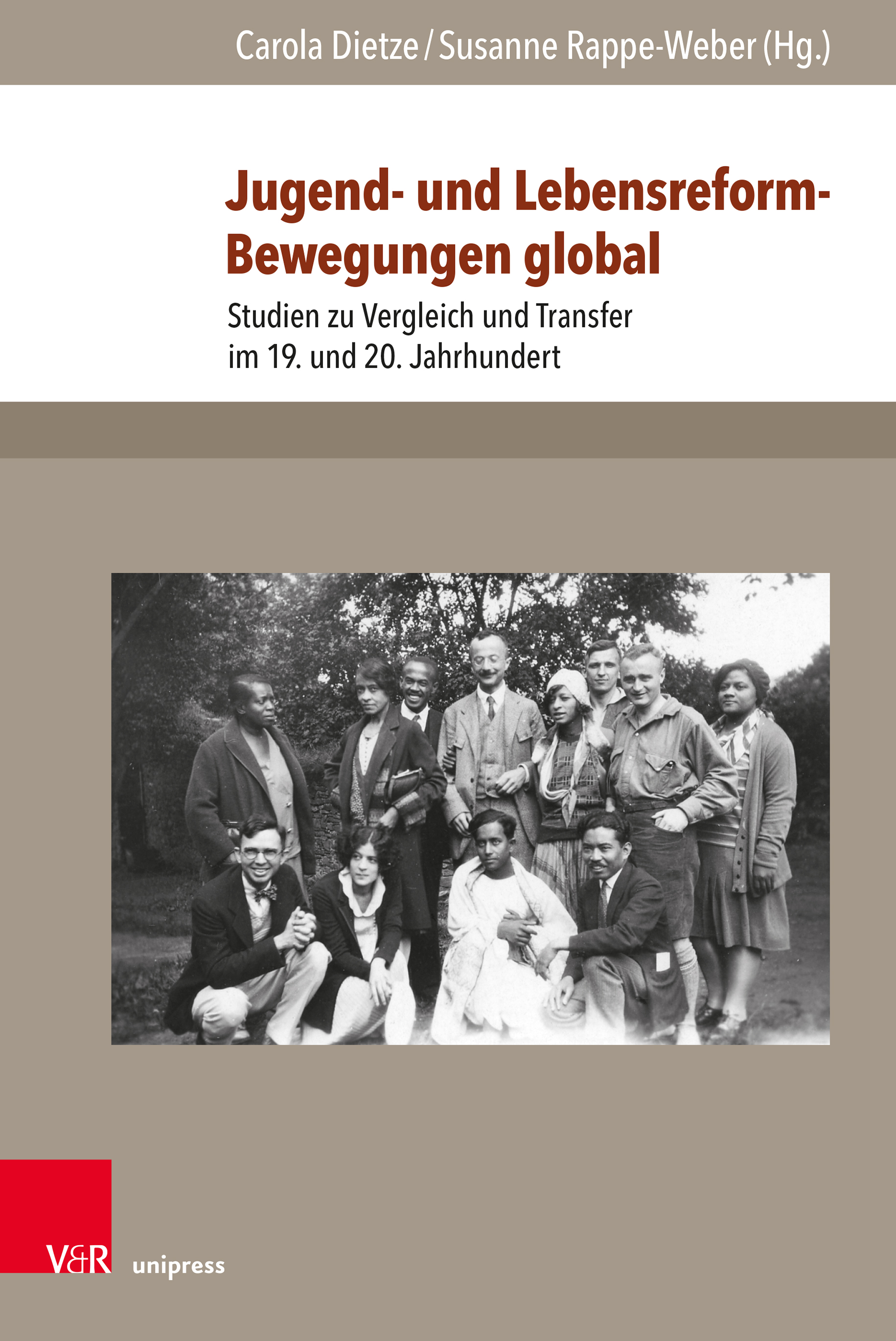 Jugend- und Lebensreform-Bewegungen global
Studien zu Vergleich und Transfer im 19. und 20. Jahrhundert
 Nordost-Archiv 35 (2026)
Vertriebene, (Heimweh-)Touristen und „Neusiedler“ in der DDR, C(S)SR und der Volksrepublik Polen / Expellees, (Homesick) Tourists and “Resettlers” in the Borderlands of the GDR, Czechoslovakia and the People’s Republic of Poland


 Gender in Gandharan Art
Representations and Interactions in the Buddhist Context (1st-4th centuries CE)

 Kings of Cities and Rulers of the Steppes
Representations of Kingship in Pre-Islamic Central Asia
Volume 22
 Liberating the Repressed Self among Contemporary Chinese
A Theoretical Study Involving Tu Weiming and Jürgen Moltmann
Volume 41


