
Liberating the Repressed Self among Contemporary Chinese
A Theoretical Study Involving Tu Weiming and Jürgen Moltmann
By (author) Tsung-I Hwang

Hardback (Published)
(March 2025)
ISBN: 9783506796752
6.1 x 9.25 inches
Price: $134.00
In stock
Blessed are those who are free to open their heart and unveil their hidden true selves. For their relational selfhood is graciously morally-cultivated in the community of grace. The repressed form of self (RFS) that is caused by relational selfhood under repressive social impositions is prevalent in contemporary Ru-influenced Chinese (CRIC) societies. For it is a significant factor causing a variety of emotional, psychological, interpersonal and communicative problems, and even suicide. This study first examines Tu Weiming’s New Ruist relational selfhood and demonstrates that the features of Tu’s account are not significantly different from the features of CRIC relational selfhood. Subsequently, the study examines Jurgen Moltmann’s Christian social trinitarian relational selfhood, featuring an open relational self, embedded within a dynamic diversity in unity as well as a unity in diversity. Hwang argues that Moltmann’s account contains a positive potentiality to liberate the RFS.
Tsung-I Hwang is an independent researcher, a professional in Christian ministry and theological education, a former faculty member at Central Taiwan Theological Seminary, an adjunct PhD supervisor at Middlesex University, a senior associate at Global China Center and the director of T. I. Hwang’s Cross Theology Classroom. Awarded his PhD by Oxford Centre for Mission Studies/Middlesex University in 2018, he has expertise in systemic theology, apologetics, ethics, intercultural and interreligious studies.
- By (author) Tsung-I Hwang
Other Titles in this Series
 Hiobs Begegnung
Islamische und christliche Perspektiven auf Theodizee und Theodizeesensibilität
Volume 39
 Freedom Revisited
A Comparative Theological Approach to the Question of Free Will in Islam
Volume 40


 Is the Quran Supersessionist?
Toward Identifying the Quran’s Theological Framework of Engagement with Earlier Abrahamic Traditions
Volume 38

 Auf den Spuren der Herrlichkeit Gottes
Theologische Ästhetik im christlich-islamischen Gespräch
Volume 33
 Liebe und Leerheit
Eine komparative Verhältnisbestimmung des Liebesbegriffs bei Hans Urs von Balthasar und des Leerheitsbegriffs bei Daisetsu Teitarō Suzuki
Volume 34

 Biblische Gestalten im Jüdischen Religionsunterricht
Bilderbücher und Konzepte zur religiösen Erziehung
Volume 24
Similar Books

 A Companion to Christianity and Sport in Europe and North America (19th-21st centuries)
Volume 1: Western and Eastern Europe
 A Connecting Polemic in the Medieval Mediterranean
The Correspondence of Leo III and ʿUmar II
Volume 6





 Ars Prophetica
Theology in the Poetry of Twentieth-Century Hebrew Poets Avraham Halfi, Shin Shalom, Amir Gilboa, and T. Carmi
 As Messianism Turns to Heresy
The Regenstein Chair Lectures On Lurianic Kabbalah and Shabbatai Tzevi at Hebrew Union College - Cincinnati


 Creating the Woman in Antiquity
Proceedings of the 16th Melammu Workshop, Innsbruck, 2–3 June 2022
Volume 13
 Cultic Kisses
Fruitful Encounters Between Deities and Humans. Festschrift for Angelika Berlejung on the Occasion of Her 65th Birthday
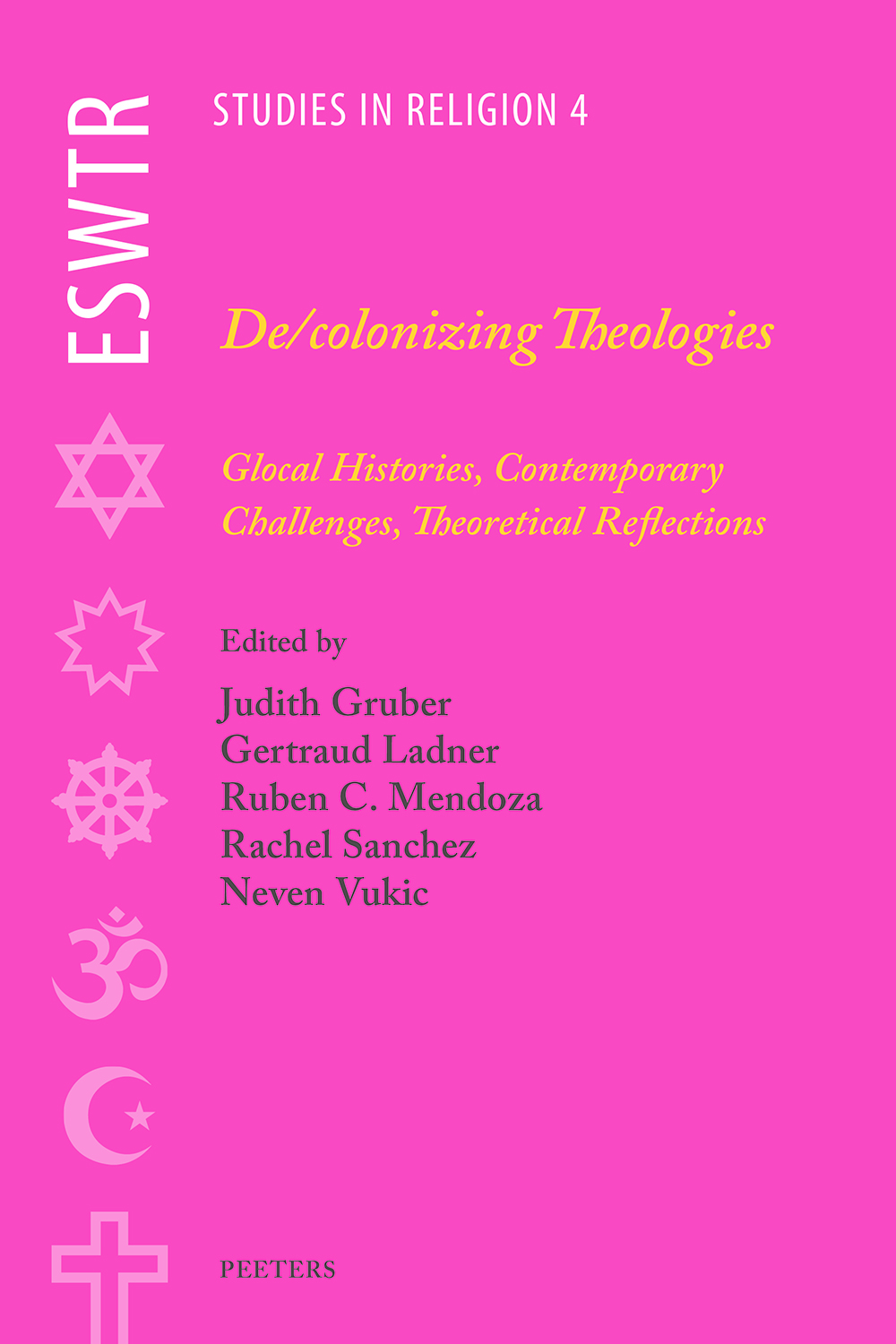 De/colonizing Theologies
Glocal Histories, Contemporary Challenges, Theoretical Reflections
Volume 4

 Drunk the Potion, No Whit Charmed
The Doctrine of Pure and Perfect Souls from Iamblichus to Damascius



 Éthique, politique, religions
Superstition (XVIIe - XXIe siècles). Sémantique, histoires et cultures