
Indo-Aryans in the Bronze Age
By (author) Stanislav Grigoriev

Hardback (Published)
(December 2025)
ISBN: 9781805830665
8.31 x 11.69 inches
Price: $84.00
In stock
The book explores Indo-Aryan origins, arguing their homeland was in NW Iran. Using linguistic, genetic, and archaeological data, it traces migrations from Iran to Central Asia, India, and beyond during the 3rd millennium BC, shaping Indo-Aryan dialects and cultures.
Indo-Aryans in the Bronze Age is devoted to the origins and early history of the Indo-Aryans. According to the generally accepted theory, they originated in the Eurasian steppe, from where they then migrated to the Indian subcontinent and the Iranian plateau. However, there is no real evidence that indicates these processes. The author has collected linguistic, palaeogenetic and archaeological data to reconstruct the processes that occurred in the Eneolithic and Bronze Age over large areas of Eurasia, demonstrating that the ancestral homeland of the Indo-Iranians was in Northwestern Iran. From there some migrated to Southeastern Iran, which led to the emergence of Indo-Aryan dialects around the beginning of the 3rd millennium BC. From the middle of the 3rd millennium BC, the migration of Indo-Aryan tribes to the north-east of Iran and Central Asia began, which later ended with migration to India, as well as to the Near East, Eastern Europe, the Southern Urals and, occasionally, to Southern Siberia.
List of Figures and Tables
Introduction
The Problem of the Indo-Aryan Homeland
Methodological problems of homeland reconstruction
Steppe hypothesis
Chapter 1. Linguistic foundations of the Indo-Aryan problem
Indo-Aryan languages
Indo-Aryan homeland
Aryans in South Asia and autochthonous tribes
Indo-Aryan linguistic relations in Northern Eurasia
Mitannian Aryan
Summarizing linguistic data on the Indo-Aryan homeland
Chapter 2. Palaeogenetics and the Indo-Aryan problem
Palaeogenetics of the Near East
Palaeogenetics of Northern Eurasia
Palaeogenetics of the Karasuk culture and the Early Iron Age in steppe Eurasia
Palaeogenetics of South Asia
Chapter 3. Archaeology and the Indo-Aryan problem
Archaeology of South Asia
Catacomb cultures of Eastern Iran and southern Central Asia
Catacombs in Northern Eurasia
Indo-Aryans in the Levant
Mitanni and chariots in the Near East
Post-Catacomb period in Eastern Europe
Formation and development of LBA cultures in Northern Eurasia
Northern Eurasia in the Late Bronze Age
Northern Eurasia in the Final Bronze Age
Chapter 4. Conclusion
Some methodological reflections on the Indo-European problem
General scheme of Indo-Aryan migrations in the 3rd–2nd millennia BC
Bibliography
,
List of Figures and Tables
Introduction
The Problem of the Indo-Aryan Homeland
Methodological problems of homeland reconstruction
Steppe hypothesis
Chapter 1. Linguistic foundations of the Indo-Aryan problem
Indo-Aryan languages
Indo-Aryan homeland
Aryans in South Asia and autochthonous tribes
Indo-Aryan linguistic relations in Northern Eurasia
Mitannian Aryan
Summarizing linguistic data on the Indo-Aryan homeland
Chapter 2. Palaeogenetics and the Indo-Aryan problem
Palaeogenetics of the Near East
Palaeogenetics of Northern Eurasia
Palaeogenetics of the Karasuk culture and the Early Iron Age in steppe Eurasia
Palaeogenetics of South Asia
Chapter 3. Archaeology and the Indo-Aryan problem
Archaeology of South Asia
Catacomb cultures of Eastern Iran and southern Central Asia
Catacombs in Northern Eurasia
Indo-Aryans in the Levant
Mitanni and chariots in the Near East
Post-Catacomb period in Eastern Europe
Formation and development of LBA cultures in Northern Eurasia
Northern Eurasia in the Late Bronze Age
Northern Eurasia in the Final Bronze Age
Chapter 4. Conclusion
Some methodological reflections on the Indo-European problem
General scheme of Indo-Aryan migrations in the 3rd–2nd millennia BC
Bibliography
- By (author) Stanislav Grigoriev
Similar Books





 Archaeological Excavations at Irmis Rka: An Investigation of a Multi-Layered Settlement in Southwest Georgia
Results from the 2020 Season: Early Bronze Age to Medieval Occupations


 Catuvellaunia and Rome: Economic and Political Relations during the Final Decades Pre-conquest
The Role of Grain from Southeastern Britain and Its Potential for Maintenance of the Roman Military along the Frontier on the Rhine
 Colour Concept “Secoli bui” a colori
Codici cromatici e architetture dipinte nell’età tardoantica e medievale
 Connecting the Dots: Counting, Writing, and the Beginnings of Civilization
The Secret Lives of Clay Tokens: A Memoir


 Crossing Disciplines in the Study of Archaeology and Prehistoric Art: Insights from the Sahara and Mediterranean Africa
Proceedings of the XX UISPP World Congress (5–9 September 2023, Timișoara, Romania) Volume / Session 18
 Cuneiform Artefacts from Archaeological Contexts: New Research on Ancient Iraq
Proceedings of a Conference Held at the Bavarian Academy of Sciences and Humanities, July 4–5, 2024
Volume 2
 Curating the Prehistoric Past
Studies on West Asian Archaeology and Beyond in Honour of Yoshihiro Nishiaki

 ENTANGLED AFRICA
Intra-African Relations Between Rain Forest and Mediterranean from Around 4,000 BCE to 1,500 CE




 Exploring Gender Dynamics across the Ancient Near East
Collected Essays of Gender and Methodology in the Ancient Near East (GeMANE) 4 and 5
Volume 7
 Exploring Prehistoric Pottery in Japan
A Study of Organic Inclusions, Adhering Materials, and Impressions of Woven Items


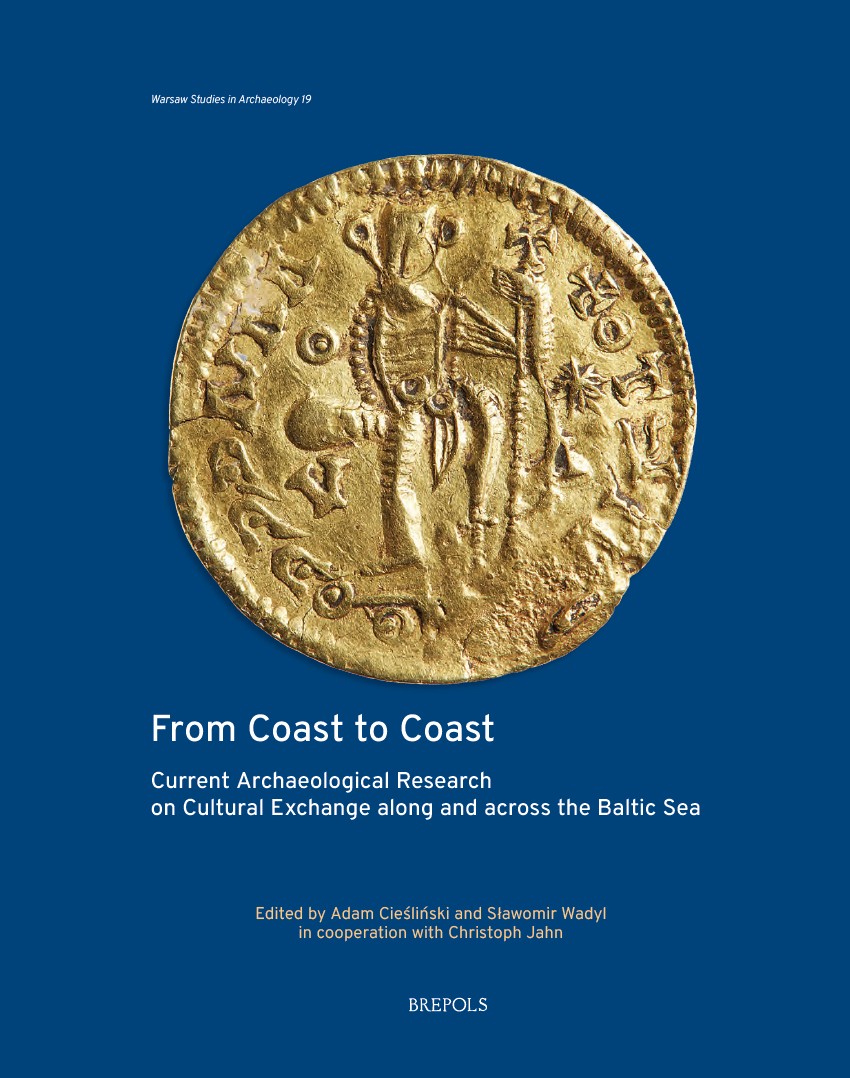 From Coast to Coast
Current Archaeological Research on Cultural Exchange along and across the Baltic Sea
Volume 19
 Frontiers of the Roman Empire: The Frontier of the Roman Province of Raetia
Grenzen des Römischen Reiches: Die Grenze der Römischen Provinz Raetien

 Gold, Silver and Glass: Power Networks, Cultural Identities, Technology Transfers and Agency across the Old World (7th Century BC – 1st Century AD)
Proceedings of a Conference Held at the British Museum, 16–18 June 2023