
The Paradigm Shift towards Energy Sustainability
Climate Change, Innovation and the Optimal Instrument Mix
edited by Michael Rodi
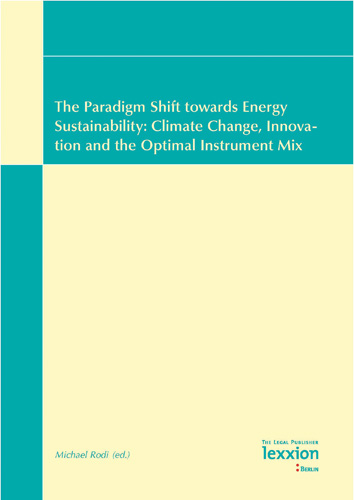
Since 2004, the Summer Academy ‘Energy and the Environment’ has brought together practitioners and policy makers from countries worldwide to engage in an interdisci-plinary discussion on practical solutions to problems of energy law. The fifth annual Summer Academy focuses on ‘The Paradigm Shift towards Energy Sustainability’. As is evi-dent through the sheer scope of the articles presented and reprinted in this volume, discussion at the 2008 Summer Academy was rich and varied in ideas and interpretations. One thing emerged especially clearly: policy priorities must be designed to encompass a multidisciplinary approach to energy sustainability. Not only must renewable energy solutions be promoted but incentives must also be increased for greater fossil fuel energy efficiency and energy conservation. Experiences from both developed and developing countries are provided to illustrate needed sustainable energy solutions at the local level to address the global climate crisis.
Since 2004, the Summer Academy ‘Energy and the Environment’ has brought together practitioners and policy makers from countries worldwide to engage in an interdisci-plinary discussion on practical solutions to problems of energy law. The fifth annual Summer Academy focuses on ‘The Paradigm Shift towards Energy Sustainability’. As is evi-dent through the sheer scope of the articles presented and reprinted in this volume, discussion at the 2008 Summer Academy was rich and varied in ideas and interpretations. One thing emerged especially clearly: policy priorities must be designed to encompass a multidisciplinary approach to energy sustainability. Not only must renewable energy solutions be promoted but incentives must also be increased for greater fossil fuel energy efficiency and energy conservation. Experiences from both developed and developing countries are provided to illustrate needed sustainable energy solutions at the local level to address the global climate crisis.
- Edited by Michael Rodi
Similar Books
 East Meets West: Justice, Law, and Politics
The 13th Kobe Lecture and the 2nd IVR Japan International Conference, Chiba, September 2023
 False Friends in Comparative Law
Advantages and Risks of Legal Transplants in Civil Law – the Polish-German Perspective

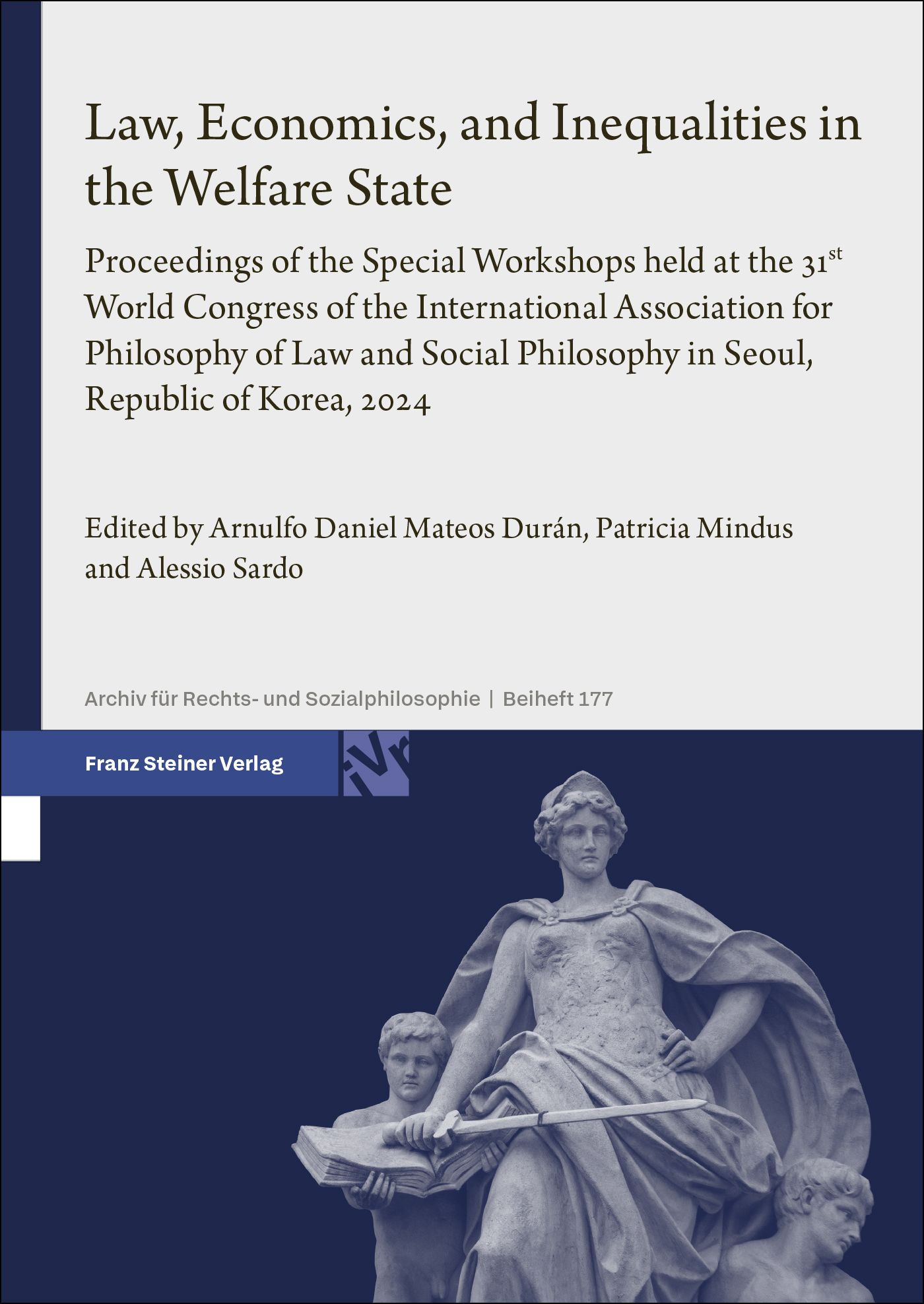 Law, Economics, and Inequalities in the Welfare State
Proceedings of the Special Workshops held at the 31st World Congress of the International Association for Philosophy of Law and Social Philosophy in Seoul, Republic of Korea, 2024
 Legal Pluralism and the Tajik Experience of Xinjiang
Between Custom and the Chinese State: An Ethnographic Perspective
 Liturgia semper reformanda
Adaptations and accommodations in the liturgy in light of canon 838 of the Code of Canon Law


 The EPPO/OLAF Compendium of National Procedures: Estonia
Desktop codes on the procedural law of the Member States with annotations by national experts
 The EPPO/OLAF Compendium of National Procedures: Greece
Desktop codes on the procedural law of the Member States with annotations by national experts
 The EPPO/OLAF Compendium of National Procedures: Italy
Desktop codes on the procedural law of the Member States with annotations by national experts
 The Right to Regulate of Developing Countries in International Investment Law
A Contextual Approach to International Investment Agreements
Volume 11

 (Bloß) symbolische Rechtsetzung
Eine interdisziplinäre Untersuchung der deutschen Glücksspielregulierung auf ihre funktionelle und symbolische Wirkung
 Active Space Debris Removal
Rechte und Pflichten der Staaten im Kontext der aktiven Weltraumabfallbeseitigung
Volume 268

 Annäherungen an das japanische Recht
Festschrift für Heinrich Menkhaus zum 70. Geburtstag
Volume 245
 Ausforschung und Rechtsdurchsetzung im Unionsprivatrecht
Herleitung und Ausgestaltung eines allgemeinen unionsrechtlichen Informationsrechts






 Credit Default Swap-Aktivismus
Eine ökonomische Analyse und rechtliche Bewertung der Einflussnahme von Credit Default Swap-Investoren auf Unternehmen


 Das rechtliche Erbe Österreichs im polnischen Verwaltungsverfahren
Zum 100-jährigen Jubiläum des Allgemeinen Verwaltungsverfahrensgesetzes (AVG 1925–2025)
 Das Rheinische Recht
Neue Perspektiven auf die Geschichte des französischen Rechts an Rhein und Mosel, ca. 1750 bis 1900
 Das Rückschrittsverbot als Instrument Europäischen Werteschutzes
Schutz unionaler Werte im Spannungsfeld nationalstaatlichen Pluralismus
 Das Spannungsverhältnis von Freiwilligkeit und Zwang
Eine grenzüberschreitende Untersuchung obligatorischer Schiedsverfahren
Volume 248

 Der Einsatz Künstlicher Intelligenz beim Erlass polizeilicher Platzverweisungen
Zulässigkeit eines Ermessensverwaltungsaktes durch Künstliche Intelligenz im Lichte des allgemeinen Verwaltungsrechts und des Grundgesetzes am Beispiel der polizeilichen Platzverweisung
Volume 37
 Der gewöhnliche Aufenthalt des Erblassers
Grundlagen und Grenzen der Aufenthaltsanknüpfung in der Europäischen Erbrechtsverordnung
Volume 249
 Der politische Streik im deutschen Arbeitskampfrecht
Dogmatische Entwicklungslinien von 1869 bis in die 1980er Jahre
Volume 393


