
The morphological-to-analytic causative continuum in Hausa
New insights and analyses in a typological perspective
by Philipp J. Jaggar

Over the last few decades, linguists have devoted considerable attention to both homogeneity and variation in the expression of causal events across languages. However, most studies, whether typological or language-specific, have focused on the category of morphologically overt (e.g., ‘lie/lay X down’) causatives, rather neglecting complex periphrastic (e.g., ‘get X to lie down’) formations. The present study addresses this imbalance by elucidating a wide spectrum of causative expressions in Hausa (Chadic/Afroasiatic), supported by a strong cross-linguistic perspective. It systematically explores, for the first time in an African language, the key design features that distinguish the two mechanisms. Also, it demonstrates that Hausa periphrastic causatives can also differ from each other, e.g., in implicational strength, depending on the modal (TAM) properties of the lower clause. In line with contemporary approaches located within a general typology of causation, the analysis invokes the widely accepted dichotomy between direct and indirect causative constructions. Direct causation associates with morphological causatives, indirect causation with periphrastic expressions – compare morphological ‘I lay X down’ (direct, with no intermediary) with periphrastic ‘I got X to lie down’ (indirect, where X also functions as an intervening actor/cause). Thus, this study provides a rare account of how the two types are used to describe pragmatically different causal events and participant roles.
Over the last few decades, linguists have devoted considerable attention to both homogeneity and variation in the expression of causal events across languages. However, most studies, whether typological or language-specific, have focused on the category of morphologically overt (e.g., ‘lie/lay X down’) causatives, rather neglecting complex periphrastic (e.g., ‘get X to lie down’) formations. The present study addresses this imbalance by elucidating a wide spectrum of causative expressions in Hausa (Chadic/Afroasiatic), supported by a strong cross-linguistic perspective. It systematically explores, for the first time in an African language, the key design features that distinguish the two mechanisms. Also, it demonstrates that Hausa periphrastic causatives can also differ from each other, e.g., in implicational strength, depending on the modal (TAM) properties of the lower clause. In line with contemporary approaches located within a general typology of causation, the analysis invokes the widely accepted dichotomy between direct and indirect causative constructions. Direct causation associates with morphological causatives, indirect causation with periphrastic expressions – compare morphological ‘I lay X down’ (direct, with no intermediary) with periphrastic ‘I got X to lie down’ (indirect, where X also functions as an intervening actor/cause). Thus, this study provides a rare account of how the two types are used to describe pragmatically different causal events and participant roles.
- By (author) Philip J Jaggar
Other Titles in this Series


 The Morpho-Syntactic and Lexical Encoding of Tense and Aspect in Semitic
Proceedings of the Erlangen Workshop on April 26, 2014
Volume 104


 Kaiserliches Theater – Theater ohne Kaiser?
Die Grundung der Han-Dynastie in zaju-Stucken der Ming-Dynastie
Volume 89

 Strategies of Clause Linking in Semitic Languages
Proceedings of the International Symposium on Clause Linking in Semitic Languages, Kivik, Sweden, 5-7 August 2012
Volume 93

 The Way and Its Powers
An Ethnographic Account of Taoist Practice and Religious Authority in Northern Taiwan
Volume 119
 The Uppsala Manuscript of Muhammed Heva’i Uskufi Bosnevi’s Makbul-i ‘arif (1631) from a Turcological Perspective
Transliteration, Transcription, and an English Translation
Volume 105


 Die Schlangensprüche als älteste semitische Textbelege?
Analyse und kritische Betrachtung von Richard C. Steiners „Early Northwest Semitic Serpent Spells in the Pyramid Texts“
Volume 140
 The Beginning of the Subtle School of Taoism
An Official Perception of Taoism in the Early T'ang Period
Volume 94
 Another Tract for the Buryats
including I. J. Schmidt's recentlly identified Kalmuck Originals
Volume 82


 Yuan Hongdao – Eine Geschichte der Vasen
Ein Beitrag zur Literatur der Kennerschaft der spaten Ming-Zeit
Volume 108

 Studien zu ‘sabab’ in der arabischen Kunstprosa des 10.-15. Jahrhunderts
Ein Beitrag zur arabischen Lexik, Phraseologie und Stilgeschichte
Volume 126
 Fujian – Penghu – Taiwan
Fruhe Kontakte, nach Texten zusammengefasst (ca. 200-1450 n.Chr.)
Volume 95

 Bible Translations – Linguistic and Cultural Issues
Proceedings of the Erlangen Workshop on October 5 and 6, 2018
Volume 122

 Verbal Festivity in Arabic and Other Semitic Languages
Proceedings of the Workshop at the Universitatsclub Bonn on January 16, 2009
Volume 72
 Daoist perspectives on knowing the future
Selections from the Scripture on Great Peace (Taiping jing)
Volume 110
 Ahmad ibn Yusuf at-Tifasis ‘Buch der koniglichen Steine’
Eine Mineralienkunde fur die arabischen Herrscher des 7./13. Jahrhunderts Eingeleitet, ubersetzt und mit Anmerkungen versehen von Armin Schopen und Karl W. Strauss Mit 38 Abbildungen von Alfred K. Schuster
Volume 92
Similar Books


 Des mots aux actes
Traduction épistémique et littéraire. Nouvelles tendances en histoire et didactique
Volume 15


 Music and Colonialism in Fascist Italy
Identity, Propaganda, and Ethnographic Representation
Volume 13

 Punning in Odd or Elegant Constructions in Jeremiah
The Convergence of Linguistics, Rhetoric, and Textuality in the Hebrew Text of Jeremiah


 Writing of Women as Cultural Resistance
Deconstructing Memory Legacies in the Afro-Luso-Brazilian Atlantic


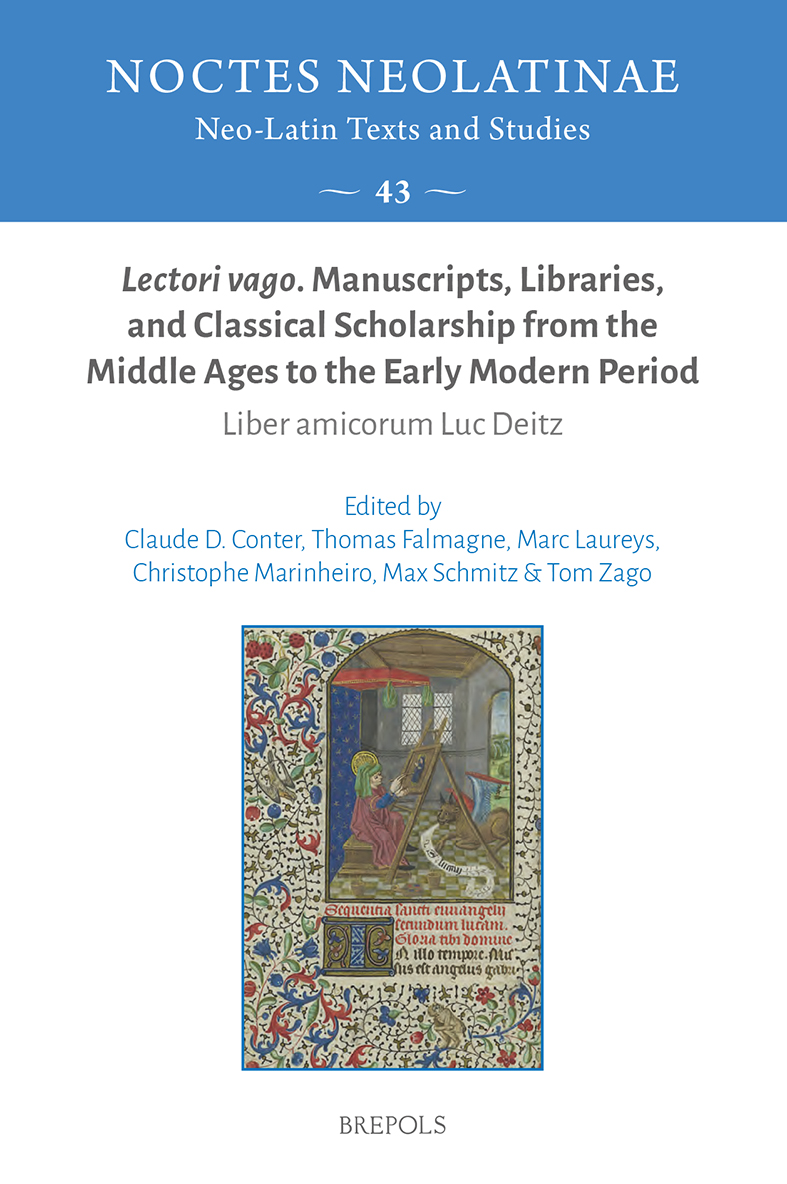 Lectori vago. Manuscripts, Libraries, and Classical Scholarship from the Middle Ages to the Early Modern Period
Liber amicorum Luc Deitz
Volume 43



 Ein Schatzhaus indischer Erzählkunst –– Die Erzählliteratur der Jainas
Band 2: Ein „Lesebuch“ originalsprachlicher Texte zur jainistischen „Universalgeschichte“ samt eines Jaina-Māhārāṣṭrī-Wörterbuchs zu allen Text- und Lesestücken.

