
Roman Imperial Artillery
Outranging the Enemies of the Empire
By (author) Alan Wilkins

Paperback (Published)
(May 2024)
ISBN: 9781803277837
6.85 x 9.65 inches
Price: $49.99
In stock
Fully revised and expanded for a new Third Edition, this book traces the Greek origins of torsion catapults, describes the machines used from the time of Sulla and Caesar, the Roman improvements in their design and power, and their importance in the defence of the Roman Empire.
Greek and Roman torsion catapults were the most powerful missile projectors in the western world from their invention in the 4th century BC to the 11th century AD. Powered by the energy stored in tensioned and twisted rope springs, they outranged archers, slingers and all other missile launchers. After tracing their Greek origins, Roman Imperial Artillery describes the machines used from the time of Sulla and Caesar, the Roman improvements in their design and power, and their importance in the defence of the Roman Empire. Full-size reconstructions, made in collaboration with engineers Len Morgan and Tom Feeley, are based firmly on the author’s revised editions of the texts of the Greek and Roman engineers, the latest archaeological finds and the evidence of relief sculptures. This revised edition analyses remarkable new finds from the Rhine frontier in the Netherlands and elsewhere. The 1999 find of a catapult frame in Germany allows an accurate reconstruction of the standard early Imperial bolt-shooter, as used in the AD 43 invasion of Britain by Vespasian against hillforts at Maiden Castle and Hod Hill. The siege-camps at Burnswark Hill, Dumfriesshire are investigated. Range and accuracy are examined, and technical tests demonstrate the strike power of these formidable and long-lived weapons.
Acknowledgements
Preface
Glossary
Weights and measures
Introduction
Greek origins
The menace of the new weapon
The bolt-shooter: accuracy, range and effects
Reconstructing the Roman bolt-shooter
The new design: the metal frame arch strut cheiroballistra/manuballista
Deciphering the manuscripts: Vitruvius’ ballista
The stone missiles: range and effects
Masada AD 73-74
Qasr Ibrim: artillery in defence. Inscribed stone shot
Artillery in action in the field: Arrian’s battle plan
Burnswark Roman camps and native hillfort, Dumfriesshire
The last stone-throwers
The Hatra stone-thrower and the inward-swinging arms theory
Survival
The Roman achievement
Future search and research
The Roman origin of the mediaeval revolving-nut crossbow release
Review of 2021 TV film on Burnswark Hill, ‘Massacre on Hadrian’s Wall’
Sources and references to artillery
- By (author) Alan Wilkins
"Alan Wilkins is the internatonal authority on Roman artillery. The successful expansion of the Roman state was due to the prowess of its army. Its deployment of artillery was hugely important in battles and in sieges. In this, the third, expanded edition of his important account of Roman artillery Alan Wilkins brings together evidence from the whole of the empire to offer a detailed description of these weapons and their use. A particular feature is his analysis of their use at Burnswark Hill in south-west Scotland." Professor David J. Breeze "What comes through consistently is the author's personal commitment, his distinctive contribution to the development of the subject, his mastery of all the technical details, and his undimmed enthusiasm." Professor Lawrence Keppie (2019), Scottish Archaeology Journal
—
‘Wilkins fulfills his goal in serving as a staple reference for the student, scholar, or reenactor, and its accessibility will hopefully enable broader engagement with the study of artillery and battlefields among all disciplines in the fields of Classics and Ancient History.’ – Evan Schultheis (2026): Rhea Classical Reviews
—
Other Titles in this Series
 Roman Military Tribunes (First Century BC to Third Century AD): A Historical and Prosopographical Study. Volume I
Prosopographical Catalogue, Part 1: Roman Military Tribunes (tribuni militum in exercitu) and in the Garrison of the Roman Capital (tribuni militum in praetorio)
 The Urbanisation of the North-Western Provinces of the Roman Empire
A Juridical and Functional Approach to Town Life in Roman Gaul, Germania Inferior and Britain


 Investigations into the Dyeing Industry in Pompeii
Experimental Archaeology and Computer Simulation Techniques


 Late Roman Dorset Black-Burnished Ware (BB1)
A Corpus of Forms and Their Distribution in Southern Britain, on the Continent and in the Channel Islands


 Ländliche Siedlungsstrukturen im römischen Spanien
Das Becken von Vera und das Camp de Tarragona –zwei Mikroregionen im Vergleich

 Life, Death and Rubbish Disposal in Roman Norton, North Yorkshire
Excavations at Brooklyn House 2015-16


Similar Books

 Caesar’s Visions and Impact on the Roman Empire
Revisiting the Archaeological and Historical Record of the 40s BC
Volume 2


 Etruscan and Roman Hellenistic Anatomical ex votos
Reassessing Popular Religious Expressions in Central Italy
Volume 8


 Invisible Labour in Antiquity
Visualizing Obscure Work in the Ancient Mediterannean and West Asia
Volume 1
 Late Antique villae in the Balkans (3rd–7th c. AD): Current Research Questions and Perspectives
HAEMUS Companion to the Late Antique Balkans 1
Volume 4


 Portraying the Individual in the Roman East
Local–Imperial Entanglements in Sculpture, Mosaics, and Paintings (First–Fourth Centuries AD)
Volume 18
 Small Worlds and Relational Agencies: Local Societies in Early Medieval Iberia
Pequeños mundos y Agencias relacionales: Sociedades locales altomedievales en la Península Ibérica

 The Iron Age Pottery from Tell Atchana / Ancient Alalakh
A Typological and Functional Analysis
Volume 8
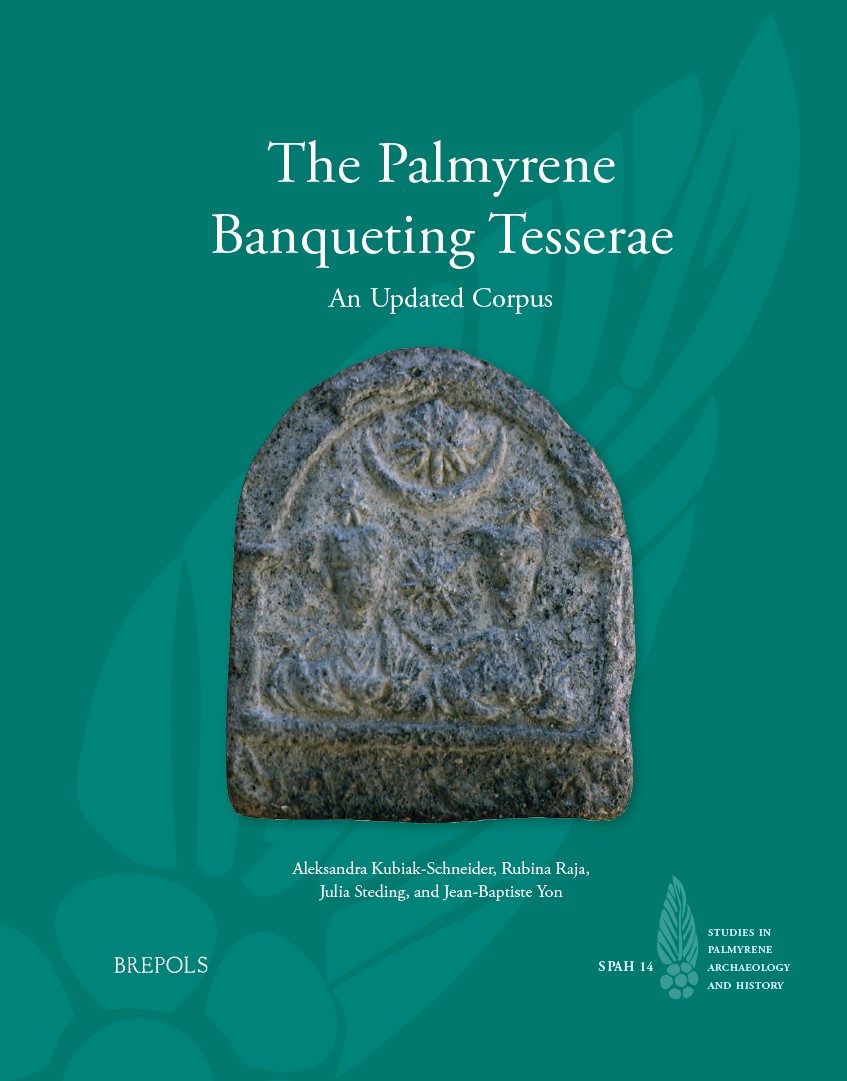

 Writing in the Church of the Nativity in Bethlehem
Inscription and Graffiti in a Multilingual and Multigraphic Perspective
Volume 45



 Atlante tematico di topografia antica 36-2026
Urbanistica e monumenti, porti, Roma. Ricerche sui monti Aurunci
Volume 36
 Cerámica común romana y ciclo haliéutico
Análisis de los contextos de las cetariae de Iulia Traducta

 Nuove scoperte e progressi nelle metodologie di rilievo e analisi dell’arte rupestre post-paleolitica in Italia
New discoveries and progress in the tracing and analysis methodologies of the post-Paleolithic rock art in Italy


 A Dramatic Event in Late Roman Florence
The Anomalous Burial Site Discovered beneath the Uffizi Gallery

 Alexander the Great and the Campaign of Gaugamela
New Research on Topography and Chronology. IAMNI 1 (Italian Archaeological Mission to Northern Iraq)
Volume 53


 Approaching Ancient Greek Coastal and Inland Poleis in the Northern Peloponnese
New Research in the Microregions of Aigeira, Lousoi and Sikyon
Volume 4