Blue/Green Glass Bottles from Roman Britain
Square and Other Prismatic Forms
By (author) H.E.M. Cool

Paperback (Published)
(April 2024)
ISBN: 9781803277431
7.99 x 10.87 inches
Price: $70.00
In stock
Square bottles came into use in the AD 60s and rapidly became the commonest glass vessel form in the empire. For the next two centuries their fragments dominate all glass assemblages. This book presents a classification scheme for the moulded base patterns which allows their chronological development to be reconstructed.
Square bottles came into use in the AD 60s and rapidly became the commonest glass vessel form in the empire. For the next two centuries their fragments dominate all glass assemblages. Hitherto this material has not been exploited to any great extent because there has been no close chronological framework. Blue/Green Glass Bottles from Roman Britain presents a classification scheme for the moulded base patterns which allows their chronological development to be reconstructed. With this it is possible to explore how sizes and capacities changed with time. The British data are set within the context of the bottles from the rest of the western empire, and it can be seen that different provinces favoured different base patterns in a systematic fashion. Previously it has been assumed that base patterns reflect long distance trade of the bottles and their contents. Now it can be seen that the main driving force for the distribution of bottles with similar distinctive base patterns was most probably the movements of military units, and that most bottles were made locally. An investigation of common capacities indicates that these were shared with glass bath flasks and it is proposed that, just as bath flasks were oil containers for hygiene purposes, square bottles became so common because they were the favoured vessel for household oil. The chronological trajectories of square bottles, bath flasks and the Spanish olive oil industry evidenced by Dressel 20 amphoras are identical, but previously unremarked upon.
Acknowledgements Preface Section 1 Chapter 1: Introduction Chapter 2: The Data Section 2 Chapter 3: Family 1: Square bottle bases with concentric circles Chapter 4: Family 2: Square bottle bases framed by circular mouldings Chapter 5: Family 3: Square bottle bases framed by square mouldings Chapter 6: Family 4: Square bottle bases framed by angle mouldings Chapter 7: Families 5-7: square bottle bases without frames Chapter 8: Hexagonal bottles Chapter 9: Rectangular and octagonal bottles Section 3 Chapter 10: Chronological patterns Chapter 11: Distributions: Geographical and social Chapter 12: The uses they served Chapter 13: Summing up Appendix 1: Base moulds Appendix 2: Mould parallels Appendix 3: Bath flask capacity data Appendix 4: Guide to the Digital files Bibliography Index,
Acknowledgements
Preface
Section 1
Chapter 1: Introduction
Chapter 2: The Data
Section 2
Chapter 3: Family 1: Square bottle bases with concentric circles
Chapter 4: Family 2: Square bottle bases framed by circular mouldings
Chapter 5: Family 3: Square bottle bases framed by square mouldings
Chapter 6: Family 4: Square bottle bases framed by angle mouldings
Chapter 7: Families 5-7: square bottle bases without frames
Chapter 8: Hexagonal bottles
Chapter 9: Rectangular and octagonal bottles
Section 3
Chapter 10: Chronological patterns
Chapter 11: Distributions: Geographical and social
Chapter 12: The uses they served
Chapter 13: Summing up
Appendix 1: Base moulds
Appendix 2: Mould parallels
Appendix 3: Bath flask capacity data
Appendix 4: Guide to the Digital files
Bibliography
Index
- By (author) H.E.M. Cool
‘Square bottles came into use in the AD 60s and rapidly became the commonest glass vessel form in the empire. For the next two centuries their fragments dominate all glass assemblages. Hitherto this material has not been exploited to any great extent because there has been no close chronological framework. This book presents a classification scheme for the moulded base patterns which allows their chronological development to be reconstructed. With this it is possible to explore how sizes and capacities changed with time.’ – Epistula XXVII (2024)
—
Other Titles in this Series

 Un insediamento di età romana dimenticato nel tempo
Rinvenimenti e ricerche archeologiche a Tezze di Arzignano e nella vallata dell'Agno-Guà (Vicenza)

 Immagini del tempo degli dei, immagini del tempo degli uomini
Un’analisi delle iconografie dei mesi nei calendari figurati romani e bizantini e del loro contest storico-culturale


 Villas, Sanctuaries and Settlement in the Romano-British Countryside
New Perspectives and Controversies


 Roman and Late Antique Wine Production in the Eastern Mediterranean
A Comparative Archaeological Study at Antiochia ad Cragum (Turkey) and Delos (Greece)


 I reperti e i motivi egizi ed egittizzanti a Pompei
Indagine preliminare per una loro contestualizzazione
 Die Ausrüstung der römischen Armee auf der Siegessäule des Marcus Aurelius in Rom
Ein Vergleich zwischen der skulpturalen Darstellung und den archäologischen Bodenfunden


 Excavations at Chester. The Northern and Eastern Roman Extramural Settlements
Excavations 1990-2019 and other investigations


Similar Books

 Caesar’s Visions and Impact on the Roman Empire
Revisiting the Archaeological and Historical Record of the 40s BC
Volume 2




 Drunk the Potion, No Whit Charmed
The Doctrine of Pure and Perfect Souls from Iamblichus to Damascius

 Epiphanies of the Divine in the Septuagint and the New Testament
Fifth International Symposium of the Corpus Judaeo-Hellenisticum Novi Testamenti (CJHNT), 14-17 May 2015, Nottingham


 Etruscan and Roman Hellenistic Anatomical ex votos
Reassessing Popular Religious Expressions in Central Italy
Volume 8



 Invisible Labour in Antiquity
Visualizing Obscure Work in the Ancient Mediterannean and West Asia
Volume 1
 Language and Power in the Roman Empire and Early India
Hierarchy, Ambiguity, and the Art of Reading the Signs in Cosmopolitan Cultures
 Late Antique villae in the Balkans (3rd–7th c. AD): Current Research Questions and Perspectives
HAEMUS Companion to the Late Antique Balkans 1
Volume 4

 Nurturing the Elite
Representations of Drinking, Eating, and Religious Vessels in Palmyrene Funerary Iconography
Volume 13


 Portraying the Individual in the Roman East
Local–Imperial Entanglements in Sculpture, Mosaics, and Paintings (First–Fourth Centuries AD)
Volume 18

 Small Worlds and Relational Agencies: Local Societies in Early Medieval Iberia
Pequeños mundos y Agencias relacionales: Sociedades locales altomedievales en la Península Ibérica
 The Compositional History of the Book of Kings
An Analysis of the Evaluative Frameworks in 1 Kings 14–2 Kings 25

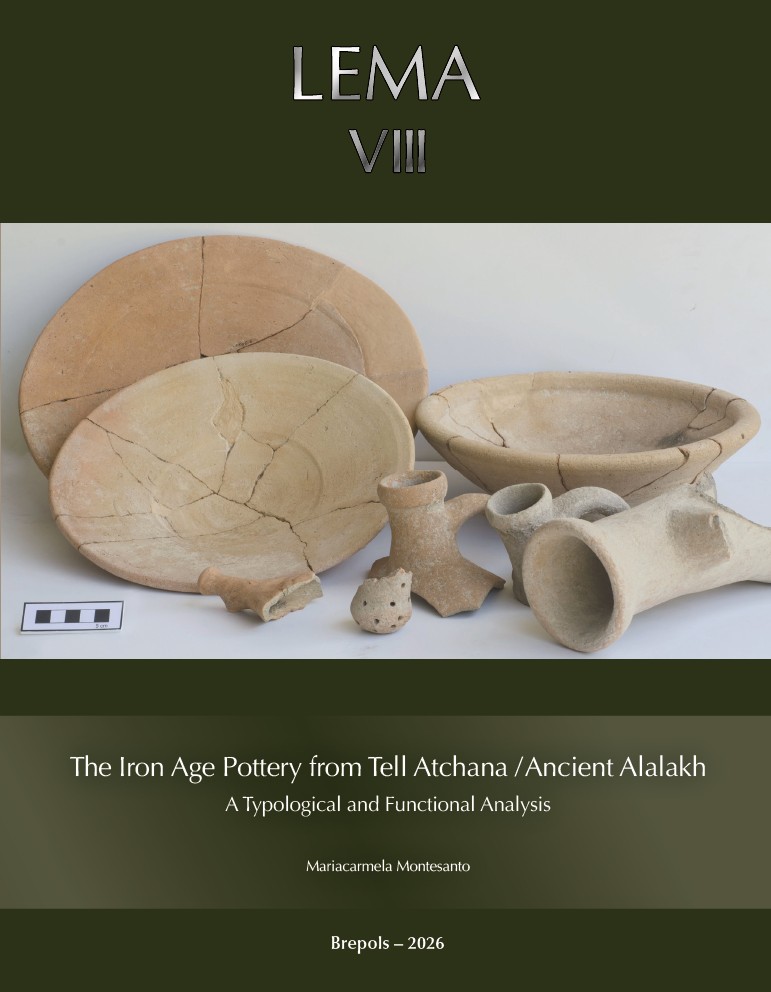 The Iron Age Pottery from Tell Atchana / Ancient Alalakh
A Typological and Functional Analysis
Volume 8

 Writing in the Church of the Nativity in Bethlehem
Inscription and Graffiti in a Multilingual and Multigraphic Perspective
Volume 45
 Contesting Labeled Identities
The Sociology of Gentilics in Biblical and Northwest Semitic Literature