Representations of Writing Materials on Roman Funerary Monuments
Text, Image, Message
Edited by Tibor Grüll

Paperback (Published)
(October 2023)
ISBN: 9781803275666
6.85 x 9.65 inches
Price: $56.00
In stock
Ancient funerary reliefs are full of representations of writing materials and instruments, the interpretation of which can help us better understand the phenomenon of ancient literacy. The eight studies in this volume enrich our knowledge of Roman writing with many new aspects and detailed observations.
Ancient funerary reliefs are full of representations of writing materials and instruments, the interpretation of which can help us better understand the phenomenon of ancient literacy. The eight studies in this volume were delivered as lectures at an online conference organized by the Department of Ancient History at the University of Pecs in October 2021. The comprehensive introductory study (N. Agocs, T. Grull, J. Jusztinger, E. Szabo) is followed by two thematic studies on depictions of the Muses (E. A. Meyer) and the role of women in written culture (J. Luginbuhl). Two studies address writing materials: the well-known and widespread writing tablets (B. Hartmann), and the less-known bone spatulae which nevertheless also occur frequently (A. Willi). Finally, three studies deal with depictions of writing instruments and materials in certain regions of the Roman Empire: at Palmyra (L. Sokolowski), in the two Moesiae (S. Pilipovic) and in Phrygia (T. Grull). Each of the studies enriches our knowledge of Roman writing with many new aspects and many detailed observations.
Foreword - Tibor Grull Representations of writing tools and materials on Roman funerary monuments - Tibor Grull, Nandor Agocs, Janos Jusztinger, Erno Szabo Clio and Calliope: Why Diptych and Scroll? - Elizabeth A. Meyer Educated by the nine Muses? - Josy Luginbuhl Tablet in Hand. Tabulae as markers of professional and social identity of Roman scribae - Benjamin Hartmann Representations of writing tools and materials on Phrygian door stelae - Tibor Grull Broadening the view on literacy in Palmyra. Ten years after the first attempt - Lukasz Sokolowski The scroll and codex on funerary steles in the Upper Moesian Limes - Sanja Pilipovic Depictions of bone 'spatulate' strips and a few thoughts about their function - Anna Willi,
Foreword – Tibor Grüll
Representations of writing tools and materials on Roman funerary monuments – Tibor Grüll, Nándor Agócs, János Jusztinger, Ernő Szabó
Clio and Calliope: Why Diptych and Scroll? – Elizabeth A. Meyer
Educated by the nine Muses? – Josy Luginbühl
Tablet in Hand. Tabulae as markers of professional and social identity of Roman scribae – Benjamin Hartmann
Representations of writing tools and materials on Phrygian door stelae – Tibor Grüll
Broadening the view on literacy in Palmyra. Ten years after the first attempt – Łukasz Sokołowski
The scroll and codex on funerary steles in the Upper Moesian Limes – Sanja Pilipović
Depictions of bone ‘spatulate’ strips and a few thoughts about their function – Anna Willi
- Edited by Tibor Grüll
‘Senza dubbio le riflessioni e le osservazioni contenute nel volume, unite al fondamentale strumento costituito dalla banca dati, risultano di grande stimolo per affrontare ed approfondire un tema che, dati alla mano, come dimostrato in questo lavoro capitolo per capitolo, ha ancora molto da suggerirci e rivelarci sulla società romana. In definitiva, questo libro rappresenta una risorsa preziosa per chiunque desideri affrontare il tema della rappresentazione degli strumenti di scrittura romani sui rilievi epigrafici, offrendo un’analisi dettagliata e rigorosa e gettando nuova luce su un aspetto della cultura materiale romana cruciale e ancora ricco di interrogativi.’ [translated: Without a doubt, the reflections and observations contained in the volume, combined with the fundamental tool constituted by the database, are a great stimulus to address and explore a topic which … still has much to suggest and reveal to us about Roman society. Ultimately, this book represents a valuable resource for anyone wishing to address the topic of the representation of Roman writing instruments on epigraphic reliefs, offering a detailed and rigorous analysis and shedding new light on an aspect of Roman material culture that is crucial and still full of questions.] – Donato Fasolini (2024): Cuadernos de Filología Clásica. Estudios Latinos
—
‘The overall value of this volume is its ability to call attention to a phenomenon that has sometimes been taken for granted in previous scholarship, but about which firm answers still elude us. … This book certainly fills a gap in the scholarship, but more than that, it demonstrates how much more work remains to be done on this and related topics. The lack of firm conclusions throughout the book supports this observation. … In order to fully understand how the various writing implements discussed in this volume functioned on funerary monuments, we must understand better how they functioned in real life. From there, the many messages that were being sent and the gestures that accompany the messages can be better understood. This volume and its associated projects are a wonderful starting point, and I hope that the participants will continue exploring this interesting line of research.’ - Elizabeth C. Robinson (2025): Bryn Mawr Classical Review
—
Other Titles in this Series

 From the Adriatic to the Alps: Transport and Trade Networks in Roman and Late Antique Northern Italy


 The Changing Landscapes of Rome’s Northern Hinterland
The British School at Rome’s Tiber Valley Project

 Roman Frontier Archaeology – in Britain and Beyond
Papers in Honour of Paul Bidwell Presented on the Occasion of the 30th Annual Conference of the Arbeia Society


 Un insediamento di età romana dimenticato nel tempo
Rinvenimenti e ricerche archeologiche a Tezze di Arzignano e nella vallata dell'Agno-Guà (Vicenza)

 Immagini del tempo degli dei, immagini del tempo degli uomini
Un’analisi delle iconografie dei mesi nei calendari figurati romani e bizantini e del loro contest storico-culturale


 Roman and Late Antique Wine Production in the Eastern Mediterranean
A Comparative Archaeological Study at Antiochia ad Cragum (Turkey) and Delos (Greece)


 I reperti e i motivi egizi ed egittizzanti a Pompei
Indagine preliminare per una loro contestualizzazione
 Die Ausrüstung der römischen Armee auf der Siegessäule des Marcus Aurelius in Rom
Ein Vergleich zwischen der skulpturalen Darstellung und den archäologischen Bodenfunden
Similar Books

 Caesar’s Visions and Impact on the Roman Empire
Revisiting the Archaeological and Historical Record of the 40s BC
Volume 2



 Drunk the Potion, No Whit Charmed
The Doctrine of Pure and Perfect Souls from Iamblichus to Damascius

 Epiphanies of the Divine in the Septuagint and the New Testament
Fifth International Symposium of the Corpus Judaeo-Hellenisticum Novi Testamenti (CJHNT), 14-17 May 2015, Nottingham


 Etruscan and Roman Hellenistic Anatomical ex votos
Reassessing Popular Religious Expressions in Central Italy
Volume 8



 Invisible Labour in Antiquity
Visualizing Obscure Work in the Ancient Mediterannean and West Asia
Volume 1
 Language and Power in the Roman Empire and Early India
Hierarchy, Ambiguity, and the Art of Reading the Signs in Cosmopolitan Cultures
 Late Antique villae in the Balkans (3rd–7th c. AD): Current Research Questions and Perspectives
HAEMUS Companion to the Late Antique Balkans 1
Volume 4

 Nurturing the Elite
Representations of Drinking, Eating, and Religious Vessels in Palmyrene Funerary Iconography
Volume 13


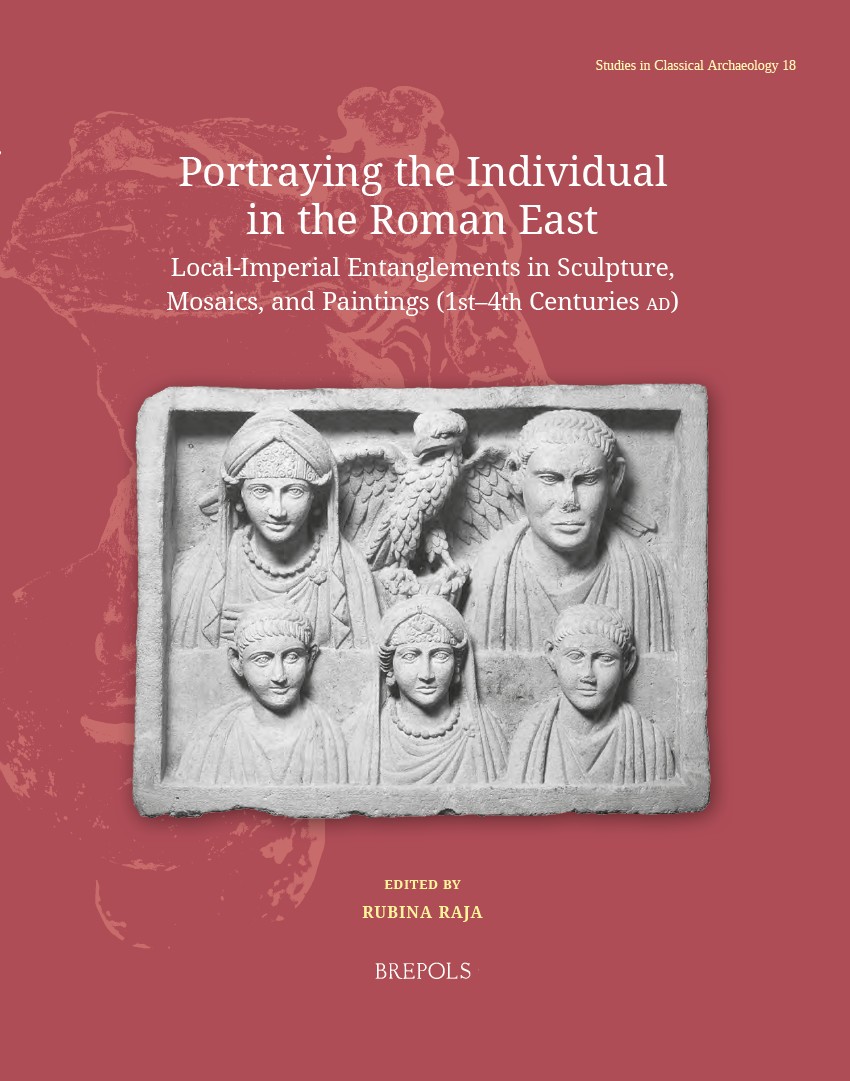 Portraying the Individual in the Roman East
Local–Imperial Entanglements in Sculpture, Mosaics, and Paintings (First–Fourth Centuries AD)
Volume 18

 Small Worlds and Relational Agencies: Local Societies in Early Medieval Iberia
Pequeños mundos y Agencias relacionales: Sociedades locales altomedievales en la Península Ibérica
 The Compositional History of the Book of Kings
An Analysis of the Evaluative Frameworks in 1 Kings 14–2 Kings 25

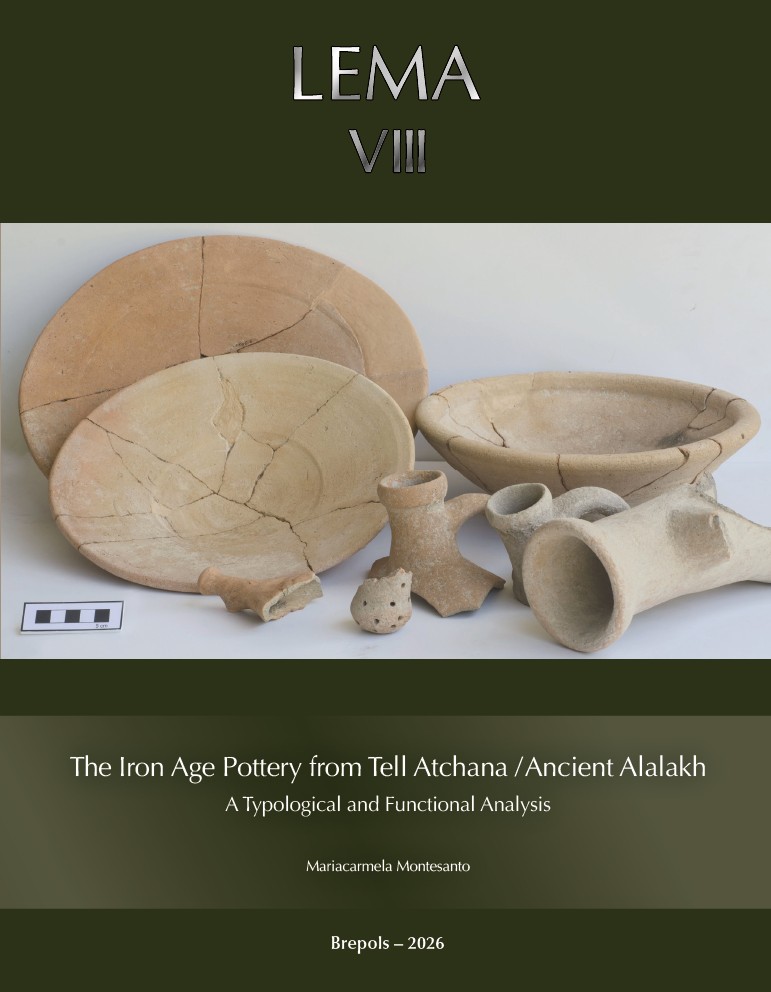 The Iron Age Pottery from Tell Atchana / Ancient Alalakh
A Typological and Functional Analysis
Volume 8

 Writing in the Church of the Nativity in Bethlehem
Inscription and Graffiti in a Multilingual and Multigraphic Perspective
Volume 45
 Contesting Labeled Identities
The Sociology of Gentilics in Biblical and Northwest Semitic Literature