
Visualising Glocalization
Villas, Architectural Spaces and Pavements in Hispania Baetica (2nd century AD – 4th century AD)
By (author) Rubén Montoya González

Paperback (Published)
(December 2024)
ISBN: 9781803278957
8.07 x 11.42 inches
Price: $77.00
In stock
Glocalization can be defined as globalization refracted through the local. This book applies the glocalization framework to an archaeological dataset composed of a selection of partially and fully excavated villas, their associated architectural spaces, and pavements from Hispania Baetica between the 2nd and the 4th centuries AD.
Glocalization, which can be defined as globalization refracted through the local, has been proposed as one of the most potent and innovative theoretical frameworks in the humanities and social sciences at this moment. However, its full application to and potential for archaeological studies has yet to be realized. For instance, in a debate on interdisciplinary perspectives on the growing use of the glocalization framework across social sciences, held in Cambridge in February 2018, V. Roudometof argued that the specific issue of how the concept should be applied to archaeological research, though, is best left to the people in the field, as they are far more knowledgeable about their own field than outsiders. This book aims to contribute to this debate by applying the glocalization framework to an archaeological dataset composed of a selection of partially and fully excavated villas, their associated architectural spaces, and pavements from Hispania Baetica between the 2nd and the 4th centuries AD. This book is one of the first ones exclusively focusing on glocalization and its application to an archaeological dataset in Roman archaeology. It also constitutes a novel approach to the study of Roman villa spaces, associated architecture, and their pavements. Furthermore, it presents an analytical model which allows other scholars to assess global phenomena across scales in specific territories.
Foreword
Chapter 1. Introduction
Research Aim and Objectives
Hispania Baetica: Geography, Economy and Territorial Organisation
Contextualising the Study of Villas and Mosaics in Hispania and in the Baetica province
Data Collection, Collation, and Analytical Methods
Structure of the Book
Chapter 2. The Global, the Local, and the Glocal
Introduction
Globalization and the Roman World
Towards Glocalization as a Framework
Conclusion
Chapter 3. Form and Architecture of Baetican Villa Spaces
Introduction
Room Types across Baetican Villas
Conclusion
Chapter 4. Villa Pavements in Context
Introduction
A Decorative Typology for the Study of Villa Décor
Types of Pavements by Types of Rooms Across Baetican Villas
Types of Pavements Across Types of Rooms in Baetican Villas
Conclusion
Chapter 5. Baetican Villa Pavements, Architectural Contexts and Spatial Function
Introduction
Grouping Room Types
Types of Pavements in ‘Predominantly Representational’ and ‘Predominantly Non-Representational’ Character Areas in Baetican Villas
Arrangement of the Decorative Patterns of Mosaic Pavements and Possible Functions
Subject Matter, Space and Function
Conclusion
Chapter 6. From Global Phenomena to Glocal Realities: the case of Baetican villas
Introduction
Glocalization and Baetican villas
Glocalization and the Display of Iconographies in a Seemingly Globalised Koine
A Hispano-Roman ‘villa model’? Baetican villas within the Iberian Peninsula
Conclusion
Chapter 7. Conclusion
Villa Spaces and Pavements in Hispania Baetica
Assessing the Frequency in the Display of Pavements across Villa Spaces
Assessing the Relationship Pavements-Space-Function and the Existence of a Hierarchical Use of Pavements in Villas
Investigating the Existence of Distribution Patterns Regarding the Types of Decoration and Decorative Scenes by Room Type
Glocalization, Baetican Villas and the Roman World: Future Research
Bibliography
Appendix A. A Gazetteer for the Study of Villa Décor from Hispania Baetica
Appendix B. Villa Spaces, Architectural Features and Types of Pavements by Room Types
- By (author) Rubén Montoya González
'Overall, this work provides fresh and insightful research not only on the debates surrounding the phenomenon of the Roman villa in Baetica, but also on theoretical approaches to the Roman world. I find this work to be a great addition to the study of Hispania Baetica, as well as a strong case-study in defence of glocalization approaches.' – Carlos Enríquez de Salamanca (2026): Bryn Mawr Classical Review
—
Other Titles in this Series

 Roman Frontier Archaeology – in Britain and Beyond
Papers in Honour of Paul Bidwell Presented on the Occasion of the 30th Annual Conference of the Arbeia Society


 The Changing Landscapes of Rome’s Northern Hinterland
The British School at Rome’s Tiber Valley Project


 Un insediamento di età romana dimenticato nel tempo
Rinvenimenti e ricerche archeologiche a Tezze di Arzignano e nella vallata dell'Agno-Guà (Vicenza)

 Immagini del tempo degli dei, immagini del tempo degli uomini
Un’analisi delle iconografie dei mesi nei calendari figurati romani e bizantini e del loro contest storico-culturale


 Villas, Sanctuaries and Settlement in the Romano-British Countryside
New Perspectives and Controversies

Similar Books

 Caesar’s Visions and Impact on the Roman Empire
Revisiting the Archaeological and Historical Record of the 40s BC
Volume 2


 Etruscan and Roman Hellenistic Anatomical ex votos
Reassessing Popular Religious Expressions in Central Italy
Volume 8


 Invisible Labour in Antiquity
Visualizing Obscure Work in the Ancient Mediterannean and West Asia
Volume 1
 Late Antique villae in the Balkans (3rd–7th c. AD): Current Research Questions and Perspectives
HAEMUS Companion to the Late Antique Balkans 1
Volume 4


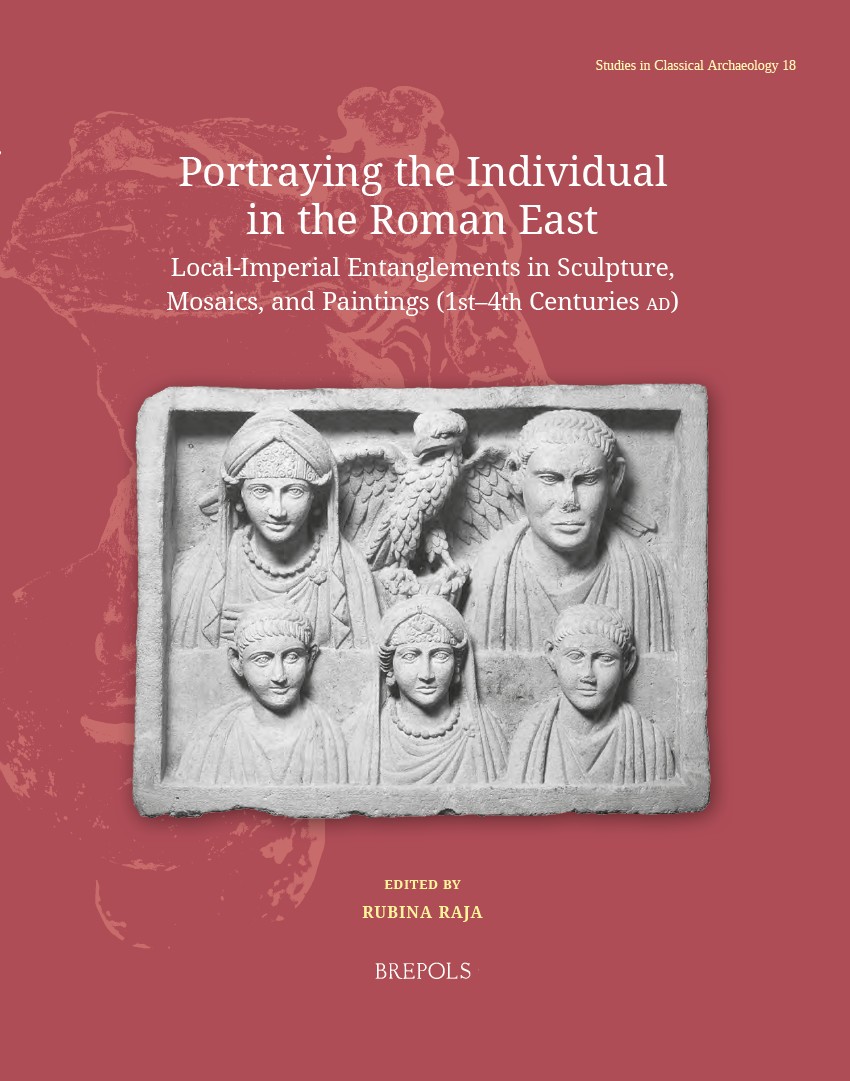 Portraying the Individual in the Roman East
Local–Imperial Entanglements in Sculpture, Mosaics, and Paintings (First–Fourth Centuries AD)
Volume 18

 Small Worlds and Relational Agencies: Local Societies in Early Medieval Iberia
Pequeños mundos y Agencias relacionales: Sociedades locales altomedievales en la Península Ibérica

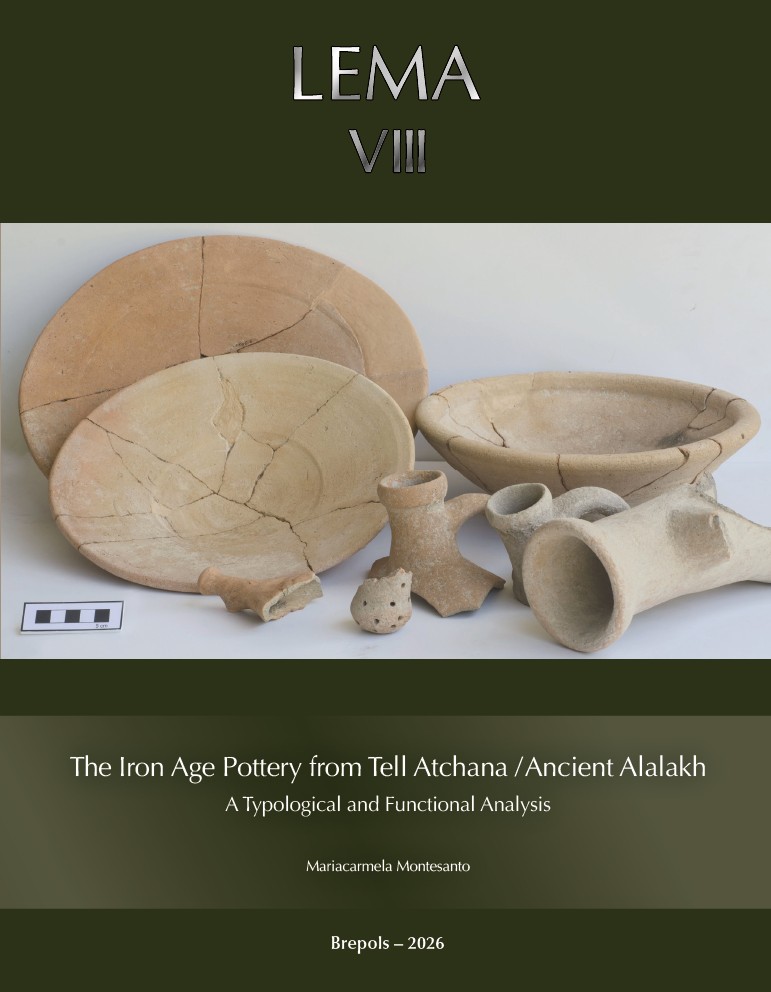 The Iron Age Pottery from Tell Atchana / Ancient Alalakh
A Typological and Functional Analysis
Volume 8

 Writing in the Church of the Nativity in Bethlehem
Inscription and Graffiti in a Multilingual and Multigraphic Perspective
Volume 45



 Atlante tematico di topografia antica 36-2026
Urbanistica e monumenti, porti, Roma. Ricerche sui monti Aurunci
Volume 36
 Cerámica común romana y ciclo haliéutico
Análisis de los contextos de las cetariae de Iulia Traducta

 Nuove scoperte e progressi nelle metodologie di rilievo e analisi dell’arte rupestre post-paleolitica in Italia
New discoveries and progress in the tracing and analysis methodologies of the post-Paleolithic rock art in Italy


 A Dramatic Event in Late Roman Florence
The Anomalous Burial Site Discovered beneath the Uffizi Gallery

 Alexander the Great and the Campaign of Gaugamela
New Research on Topography and Chronology. IAMNI 1 (Italian Archaeological Mission to Northern Iraq)
Volume 53


 Approaching Ancient Greek Coastal and Inland Poleis in the Northern Peloponnese
New Research in the Microregions of Aigeira, Lousoi and Sikyon
Volume 4