
A Landscape of Plenty: Excavations on a Roman Estate, Cambridgeshire
By (author) Francis M. Morris By (author) James E. R. Davey

Hardback (Published)
(August 2025)
ISBN: 9781805831037
11.46 x 8.07 inches
Price: $85.00
In stock
Excavations near Milton, Cambridgeshire, revealed a late Roman agricultural complex with enclosures, structures, and a possible villa estate. Active from the mid-3rd to 5th century AD, the site suggests surplus grain production and cattle use. The findings raise key questions about land use after Roman rule ended.
A large archaeological excavation was undertaken in 2023 prior to the construction of the new Cambridgeshire Southern Police Station directly west of the village of Milton, 4km north-east of the historic core of Cambridge. The main features revealed were ditches that formed part of an extensive and complex series of intercutting late Roman period enclosures with associated boundary ditches, trackways, small timber structures, pits , waterholes or wells, a pond and an oven. Activity on the site probably began in the mid-3rd century AD, apparently peaked in the mid- to late 4th century AD and possibly extended into the 5th century AD. The remains indicate an intensive agricultural working area where activities related to the surplus production of grain and the penning/keeping and breeding of considerable numbers of domestic animals, principally cattle for traction activities such as ploughing and transport. This working area may well have formed part of a villa estate and evidence from the site and its vicinity indicates that a villa probably lay nearby-most likely in the unexcavated area immediately to the south. A wide array of Roman finds was recovered, including a large pottery assemblage, 68 coins, ironwork, copper-alloy objects, glass vessels. These suggested basic, utilitarian occupation and activity, although some objects suggest ‘higher-status’ occupation in the vicinity. Evidence for small-scale bone and antler working appeared to reflect the manufacture of pins and handles respectively. A poignant discovery was a burial of three infants of the same age, very likely triplets, in a pit cut into the inner side of an enclosure ditch, probably in the late 4th century AD. This agricultural working area/probable villa estate appears to have gone out of use around the end of the Roman period, c.AD 400 or shortly after, with enclosure and boundary ditches filled up at about this date. No features or finds of Anglo-Saxon date were recorded. The results raise important questions as to how land tenure and land use changed after Britain left the Roman Empire in AD 409. Was the estate confiscated or was it abandoned and left to fall out of use? By whom and why was the system of land allotment filled in and levelled? Did woodland regenerate or were larger fields created and still tilled or given over to grazing? Infilling of the ditches suggests that land divisions, and potentially ownership or tenure, were deliberately changed as new systems of control, governance, coercion and military-political dominance took hold.
Summary
Chapter 1: Introduction
Outline of the study
Geology and physical setting
Archaeological and historical background
Aims and objectives
Methodology
Site phasing
Chapter 2: Results
Introduction
Unstratified prehistoric struck flints
Period 1. Middle to late Iron Age
Early to middle Roman (residual finds)
Period 2. Late Roman, mid-3rd to mid-4th centuries AD
Period 3. Late Roman, mid- to late 4th century AD
Period 4. Late Roman, late 4th to ?5th centuries AD
Period 5. Medieval/post-medieval
Period 6. Modern
Chapter 3: Specialist reports
Introduction
Iron Age and Roman pottery
Medieval and later pottery
Ceramic building material
Burnt clay
Mortar
Struck flints
Utilised stone artefacts
Coins
Metal small finds
Miscellaneous material
Objects of antler and bone
Glass
Clay tobacco pipe
Human bone
Animal bone
Marine shell
Molluscan assemblage
Charred plant remains and charcoal
Waterlogged wood
Radiocarbon dating
Chapter 4: Summary and discussion
Introduction
Neolithic to Bronze Age
Middle to late Iron Age (Period 1)
Early to middle Roman
Late Roman, mid-3rd to late 4th or 5th centuries AD (Periods 2-4)
Medieval/post-medieval (Period 5) and modern periods (Period 6)
Significance of results
Concluding remarks
List of abbreviations
Bibliography
,
Summary
Chapter 1: Introduction
Outline of the study
Geology and physical setting
Archaeological and historical background
Aims and objectives
Methodology
Site phasing
Chapter 2: Results
Introduction
Unstratified prehistoric struck flints
Period 1. Middle to late Iron Age
Early to middle Roman (residual finds)
Period 2. Late Roman, mid-3rd to mid-4th centuries AD
Period 3. Late Roman, mid- to late 4th century AD
Period 4. Late Roman, late 4th to ?5th centuries AD
Period 5. Medieval/post-medieval
Period 6. Modern
Chapter 3: Specialist reports
Introduction
Iron Age and Roman pottery
Medieval and later pottery
Ceramic building material
Burnt clay
Mortar
Struck flints
Utilised stone artefacts
Coins
Metal small finds
Miscellaneous material
Objects of antler and bone
Glass
Clay tobacco pipe
Human bone
Animal bone
Marine shell
Molluscan assemblage
Charred plant remains and charcoal
Waterlogged wood
Radiocarbon dating
Chapter 4: Summary and discussion
Introduction
Neolithic to Bronze Age
Middle to late Iron Age (Period 1)
Early to middle Roman
Late Roman, mid-3rd to late 4th or 5th centuries AD (Periods 2–4)
Medieval/post-medieval (Period 5) and modern periods (Period 6)
Significance of results
Concluding remarks
List of abbreviations
Bibliography
Francis M. Morris has a particular interest in the late Iron Age, Roman, and early Anglo-Saxon periods in Britain and in contemporary connections between Britain and continental Europe at that time. He took a DPhil in Archaeology at the University of Oxford in 2010 and subsequently worked at the Oxford Celtic Coin Index and on the publication of the Biddles’ excavations at the chapter house of St Albans Abbey (forthcoming). Since 2012 Francis has contributed to the publication of books in the Winchester Studies series, especially WS 3.i (this book), WS 4.i The Anglo-Saxon Minsters of Winchester (forthcoming), and WS 11 The British Historic Towns Atlas of Winchester.
- By (author) Francis M. Morris
- By (author) James E. R. Davey
'This volume makes good use of figures and reconstructions, and is a welcome addition to the ever-growing corpus of evidence for the later Roman trend for extensive interconnected agricultural estates in the region, and, most importantly, how they may have been linked.' – Paddy Lambert (2026): Current Archaeology Issue 432
—
Similar Books


 Caesar’s Visions and Impact on the Roman Empire
Revisiting the Archaeological and Historical Record of the 40s BC
Volume 2

 Construction Processes in Historical Western Societies (5th c. BC – 10th c. AD)
Case Studies on Techniques, Models, and Costs


 Etruscan and Roman Hellenistic Anatomical ex votos
Reassessing Popular Religious Expressions in Central Italy
Volume 8




 Invisible Labour in Antiquity
Visualizing Obscure Work in the Ancient Mediterannean and West Asia
Volume 1

 Late Antique villae in the Balkans (3rd–7th c. AD): Current Research Questions and Perspectives
HAEMUS Companion to the Late Antique Balkans 1
Volume 4





 Portraying the Individual in the Roman East
Local–Imperial Entanglements in Sculpture, Mosaics, and Paintings (First–Fourth Centuries AD)
Volume 18


 Roman Copies, Collecting, and Culture in the Bay of Naples and Beyond
Papers in Honor of Eugene J. Dwyer
 Small Worlds and Relational Agencies: Local Societies in Early Medieval Iberia
Pequeños mundos y Agencias relacionales: Sociedades locales altomedievales en la Península Ibérica
 SOMA 2023: Proceedings of the 24th Symposium on Mediterranean Archaeology
Ideas that Travelled by the Sea, Udine, 2-4 February, 2023


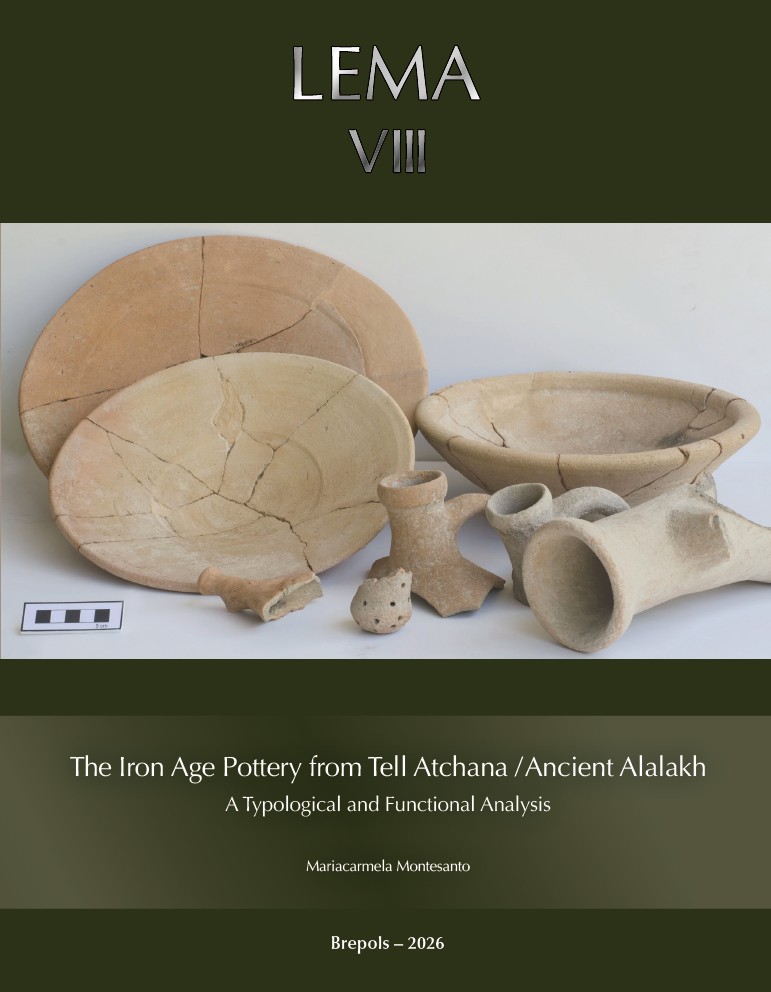 The Iron Age Pottery from Tell Atchana / Ancient Alalakh
A Typological and Functional Analysis
Volume 8


 Writing in the Church of the Nativity in Bethlehem
Inscription and Graffiti in a Multilingual and Multigraphic Perspective
Volume 45
 Zooarchaeology of Ancient Greek Sanctuaries in Southwestern Sicily
Faunal Analysis from Selinus and Akragas as Evidence of Differences in the Treatment of Animals for Ritual Purposes
 Alabaster
An Interdisciplinary Study of the Sources and Uses of Calcite Alabaster in Antiquity
Volume 5

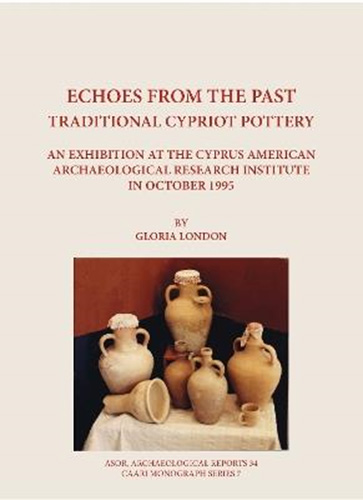 Echoes from the Past: Traditional Cypriot Pottery
An Exhibition at the Cyprus American Archaeological Research Institute in October 1995