
Colour Schemes in Roman Architecture
Aesthetics, Semantics, and Regional Appropriation
Edited by Johannes Lipps Edited by Matthias Grawehr

Hardback (Published)
(March 2025)
ISBN: 9783752008548
8.27 x 11.69 inches
Price: $147.00
On back order
Roman architecture was characterised by a rich palette of colours, achieved through the use of natural coloured stones and painting. This conference volume is the first book entirely dedicated to the polychromy of architectural orders in the Roman provinces. Its objectives are to present new data, to explore the visual effects for which colour was used on architectural elements, and to collate observations on the functional, chronological and regional variation. The volume brings together the contributions of twenty-five archaeologists, ancient historians, art historians and chemists, encompassing a wide chronological frame from the 2nd century BC to the 3rd century AD and covering a geographical range from modern Spain, France, Switzerland, Italy, and Austria to Turkey, Cyprus, Lebanon, and Libya.
Roman architecture was characterised by a rich palette of colours, achieved through the use of natural coloured stones and painting. Evaluating the use of colour in Roman architecture addresses an important part of the built environment. Unlike black-and-white photographs or line-art reconstruction drawings, architecture was conceived, perceived and experienced in colour. Although such statements are accepted by most archaeologists and architectural historians today, details about functional, chronological, and regional variation in Roman architectural polychromy remain to be discovered. This conference volume is the first book entirely dedicated to the polychromy of architectural orders in the Roman provinces. Its objectives are to present new data on raw materials, painting techniques, and traces of paint on architectural orders, to explore the visual effects for which colour was used on architectural elements and to collate initial observations on the functional, chronological and regional variation of the applied colour scheme in the various areas of the Roman Empire. The volume brings together the contributions of twenty-five archaeologists, ancient historians, art historians and chemists. The collected essays encompass a wide chronological frame from the 2nd century BC to the 3rd century AD and cover a vast geographical range from modern Spain, France, Switzerland, Italy, and Austria to Turkey, Cyprus, Lebanon, and Libya.
- Edited by Johannes Lipps
- Edited by Matthias Grawehr
Other Titles in this Series


Similar Books
 A Collaborative Tapestry in Honour of Shirley Ann Brown / Une fresque brodée en l’honneur de Shirley Ann Brown
The Bayeux Tapestry Seen by her Colleagues and Friends / La Tapisserie de Bayeux vue par ses collègues et amis



 Balthasar Caymox of Nuremberg
Early Modern German Print Publishers: Popular Prints of the Seventeenth Century
 Behind the Scenes of Medieval Roofs
An Overview of the Roofing Systems of Italian Churches
Volume 90
 Caesar’s Visions and Impact on the Roman Empire
Revisiting the Archaeological and Historical Record of the 40s BC
Volume 2

 Circulation, Use, Impact
The Consumption of Architectural Books in the Early Modern Eastern Adriatic
Volume 1


 Etruscan and Roman Hellenistic Anatomical ex votos
Reassessing Popular Religious Expressions in Central Italy
Volume 8



 Invisible Labour in Antiquity
Visualizing Obscure Work in the Ancient Mediterannean and West Asia
Volume 1
 Late Antique villae in the Balkans (3rd–7th c. AD): Current Research Questions and Perspectives
HAEMUS Companion to the Late Antique Balkans 1
Volume 4
 Legal Visuality
Exegesis, Ambiguity, and Dissimulation of the Donation of Constantine in the Early Modern Period


 Monastic Manuscripts from the Eastern Mediterranean (Sinai, Jerusalem, Antioch)
Production, Use, and Contexts
 Naples as Laboratory / Laboratorium Neapel
Style Options, Artistic Rivalry and Self Fashioning in Neapolitan Baroque Painting / Plurale Stilbildung, Kunstlerkonkurrenz und Self Fashioning in der neapolitanischen Barockmalerei

 Nurturing the Elite
Representations of Drinking, Eating, and Religious Vessels in Palmyrene Funerary Iconography
Volume 13


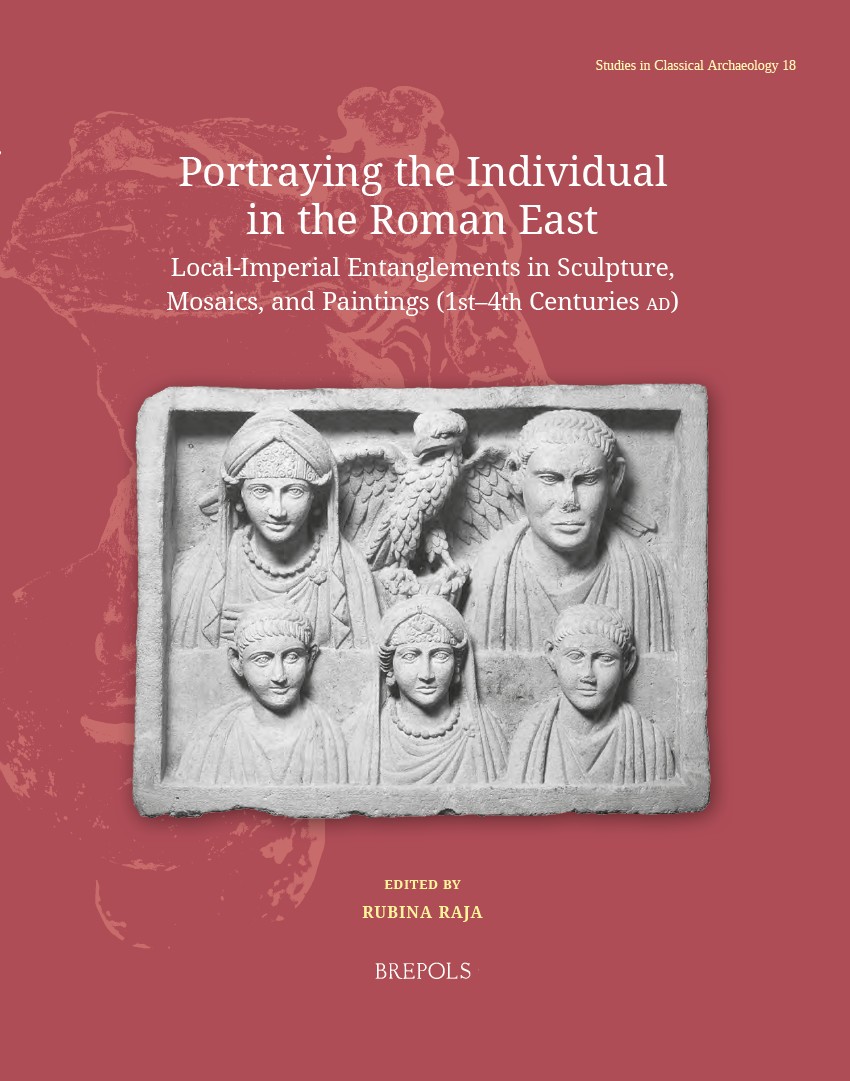 Portraying the Individual in the Roman East
Local–Imperial Entanglements in Sculpture, Mosaics, and Paintings (First–Fourth Centuries AD)
Volume 18

