
Life, Death and Rubbish Disposal in Roman Norton, North Yorkshire
Excavations at Brooklyn House 2015-16
By (author) Janet Phillips By (author) Pete Wilson

Paperback (Published)
(February 2021)
ISBN: 9781789698381
8.07 x 11.42 inches
Price: $67.00
In stock
This volume reports on excavations in advance of the development of a site in Norton-on-Derwent, North Yorkshire close to the line of the main Roman road running from the crossing point of the River Derwent near Malton Roman fort to York. This site provided much additional information on aspects of the poorly understood ‘small town’
Life, Death and Rubbish Disposal in Roman Norton, North Yorkshire: Excavations at Brooklyn House 2015-16 reports on excavations in advance of the development of a site in Norton-on-Derwent, North Yorkshire close to the line of the main Roman road running from the crossing point of the River Derwent near Malton Roman fort to York (Eboracum). The Brooklyn House site provided much information on aspects of the poorly understood ‘small town’ of Delgovicia. The area came to be used for apparently widely-dispersed burials in the mid-3rd century AD. Among these was the bustumtype burial of a soldier, or former soldier, which produced a well-preserved assemblage of military equipment and incorporated some ‘non-standard’ features. In addition, evidence was found for a possible mausoleum. During the late third and fourth centuries the burial activity was succeeded by occupation in the form of substantial stone-founded, or in some cases possibly stone-built buildings fronting onto the Roman road which was the main approach road to the town from the south. These structures could have been related in some way to the Norton Roman pottery industry, the core area of which was located to the east of the site, although no evidence from them suggested this. Following the fairly short-lived occupation, much of the site was used for the disposal of large quantities of rubbish and structural debris that presumably originated from locations closer to or beyond the river crossing, including possibly the Roman fort. The Roman pottery assemblage incorporated in excess of 21,000 sherds and adds considerably to our knowledge of pottery use and production in Roman Malton/Norton. Similarly, the substantial and well-preserved Roman-period finds assemblage provides insights, not only into the bustum burial but also wider aspects of life in Delgovicia. Within the assemblage, there were some unusual and rarely found individual items such as a pair of iron-working tongs, a two-link snaffle bit and a bone needle case, as well as a wide range of other material including military equipment, jewellery, styli and a possible scroll holder. The medieval and later pottery from the site provides a baseline for work on assemblages recovered from Malton/Norton in the future.
Chapter 1. Introduction - Pete Wilson Chapter 2. The excavation - Janet Phillips and Pete Wilson Chapter 3. Prehistoric pottery - Blaise Vyner Chapter 4. The Roman pottery - I.M. Rowlandson and H.G. Fiske Chapter 5. The post-Roman pottery - C.G. Cumberpatch Chapter 6. The coins - Richard Brickstock Chapter 7. The small finds and vessel glass / The finds from the cremation burial - H.E.M. Cool and S.J. Greep Chapter 8. The ceramic building materials - J.M. McComish Chapter 9. The stone building materials - J.M. McComish Chapter 10. Chipped stone lithics - Spencer Carter Chapter 11. Querns, millstones and associated material - John Cruse Chapter 12. The whetstones - S. Tibbles Chapter 13. Human bone - Katie Keefe and Malin Holst Chapter 14. Vertebrate remains - Alison Foster Chapter 15. Shell - John Carrott Chapter 17. Discussion - Pete Wilson Bibliography, Chapter 1. Introduction – Pete WilsonJanet Phillips and Pete WilsonBlaise VynerI.M. Rowlandson and H.G. FiskeC.G. CumberpatchRichard BrickstockH.E.M. Cool and S.J. GreepJ.M. McComishJ.M. McComishSpencer CarterJohn CruseS. TibblesKatie Keefe and Malin HolstAlison FosterJohn CarrottPete Wilson
- By (author) Janet Phillips
- By (author) Pete Wilson
This report conforms to the usual high standards of production demonstrated by the Archaeopress imprint. It affords an important insight into the character of one of the small towns of Roman Britain.
— David Mason
Other Titles in this Series


 Die Bleifunde der römisch-republikanischen Anlage von Sanisera, Menorca
Archäologische und archäometrische Analyse

 Roman Copies, Collecting, and Culture in the Bay of Naples and Beyond
Papers in Honor of Eugene J. Dwyer


 Rus Africum IV: La fattoria Bizantina di Aïn Wassel, Africa Proconsularis (Alto Tell, Tunisia)
Lo scavo stratigrafico e i materiali
 Roman Frontier Studies 2009
Proceedings of the XXI International Congress of Roman Frontier Studies (Limes Congress) held at Newcastle upon Tyne in August 2009
 The Arverni and Roman Wine
Roman Amphorae from Late Iron Age sites in the Auvergne (Central France): Chronology, fabrics and stamps


 Corpus des amphores romaines produites dans les centres de mer Noire
Collections des musées de la côte turque de la mer Noire (Ereğli, Amasra, Sinop, Samsun, Giresun, Ordu, Trabzon et Amasya)


 Roman Frontier Studies 2009
Proceedings of the XXI International Congress of Roman Frontier Studies (Limes Congress) held at Newcastle upon Tyne in August 2009

 Visualising Glocalization
Villas, Architectural Spaces and Pavements in Hispania Baetica (2nd century AD – 4th century AD)

Similar Books

 Caesar’s Visions and Impact on the Roman Empire
Revisiting the Archaeological and Historical Record of the 40s BC
Volume 2


 Etruscan and Roman Hellenistic Anatomical ex votos
Reassessing Popular Religious Expressions in Central Italy
Volume 8



 Invisible Labour in Antiquity
Visualizing Obscure Work in the Ancient Mediterannean and West Asia
Volume 1

 Late Antique villae in the Balkans (3rd–7th c. AD): Current Research Questions and Perspectives
HAEMUS Companion to the Late Antique Balkans 1
Volume 4


 Portraying the Individual in the Roman East
Local–Imperial Entanglements in Sculpture, Mosaics, and Paintings (First–Fourth Centuries AD)
Volume 18

 Small Worlds and Relational Agencies: Local Societies in Early Medieval Iberia
Pequeños mundos y Agencias relacionales: Sociedades locales altomedievales en la Península Ibérica

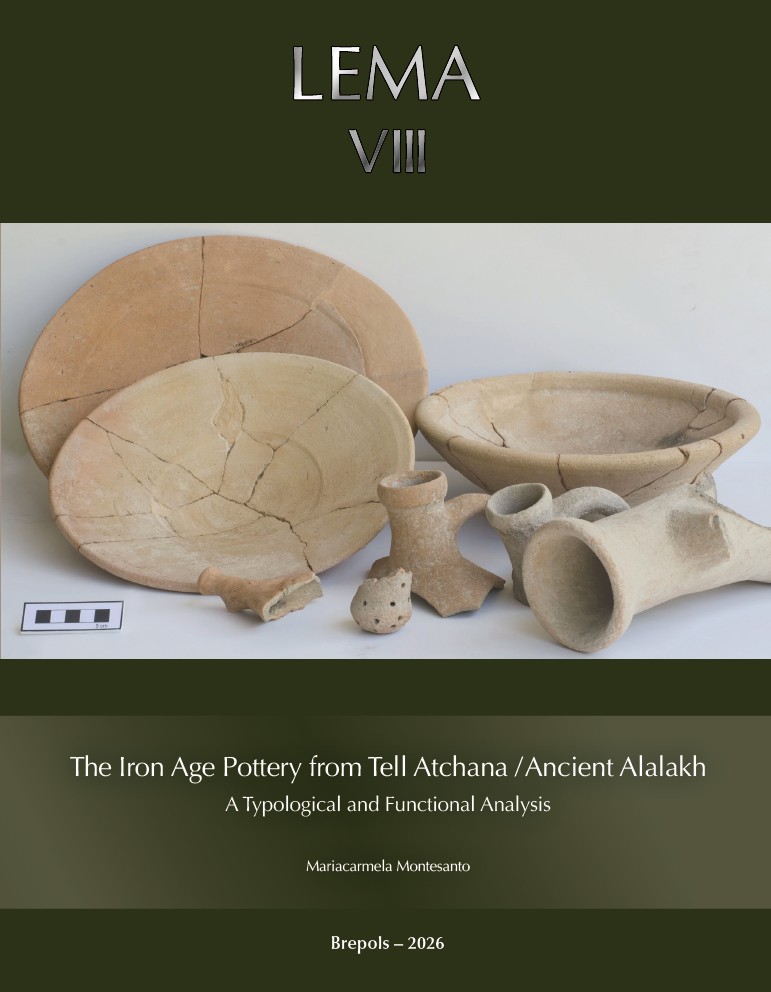 The Iron Age Pottery from Tell Atchana / Ancient Alalakh
A Typological and Functional Analysis
Volume 8

 Writing in the Church of the Nativity in Bethlehem
Inscription and Graffiti in a Multilingual and Multigraphic Perspective
Volume 45



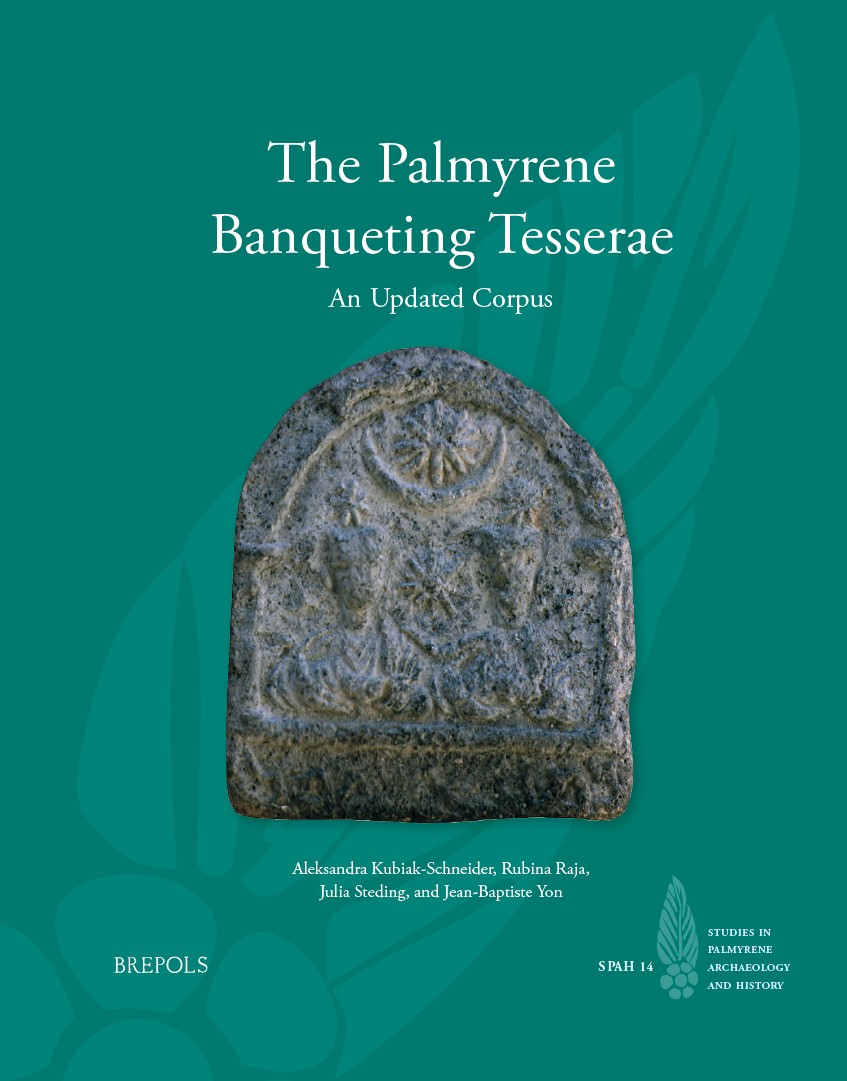
 Atlante tematico di topografia antica 36-2026
Urbanistica e monumenti, porti, Roma. Ricerche sui monti Aurunci
Volume 36
 Cerámica común romana y ciclo haliéutico
Análisis de los contextos de las cetariae de Iulia Traducta

 Nuove scoperte e progressi nelle metodologie di rilievo e analisi dell’arte rupestre post-paleolitica in Italia
New discoveries and progress in the tracing and analysis methodologies of the post-Paleolithic rock art in Italy


 A Dramatic Event in Late Roman Florence
The Anomalous Burial Site Discovered beneath the Uffizi Gallery

 Alexander the Great and the Campaign of Gaugamela
New Research on Topography and Chronology. IAMNI 1 (Italian Archaeological Mission to Northern Iraq)
Volume 53


 Approaching Ancient Greek Coastal and Inland Poleis in the Northern Peloponnese
New Research in the Microregions of Aigeira, Lousoi and Sikyon
Volume 4