
A Dramatic Event in Late Roman Florence
The Anomalous Burial Site Discovered beneath the Uffizi Gallery
Edited by Elsa Pacciani

Paperback (Published)
(March 2025)
ISBN: 9781803279312
7.99 x 10.87 inches
Price: $49.00
In stock
A multi-disciplinary investigation beneath the Uffizi Gallery in Florence uncovered an emergency burial site from the late 4th to early 5th century AD. Likely due to an epidemic, this discovery sheds new light on a dramatic, undocumented event in the city’s history, revealing its historical and socioeconomic context.
A Dramatic Event in Late Roman Florence: The Anomalous Burial Site Discovered beneath the Uffizi Gallery presents a multi-disciplinary scientific investigation arising from excavations under the Uffizi Gallery in Florence, Italy. Investigations revealed traces of a striking, hitherto unknown episode and made it possible to write an entirely new chapter of the city’s ancient history. Between the end of the 4th and the beginning of the 5th century AD this space – then a strip of land between the walls of Roman Florentia and the River Arno – was chosen as the burial place for dozens of inhabitants who had died within a short time span. Indeed, what has survived the expansion of the medieval and Renaissance city represents a small part of an originally much larger emergency burial area used in the course of a dramatic event of considerable proportions, most probably an epidemic, of which there is no historical record. The scientific investigations described here aim to understand, through a synergetic and coordinated approach, not only the cause of these deaths but also the historical and socioeconomic context of this event. The volume therefore collects contributions by several specialists in different disciplines: anthropology, medicine, numismatics, C14 dating, palaeogenetics, palaeobacteriology, and palaeoparasitology. The results are of considerable historical interest: they reveal contemporary living conditions, which contributed to the onset of mortality; the event was likely a contributing factor to subsequent well-known demographic changes; and its chronology suggests a probable relationship with the first barbarian aggression against the city.
"The Uffizi before the Uffizi - Andrea Pessina
Introduction - Elsa Pacciani
Chapter 1. The Excavation and Archaeo-Thanatological Analysis of the Depositions - Elsa Pacciani
Chapter 2. Radiocarbon Dating of Bone Finds - Mariaelena Fedi, Serena Barone, Lucia Liccioli, Pier Andrea Mando
Chapter 3. The Coins from the Burial Site - Michele Asolati
Chapter 4. Anthropological Features - Elsa Pacciani
Chapter 5. In the Search for Infectious Diseases Using Ancient DNA - Gunnar U. Neumann
Chapter 6. Palaeopathological Investigations - Elsa Pacciani, Linda Calistri, Filiberto Chilleri, Martina Focardi, Alessandro Franchi, Gianluca Giavaresi, Melania Maglio
Chapter 7. Genomic Analysis of Human Remains - Costanza Cannariato, Margherita Vanni, Valentina Zaro, Gunnar Neumann, Martina Lari, Cosimo Posth, David Caramelli
Chapter 8. Endemic Parasites: A Microscopic and Paleogenetic Survey - Kevin Roche, Nicolas Capelli, Raffaella Bianucci, Matthieu Le Bailly
Chapter 9. The Oral Health - Elisa Morieri, Alessandro Riga
Chapter 10. Stable Isotope Analysis of Diets in Late Roman and Medieval Firenze - Patrick Roberts, Mary Lucas
Chapter 11. Notes on the Conservation Treatment of Human Remains - Franca Caracci, Rossella Cheli
Concluding Remarks - Elsa Pacciani
",
The Uffizi before the Uffizi – Andrea Pessina
Introduction – Elsa Pacciani
Chapter 1. The Excavation and Archaeo-Thanatological Analysis of the Depositions – Elsa Pacciani
Chapter 2. Radiocarbon Dating of Bone Finds – Mariaelena Fedi, Serena Barone, Lucia Liccioli, Pier Andrea Mandò
Chapter 3. The Coins from the Burial Site – Michele Asolati
Chapter 4. Anthropological Features – Elsa Pacciani
Chapter 5. In the Search for Infectious Diseases Using Ancient DNA – Gunnar U. Neumann
Chapter 6. Palaeopathological Investigations – Elsa Pacciani, Linda Calistri, Filiberto Chilleri, Martina Focardi, Alessandro Franchi, Gianluca Giavaresi, Melania Maglio
Chapter 7. Genomic Analysis of Human Remains – Costanza Cannariato, Margherita Vanni, Valentina Zaro, Gunnar Neumann, Martina Lari, Cosimo Posth, David Caramelli
Chapter 8. Endemic Parasites: A Microscopic and Paleogenetic Survey – Kévin Roche, Nicolas Capelli, Raffaella Bianucci, Matthieu Le Bailly
Chapter 9. The Oral Health – Elisa Morieri, Alessandro Riga
Chapter 10. Stable Isotope Analysis of Diets in Late Roman and Medieval Firenze – Patrick Roberts, Mary Lucas
Chapter 11. Notes on the Conservation Treatment of Human Remains – Franca Caracci, Rossella Cheli
Concluding Remarks – Elsa Pacciani
- Edited by Elsa Pacciani
‘The editorial work is good, with great success in eliminating the appearance of a direct translation from Italian and achieving a readable and fluent style. With the exception of minor instances the language is polished and correct, adding much to the readability of the volume and assuring a far wider audience. … No less praiseworthy is the lavish and informative photographic apparatus that supports the text. The decision to present the entire set of photographs in color, particularly in a volume that addresses the analysis of human skeletal remains, is an excellent editorial choice. … Along with the careful editing and the fine visual record, these elevate the volume to a standard of quality all too rarely achieved in books of this kind, and assure both its scientific utility and its broader relevance.’ - Alessandro Sebastiani (2025): Bryn Mawr Classical Review
—
Other Titles in this Series

 Life, Death and Rubbish Disposal in Roman Norton, North Yorkshire
Excavations at Brooklyn House 2015-16


 Die Bleifunde der römisch-republikanischen Anlage von Sanisera, Menorca
Archäologische und archäometrische Analyse

 Roman Copies, Collecting, and Culture in the Bay of Naples and Beyond
Papers in Honor of Eugene J. Dwyer


 Rus Africum IV: La fattoria Bizantina di Aïn Wassel, Africa Proconsularis (Alto Tell, Tunisia)
Lo scavo stratigrafico e i materiali
 Roman Frontier Studies 2009
Proceedings of the XXI International Congress of Roman Frontier Studies (Limes Congress) held at Newcastle upon Tyne in August 2009
 The Arverni and Roman Wine
Roman Amphorae from Late Iron Age sites in the Auvergne (Central France): Chronology, fabrics and stamps


 Corpus des amphores romaines produites dans les centres de mer Noire
Collections des musées de la côte turque de la mer Noire (Ereğli, Amasra, Sinop, Samsun, Giresun, Ordu, Trabzon et Amasya)


 Roman Frontier Studies 2009
Proceedings of the XXI International Congress of Roman Frontier Studies (Limes Congress) held at Newcastle upon Tyne in August 2009

 Visualising Glocalization
Villas, Architectural Spaces and Pavements in Hispania Baetica (2nd century AD – 4th century AD)

Similar Books

 Caesar’s Visions and Impact on the Roman Empire
Revisiting the Archaeological and Historical Record of the 40s BC
Volume 2


 Etruscan and Roman Hellenistic Anatomical ex votos
Reassessing Popular Religious Expressions in Central Italy
Volume 8


 Invisible Labour in Antiquity
Visualizing Obscure Work in the Ancient Mediterannean and West Asia
Volume 1
 Late Antique villae in the Balkans (3rd–7th c. AD): Current Research Questions and Perspectives
HAEMUS Companion to the Late Antique Balkans 1
Volume 4


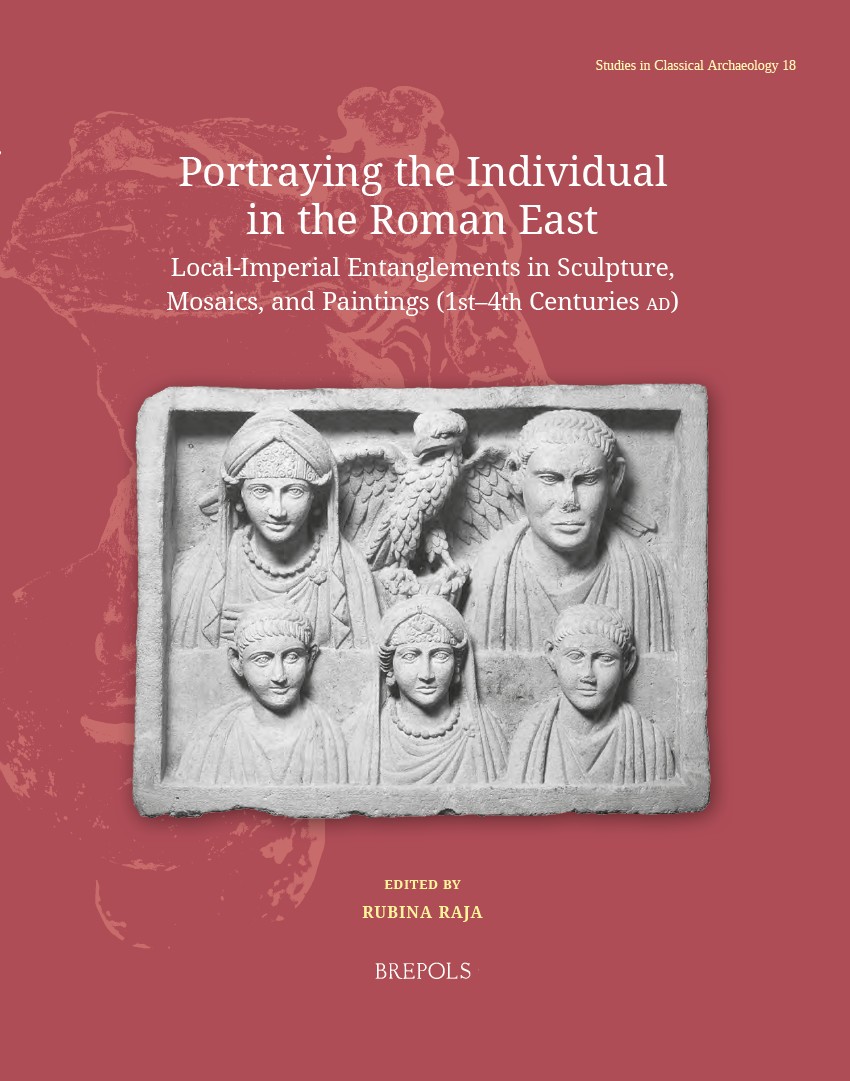 Portraying the Individual in the Roman East
Local–Imperial Entanglements in Sculpture, Mosaics, and Paintings (First–Fourth Centuries AD)
Volume 18

 Small Worlds and Relational Agencies: Local Societies in Early Medieval Iberia
Pequeños mundos y Agencias relacionales: Sociedades locales altomedievales en la Península Ibérica

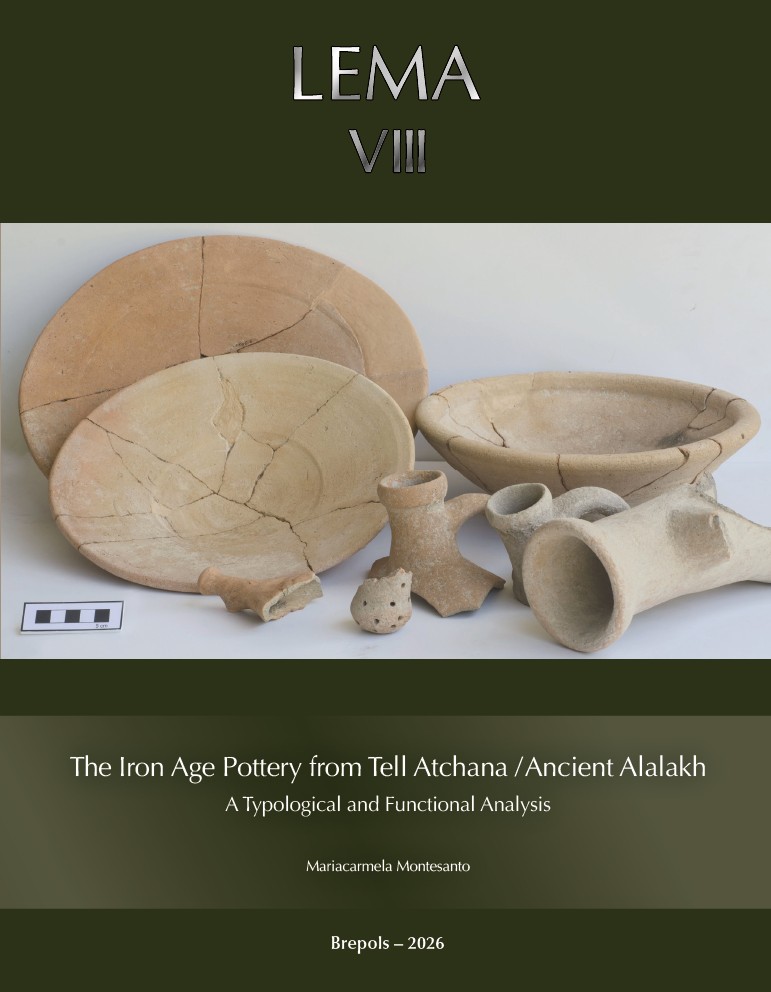 The Iron Age Pottery from Tell Atchana / Ancient Alalakh
A Typological and Functional Analysis
Volume 8

 Writing in the Church of the Nativity in Bethlehem
Inscription and Graffiti in a Multilingual and Multigraphic Perspective
Volume 45


 Atlante tematico di topografia antica 36-2026
Urbanistica e monumenti, porti, Roma. Ricerche sui monti Aurunci
Volume 36
 Cerámica común romana y ciclo haliéutico
Análisis de los contextos de las cetariae de Iulia Traducta

 Nuove scoperte e progressi nelle metodologie di rilievo e analisi dell’arte rupestre post-paleolitica in Italia
New discoveries and progress in the tracing and analysis methodologies of the post-Paleolithic rock art in Italy


 Alexander the Great and the Campaign of Gaugamela
New Research on Topography and Chronology. IAMNI 1 (Italian Archaeological Mission to Northern Iraq)
Volume 53


 Approaching Ancient Greek Coastal and Inland Poleis in the Northern Peloponnese
New Research in the Microregions of Aigeira, Lousoi and Sikyon
Volume 4
