
More Songs and Stories of the Ch’uan Miao
by David Crockett Graham

David Crockett Graham (1884-1961) was an American Baptist minister who went to China as a missionary in 1911. He was stationed at Siufu (Xufu) in Sichuan Province where he became acquainted with the local Chuan Miao, an ethnic group within the Miao people. Having obtained a Ph.D. in anthropology at the University of Chicago in 1927 he seriously studied their culture and folklore, and with the help of one of them, Xiong Chaosong, he collected and translated 752 songs and stories. This was mainly done after 1932 despite the fact that he was then transferred to Chengdu where he became head of the University Museum and professor at the West China Union University. Besides being a pioneering expert on the Chuan Miao, Graham also was an archaeologist of note and an outstanding zoological collector who assembled a huge amount of species for the Smithsonian Institution. In 1948 Graham retired to Colorado where he worked up his collections. He managed to get part of his Songs and Stories of the Chuan Miao published by the Smithsonian Institution in 1954 but to keep down costs he had to leave out 276 items which Hartmut Walravens, the editor of this volume, discovered at Whitman College, Walla Walla, Washington. This collection covers the same wide spectrum as the published collection and is a valuable complement. It comprises a more explicit, informative introduction, legends, mythological tales, religious chants, love and marriage songs, stories and folk-tales. The material was annotated by Wolfram Eberhard, the well-known Berkeley anthropologist.
David Crockett Graham (1884-1961) was an American Baptist minister who went to China as a missionary in 1911. He was stationed at Siufu (Xufu) in Sichuan Province where he became acquainted with the local Chuan Miao, an ethnic group within the Miao people. Having obtained a Ph.D. in anthropology at the University of Chicago in 1927 he seriously studied their culture and folklore, and with the help of one of them, Xiong Chaosong, he collected and translated 752 songs and stories. This was mainly done after 1932 despite the fact that he was then transferred to Chengdu where he became head of the University Museum and professor at the West China Union University. Besides being a pioneering expert on the Chuan Miao, Graham also was an archaeologist of note and an outstanding zoological collector who assembled a huge amount of species for the Smithsonian Institution. In 1948 Graham retired to Colorado where he worked up his collections. He managed to get part of his Songs and Stories of the Chuan Miao published by the Smithsonian Institution in 1954 but to keep down costs he had to leave out 276 items which Hartmut Walravens, the editor of this volume, discovered at Whitman College, Walla Walla, Washington. This collection covers the same wide spectrum as the published collection and is a valuable complement. It comprises a more explicit, informative introduction, legends, mythological tales, religious chants, love and marriage songs, stories and folk-tales. The material was annotated by Wolfram Eberhard, the well-known Berkeley anthropologist.
- Edited by Hartmut Walravens
Other Titles in this Series
 The Uppsala Manuscript of Muhammed Heva’i Uskufi Bosnevi’s Makbul-i ‘arif (1631) from a Turcological Perspective
Transliteration, Transcription, and an English Translation
Volume 105


 Die Schlangensprüche als älteste semitische Textbelege?
Analyse und kritische Betrachtung von Richard C. Steiners „Early Northwest Semitic Serpent Spells in the Pyramid Texts“
Volume 140
 The Beginning of the Subtle School of Taoism
An Official Perception of Taoism in the Early T'ang Period
Volume 94
 Another Tract for the Buryats
including I. J. Schmidt's recentlly identified Kalmuck Originals
Volume 82


 Yuan Hongdao – Eine Geschichte der Vasen
Ein Beitrag zur Literatur der Kennerschaft der spaten Ming-Zeit
Volume 108

 Studien zu ‘sabab’ in der arabischen Kunstprosa des 10.-15. Jahrhunderts
Ein Beitrag zur arabischen Lexik, Phraseologie und Stilgeschichte
Volume 126
 Fujian – Penghu – Taiwan
Fruhe Kontakte, nach Texten zusammengefasst (ca. 200-1450 n.Chr.)
Volume 95

 Bible Translations – Linguistic and Cultural Issues
Proceedings of the Erlangen Workshop on October 5 and 6, 2018
Volume 122

 Verbal Festivity in Arabic and Other Semitic Languages
Proceedings of the Workshop at the Universitatsclub Bonn on January 16, 2009
Volume 72
 Daoist perspectives on knowing the future
Selections from the Scripture on Great Peace (Taiping jing)
Volume 110
 Ahmad ibn Yusuf at-Tifasis ‘Buch der koniglichen Steine’
Eine Mineralienkunde fur die arabischen Herrscher des 7./13. Jahrhunderts Eingeleitet, ubersetzt und mit Anmerkungen versehen von Armin Schopen und Karl W. Strauss Mit 38 Abbildungen von Alfred K. Schuster
Volume 92
 Die vokalische Gestalt des arabischen Wortstamms
Ihr Kodierungspotential im dreiradikaligen Masdar
Volume 127


 Arabische Kunstprosa im 14. Jahrhundert
Drei Einsetzungen fur Oberrichter 'Imad ad-Din at-Tarasusi in Lehramter an Damaszener Hochschulen
Volume 123

 Hochsprache und Dialekt im Arabischen
Untersuchungen zur heutigen arabischen Zweisprachigkeit
Volume 41.1
 The morphological-to-analytic causative continuum in Hausa
New insights and analyses in a typological perspective
Volume 109


Similar Books


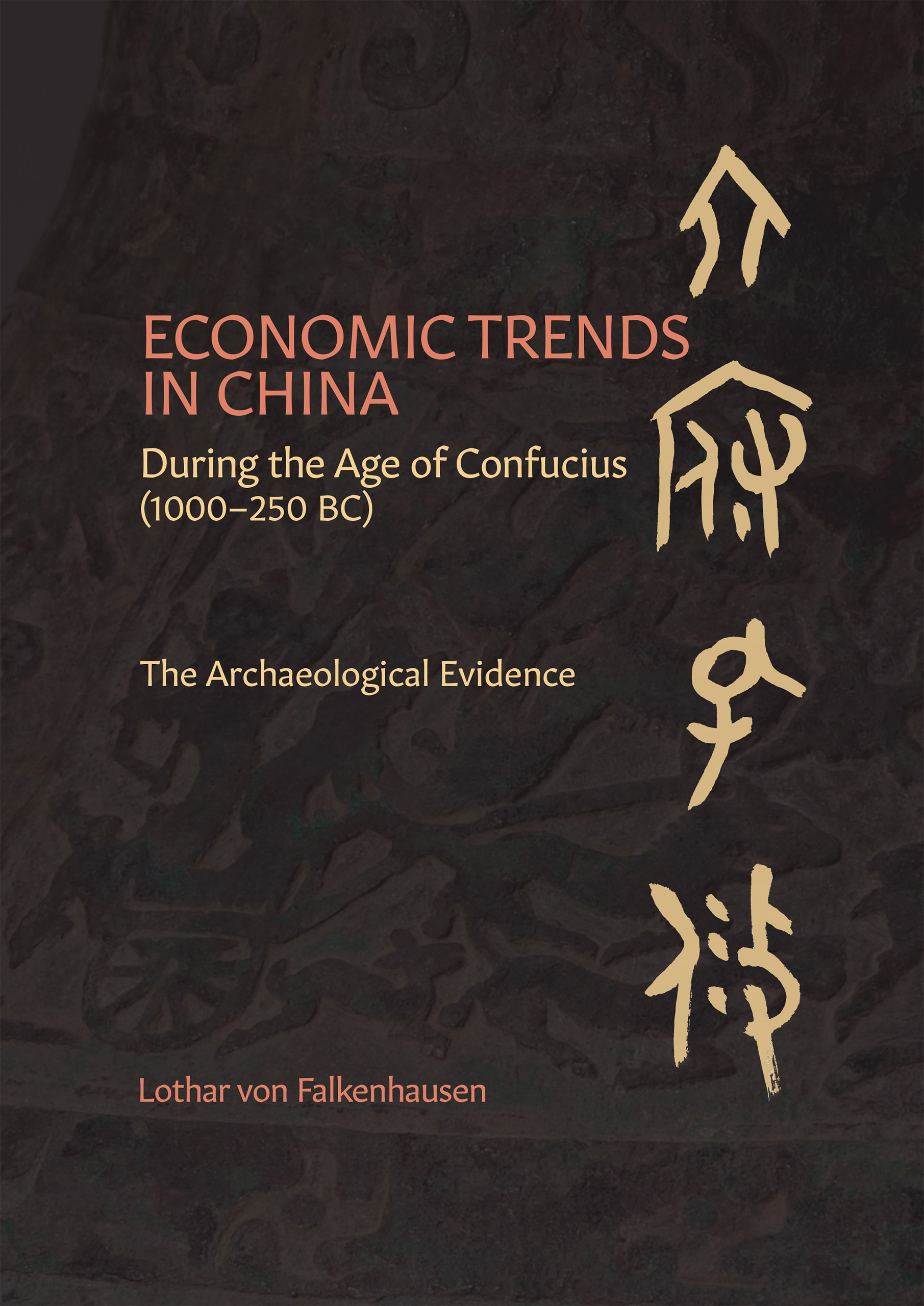 Economic Trends in China During the Age of Confucius (1000–250 BC)
The Archaeological Evidence
Volume 10


 Gender in Gandharan Art
Representations and Interactions in the Buddhist Context (1st-4th centuries CE)
 Liberating the Repressed Self among Contemporary Chinese
A Theoretical Study Involving Tu Weiming and Jürgen Moltmann
Volume 41


 The Lizhi 荔枝 (Lychee) in Chinese Literature
Translation of Chinese Sources by Michael J. Hagerty. With an introduction and edited by Hartmut Walravens
Volume 66


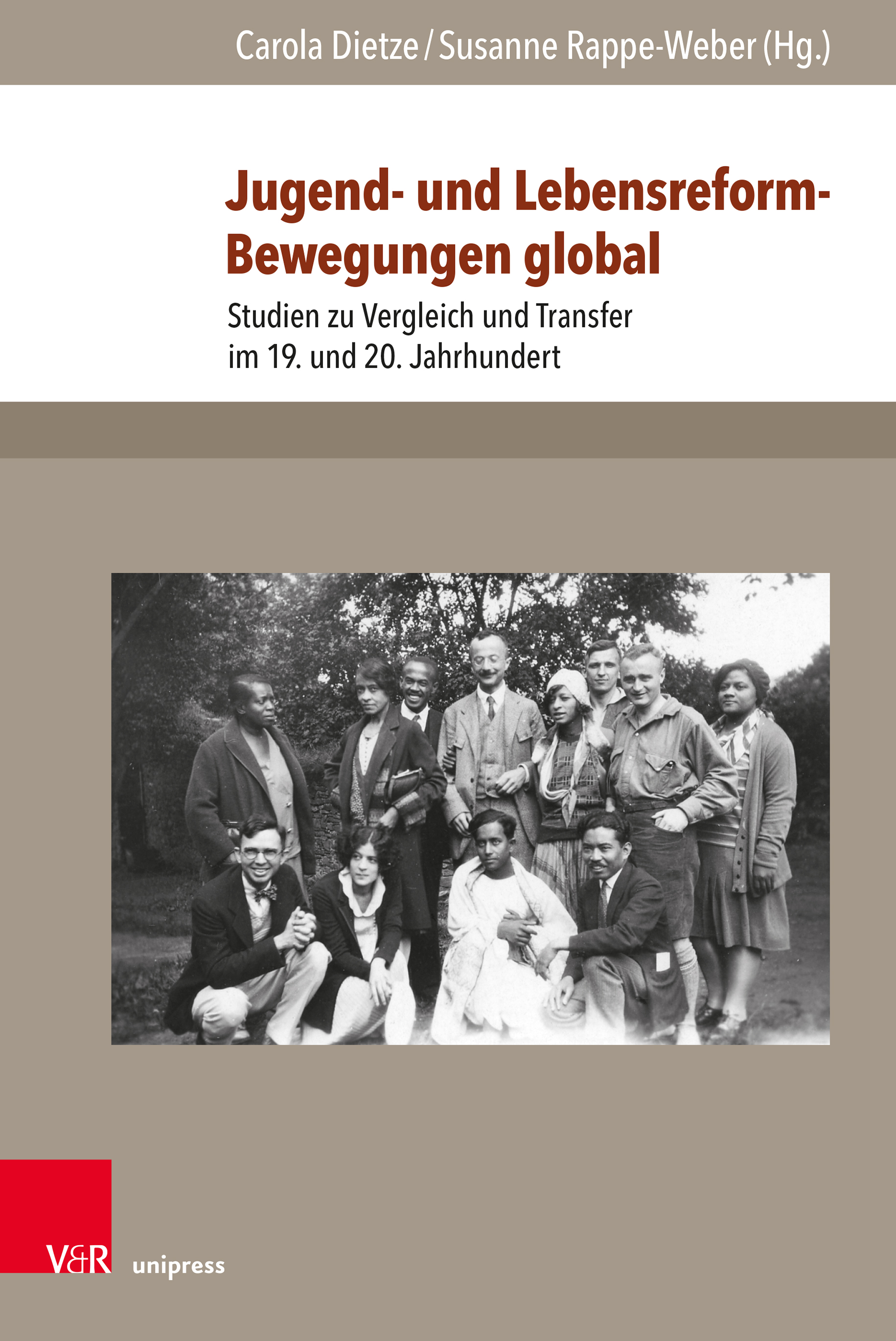 Jugend- und Lebensreform-Bewegungen global
Studien zu Vergleich und Transfer im 19. und 20. Jahrhundert

 Der altorientalische Mensch in seiner Umwelt
11. Internationales Colloquium der Deutschen Orientgesellschaft, 16.-19. Juni 2022 in Leipzig
Volume 11
 Der Königsgruftkomplex von Qaṭna. Teil 2: Die Grabkammern. Befund, Kontextualisierung, Interpretation
Mit Beiträgen von Carsten Witzel, Emmanuelle Vila, Tina Köster, Nicole Reifarth, Giulia Baccelli, Susanne Degenhardt, Marco Semmelroth, Stefan Flohr, Uwe Kierdorf, Michael Schultz und Fidaa Hlal
Volume 9

 Die Idee eines weißen Australiens
Rassenideologien, „Biological Absorption Policy“ und die Theorie von den schwarzen Kaukasiern
 Eine Welt aus Tau
Japan: Rollbilder und Werke der Gegenwartskunst in der Sammlung Dr. Christiane Hackerodt
 Fundmunzen aus Usbekistan, Band 2
Schatzfunde kushano-sasanidischer Kupfermunzen und ihr Beitrag zur Kenntnis von Pragesystem und Geldumlauf im kushano-sasanidischen Herrschaftsbereich. In Kooperation mit Shakir Pidaev
Volume 557
 Individualitat und Kollektivitat
Deutsche und japanische Perspektiven auf Recht, Kultur und Rechtskultur
 La gestion de l’eau dans les civilisations de l’Asie
Actes du colloque international organisé par l'Académie des Inscriptions et Belles-Lettres, la Société asiatique et le Collège de France à l'Institut des Civilisations du Collège de France et à l'Académie des Inscriptions et Belles-Lettres, les 4 et

 Uigurisches Wörterbuch. Sprachmaterial der vorislamischen türkischen Texte aus Zentralasien
Bd. 3: Fremdelemente. Teil 4: ha – ketumati
 Wilde Schönheiten
Ein Beitrag zur Motivgeschichte der Perlen in der chinesischen Literatur von den Anfängen bis zur Song-Zeit
Volume 31


