
Art of Ancient India and the Aegean
Fortuitous Parallels or Cultural Contacts?
By (author) A.S. Bhalla

Paperback (Published)
(July 2024)
ISBN: 9781803277615
6.85 x 9.65 inches
Price: $45.00
In stock
This book examines similarities and differences between art in ancient Indian (Indus) civilizations and that of the Aegean civilizations. The comparison raises questions about possible cross-cultural influences, which became more significant following Alexander’s invasion and the subsequent adaptation of Indian art under the Indo-Gre
Art in physical forms and shapes (e.g. buildings and paintings) existed in both prehistoric and modern societies. This book examines similarities and differences between art in ancient Indian (Indus) civilizations and that of the Aegean civilizations (i.e. Minoan, Mycenaean and the Cycladic). In prehistoric cultures, art was distinct from the modern, which was defined in terms of utility or practicality rather than aesthetics. It was expressed not in terms of the beauty of an object, but rather its purpose, such as for worship through representations of gods and goddesses (male and female sculptures) or the use of figurines as votive offerings; it was also used for trade and commerce (stamp seals) and for indication of social hierarchy (jewellery and ornaments). Demand for prestige objects in the Minoan and Mycenaean societies grew in response to royal and elite patronage, which was absent in the Indus Valley. The book discusses production and consumption patterns of objects such as pottery, figurines, seals, jewellery and paintings to show striking similarities between the Indian and Aegean civilizations. The comparison raises questions about possible cross-cultural influences, which became much more significant and direct following Alexander’s invasion and the subsequent adaptation of Indian art under the Indo-Greek kingdoms.
Foreword – Dr Dimitrios Th. Vassiliadis
Preface
Introduction
Issues relating to Chronology
Definition. Scope and Coverage of Art
Structure of the Book
1. A Brief Introduction to Ancient Societies
Indus (India)
Minoan (Crete)
Mycenaean (Greek Mainland)
Cycladic
2. Egalitarianism, Elitism and Prestige Goods
Towards a Framework of Analysis
How Unequal or Elitist were Ancient Societies?
3. The Art of the Indus Valley and the Aegean
Pottery
Sculpture
Male Busts and Stone Figures
Frescoes and Paintings
Seals and Signet Rings
Jewellery
Architecture
Concluding Remarks
4. The Indus Valley and Minoan Crete:Fortuitous Parallels or Cultural/Historical Contacts?
Parallels between the Indus Valley and Minoan Crete
Indirect Contacts
Direct Contacts
Cross-Cultural Influences in Ancient Art
Functionality of Ancient Art
Concluding Remarks
5. Direct Greek Influences on Indian Gandhara Art
Pottery
Sculpture
Painting
Seals and Signet Rings
Jewellery
Coins
Architecture
Concluding Remarks
6. Conclusion: Patronage, Pomp and Power
Royal and Elite Patronage
The Social Context
Peace and Stability
Parallels between the Indus and the Aegean: Coincidence or Contacts?
Concluding Remarks
References
Index
- By (author) A.S. Bhalla
‘Art of Ancient India and the Aegean; Fortuitous Parallels or Cultural Contacts? contributes to our understanding of ancient art and its construction within various socio-cultural contexts. This analysis ... helps create a more well-rounded picture of how similar or different the Indus Valley Civilization is from Minoan-Aegeans. This book is essential for anyone interested in art history, archaeology, and the ancient world.’ – Arshad Awan (2024): The Express Tribune
—
Similar Books
 A Collaborative Tapestry in Honour of Shirley Ann Brown / Une fresque brodée en l’honneur de Shirley Ann Brown
The Bayeux Tapestry Seen by her Colleagues and Friends / La Tapisserie de Bayeux vue par ses collègues et amis


 Balthasar Caymox of Nuremberg
Early Modern German Print Publishers: Popular Prints of the Seventeenth Century
 Caesar’s Visions and Impact on the Roman Empire
Revisiting the Archaeological and Historical Record of the 40s BC
Volume 2


 Etruscan and Roman Hellenistic Anatomical ex votos
Reassessing Popular Religious Expressions in Central Italy
Volume 8



 Invisible Labour in Antiquity
Visualizing Obscure Work in the Ancient Mediterannean and West Asia
Volume 1
 Late Antique villae in the Balkans (3rd–7th c. AD): Current Research Questions and Perspectives
HAEMUS Companion to the Late Antique Balkans 1
Volume 4
 Legal Visuality
Exegesis, Ambiguity, and Dissimulation of the Donation of Constantine in the Early Modern Period

 Monastic Manuscripts from the Eastern Mediterranean (Sinai, Jerusalem, Antioch)
Production, Use, and Contexts
 Naples as Laboratory / Laboratorium Neapel
Style Options, Artistic Rivalry and Self Fashioning in Neapolitan Baroque Painting / Plurale Stilbildung, Kunstlerkonkurrenz und Self Fashioning in der neapolitanischen Barockmalerei

 Nurturing the Elite
Representations of Drinking, Eating, and Religious Vessels in Palmyrene Funerary Iconography
Volume 13


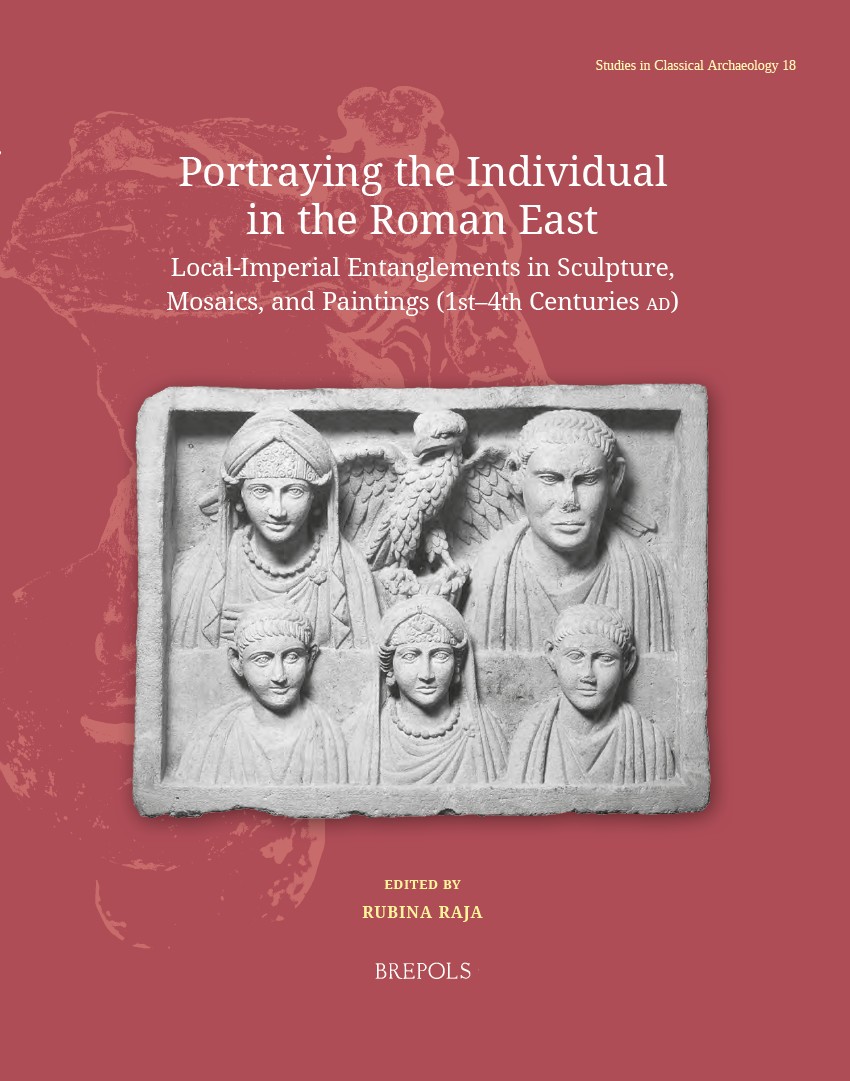 Portraying the Individual in the Roman East
Local–Imperial Entanglements in Sculpture, Mosaics, and Paintings (First–Fourth Centuries AD)
Volume 18


 Small Worlds and Relational Agencies: Local Societies in Early Medieval Iberia
Pequeños mundos y Agencias relacionales: Sociedades locales altomedievales en la Península Ibérica


 Technical Studies of Asian Art
Proceedings of the Seventh Forbes Symposium at the Freer Gallery of Art
