
»Kultprostitution« im Alten Testament?
Die Qedeschen der Hebräischen Bibel und das Motiv der Hurerei
By (author) Christine Stark

Was hat es auf sich mit der Hurerei am Tempel?
Als “Tempeldirnen” und “Lustknaben” sind sie in Bibelubersetzungen zu finden. Aber gab es sie wirklich, die sogenannten Tempelprostituierten? Fur den Alten Orient wird dies schon lange in Zweifel gezogen. Das Alte Testament jedoch soll Kultprostitution bezeugen, und zwar als Tatigkeit der Qedeschen. Die vorliegende Untersuchung widmet sich dieser alttestamentlichen Gruppe in detaillierten Exegesen zu samtlichen Belegen uber das Qedeschen-Wesen und kommt zu dem Ergebnis: Die Vorstellung von Kultprostitution speist sich aus einem Forschungsmythos. Die alttestamentlichen Qedeschen erscheinen als Kultpersonal aus der Anfangszeit Judas, die mit Opferriten und der Verehrung Ascheras in Verbindung gestanden haben, jedoch nicht als Kultprostituierte i.e.S. bezeichnet werden konnen.
- By (author) Christine Stark
Other Titles in this Series
 Anfänge der ägyptischen Kunst
Eine problemgeschichtliche Einführung in ägyptologische Bild-Anthropologie




 Formen für ägyptische Fayencen aus Qantir Band II
Katalog der Sammlung des Franciscan Biblical Museum, Jerusalem und zweier Privatsammlungen

 What Is Stronger than a Lion?
Leonine Image and Metaphor in the Hebrew Bible and the Ancient Near East


 Architecture, Iconography, and Text
New Studies on the Northwest Palace Reliefs of Ashurnasirpal II
Volume 301
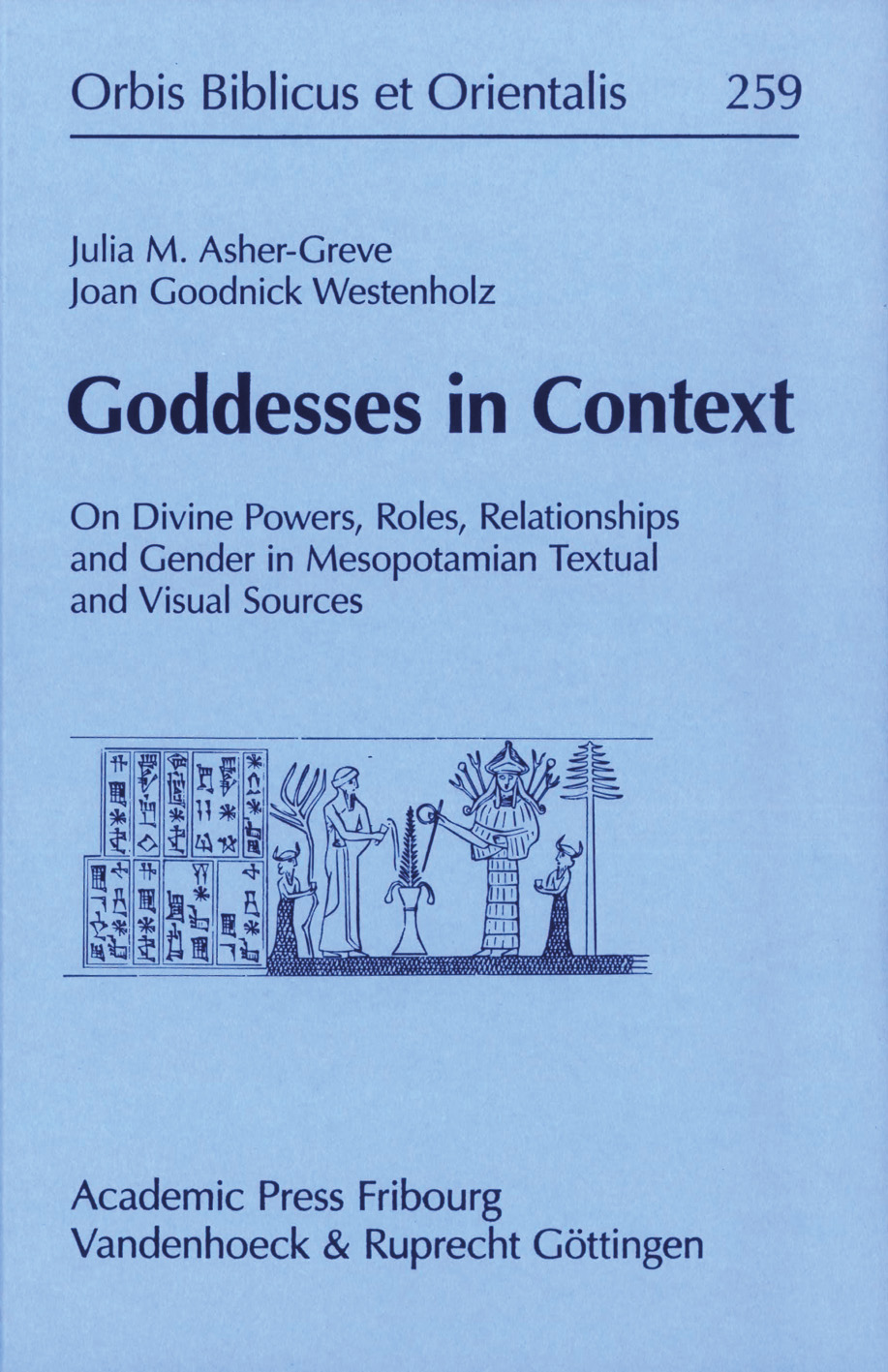 Goddesses in Context
On Divine Powers, Roles, Relationships and Gender in Mesopotamian Textual and Visual Sources
 The Awakening of Osiris and the Transit of the Solar Barques
Royal Apotheosis in a Most Concise Book of the Underworld and Sky
 L’Ecrit et l’Esprit
Etudes d’Histoire du texte et de théologie biblique en hommage à Adrian Schenker
 When Gods Speak to Men
Divine Speech according to Textual Sources in the Ancient Mediterranean Basin
Volume 289
 Eine königliche Weisheitslehre?
Exegetische Analyse von Sprüche 28-29 und Vergleich mit den ägyptischen Lehren Merikaras und Amenemhats
 Les fluides corporels en Égypte et au Proche-Orient anciens
Actes du colloque organisé à l'Université Paul-Valéry, Montpellier, 5-7 septembre 2019
Volume 309
 Göttliche Körper – Göttliche Gefühle
Was leisten anthropomorphe und anthropopathische Götterkonzepte im Alten Orient und Alten Testament?
 Divine Names on the Spot II
Exploring the Potentials of Names through Images and Narratives
Volume 299
 Comment devient-on prophète?
Actes du colloque organisé par le Collège de France, Paris, les 4-5 avril 2011
 Wortschöpfung
Die Memphitische Theologie und die Siegesstele des Pije - zwei Zeugen kultureller Repräsentation in der 25. Dynastie
Volume 243
 From Most Ancient Sources
The Nature and Text-Critical Use of the Greek Old Testament Text of the Complutensian Polyglot Bible

 Menschenwürde und Menschenrechte im Altem Orient, Israel und Hellas. Band 1
Human Dignity and Human Rights in the Ancient Near East, Ancient Israel, and Hellas. Volume 1
Volume 311
Similar Books


 Athanasius of Alexandria, Epistula ad episcopos Aegypti et Libyae
Old Slavonic Version and English Translation
Volume 261



 Contesting Labeled Identities
The Sociology of Gentilics in Biblical and Northwest Semitic Literature
 Cyril of Alexandria’s Christological Exegesis
Explorations of Partitive Exegesis in the Dialogues on the Trinity
Volume 70


 Epiphanies of the Divine in the Septuagint and the New Testament
Fifth International Symposium of the Corpus Judaeo-Hellenisticum Novi Testamenti (CJHNT), 14-17 May 2015, Nottingham


 Extracanonical Traditions and the Holy Land
Texts, Rituals, and Material Culture in Late Antique Palestine
 From Joseph to Jesus
The Joseph Narrative as a Compositional Template from Old Greek Esther to the Gospel of Luke
Volume 125





 Nicholas of Lyra’s Commentaries on the Gospels of Matthew and Luke
Franciscan Exegesis in a Time of Crisis
 Paradise Lost in Transmission
The Return to Eden in the Apocalypse of Peter within Its Ethiopic and Early Christian Contexts




 Punning in Odd or Elegant Constructions in Jeremiah
The Convergence of Linguistics, Rhetoric, and Textuality in the Hebrew Text of Jeremiah


 Reformed Covenantal Eudaimonism
Wilhelmus à Brakel (1635–1711) on Highest Good, Virtue, and Law
Volume 87
