
Joining Israel: Gentiles in 1 Peter’s Ethnic Imagination
By (author) Noel Cheong

Paperback (Forthcoming)
(October 2026)
ISBN: 9783162005335
6.1 x 9.13 inches
Price: $119.00
If 1 Peter calls its readers “a holy nation,” what does that imply about their relationship to Israel? Exploring the letter’s ethnic language, Noel Cheong shows how Gentile Christians have joined Israel, echoing Old Testament patterns of incorporating resident foreigners.
Noel Cheong provides a comprehensive investigation of ethnicity in 1 Peter, focusing on the epistle’s use of terms denoting peoplehood such as γένος ἐκλεκτόν (2.9) and τὰ ἔθνη (2.12; 4.3). He asks what these terms imply about the readers’ relationship with Israel and concludes that the letter presents Gentile believers as foreigners who have joined Israel in a manner analogous to the Old Testament incorporation of non-Israelites into God’s people. Methodologically, the author offers a historical-critical analysis of 1 Peter, situating the letter’s ethnic language within the first-century Jewish and Graeco-Roman world. To this end, he compares 1 Peter with sources such as Greek inscriptions, the Qumran writings, and the Mishnah. This is complemented by social-scientific approaches to ethnicity, which treat ethnic categories as attempts to mark difference on the basis of supposedly immutable traits, even though group boundaries remain fluid. Accordingly, terms like “Gentile” and “Israel” are not fixed but often reflect the desire to emphasise difference or similarity between individuals. On this basis, the author reassesses the widespread assumption that biblical Israel was imagined as an ethnically homogeneous entity. He demonstrates instead that the Old Testament regularly depicts Israel as including individuals and groups who are not biological descendants of Jacob, such as the Gibeonites and the resident foreigners who were involved in Israel’s social and cultic life. The author concludes that 1 Peter articulates a thoroughly Jewish vision of Gentile inclusion, consonant with scriptural expectations of the incorporation of non-Jews into the redemption of Israel. In doing so, he challenges prevailing interpretations of Jewish conversion and Christian supersessionism in New Testament scholarship.
Chapter 1: Introduction
1.1. Ethnicity - Then and Now
1.2. 1 Peter in Place and Time
1.3. Framing This Study
Chapter 2: Israel's Titles for a Gentile Audience
2.1. "You Are A Chosen People"
2.2. Hosea's Prophecy
2.3. The Diaspora of Israel
2.4. The Co-Elect in Babylon
2.5. Conclusion
Chapter 3: Πάροικος καὶ Παρεπίδημος and 1 Peter's Resident Foreigners
3.1. Status Quaestionis: Alienation and Exile
3.2. Israel's Non-Native Insiders
3.3. 1 Peter's Pious Gentiles
3.4. The Πάροικος and the Παρεπίδημος in the Ancient World
Chapter 4: Why are Outsiders Called "Gentiles"?
4.1. Who are τὰ ἔθνη?
4.2. Gentiles as Outsiders in 1 Peter
4.3. Conclusion
Chapter 5: Kinship and Conversion: Family Imagery in 1 Peter
5.1. The Futility of Ancestral Traditions
5.2. Redemption as Transfer
5.3. Divine Fatherhood and Regeneration
5.4. Becoming Children of Sarah
5.5. Sharing the Inheritance of Israel
5.6. Belonging to a Worldwide Brotherhood
5.7. The Household of Christ
5.8. Conclusion
Chapter 6: Conclusion
6.1. Summary
6.2. Implications
6.3. Reflections and Praxis
- By (author) Noel Cheong
Other Titles in this Series


 The Cosmic Drama of Salvation
A Study of Paul's Undisputed Writings from Anthropological and Cosmological Perspectives
Volume 276
 Christosis
Pauline Soteriology in Light of Deification in Irenaeus and Cyril of Alexandria
Volume 314
 Christian Identity in Corinth
A Comparative Study of 2 Corinthians, Epictetus, and Valerius Maximus
Volume 243


 The Characterisation of Jesus the Davidic Shepherd in Mark’s Gospel
A Narrative Analysis through the Lens of Metalepsis
Volume 626


 “Make Disciples of All Nations”
The Appeal and Authority of Christian Faith in Hellenistic-Roman Times
 Moral Transformation in Greco-Roman Philosophy of Mind
Mapping the Moral Milieu of the Apostle Paul and his Diaspora Jewish Contemporaries
Volume 515
 Paul’s Teaching on the Pneumatika in 1 Corinthians 12-14
Prophecy as the Paradigm of ta Charismata ta Meizona for the Future-Oriented Ekklesia
Volume 455
 Vielfalt der Emotionen in neutestamentlicher und frühchristlicher Literatur
Exegetische Studien zu Darstellung, Funktion und Deutung
 Sprachethik im Neuen Testament
Eine Analyse des fruhchristlichen Diskurses im Matthausevangelium, im Jakobusbrief und im 1. Petrusbrief
Volume 394
 The Mysticism of Hebrews
Exploring the Role of Jewish Apocalyptic Mysticism in the Epistle to the Hebrews
Volume 331


 Das Wirken Jesu in Galilaa bei Johannes
Eine strukturale Analyse der Intertextualitat des vierten Evangeliums mit den Synoptikern
Volume 325


 Communal Participation in the Spirit
The Corinthian Correspondence in Light of Early Jewish Mysticism in the Dead Sea Scrolls
Volume 575

 Portraits of Paul’s Performance in the Book of Acts
Luke's Apologetic Strategy in the Depiction of Paul as Messenger of God
Volume 556
 The Doubt of the Apostles and the Resurrection Faith of the Early Church
The Post-Resurrection Appearance Stories of the Gospels in Ancient Reception and Modern Debate
Volume 495
 Semantik und Ethik des Wortfeldes ‘Ergon’ im Johannesevangelium
Kontexte und Normen neutestamentlicher Ethik / Contexts and Norms of New Testament Ethics, Band VIII
Volume 431
Similar Books



 Athanasius of Alexandria, Epistula ad episcopos Aegypti et Libyae
Old Slavonic Version and English Translation
Volume 261


 Connecting the Dots: Counting, Writing, and the Beginnings of Civilization
The Secret Lives of Clay Tokens: A Memoir
 Cyril of Alexandria’s Christological Exegesis
Explorations of Partitive Exegesis in the Dialogues on the Trinity
Volume 70


 Epiphanies of the Divine in the Septuagint and the New Testament
Fifth International Symposium of the Corpus Judaeo-Hellenisticum Novi Testamenti (CJHNT), 14-17 May 2015, Nottingham


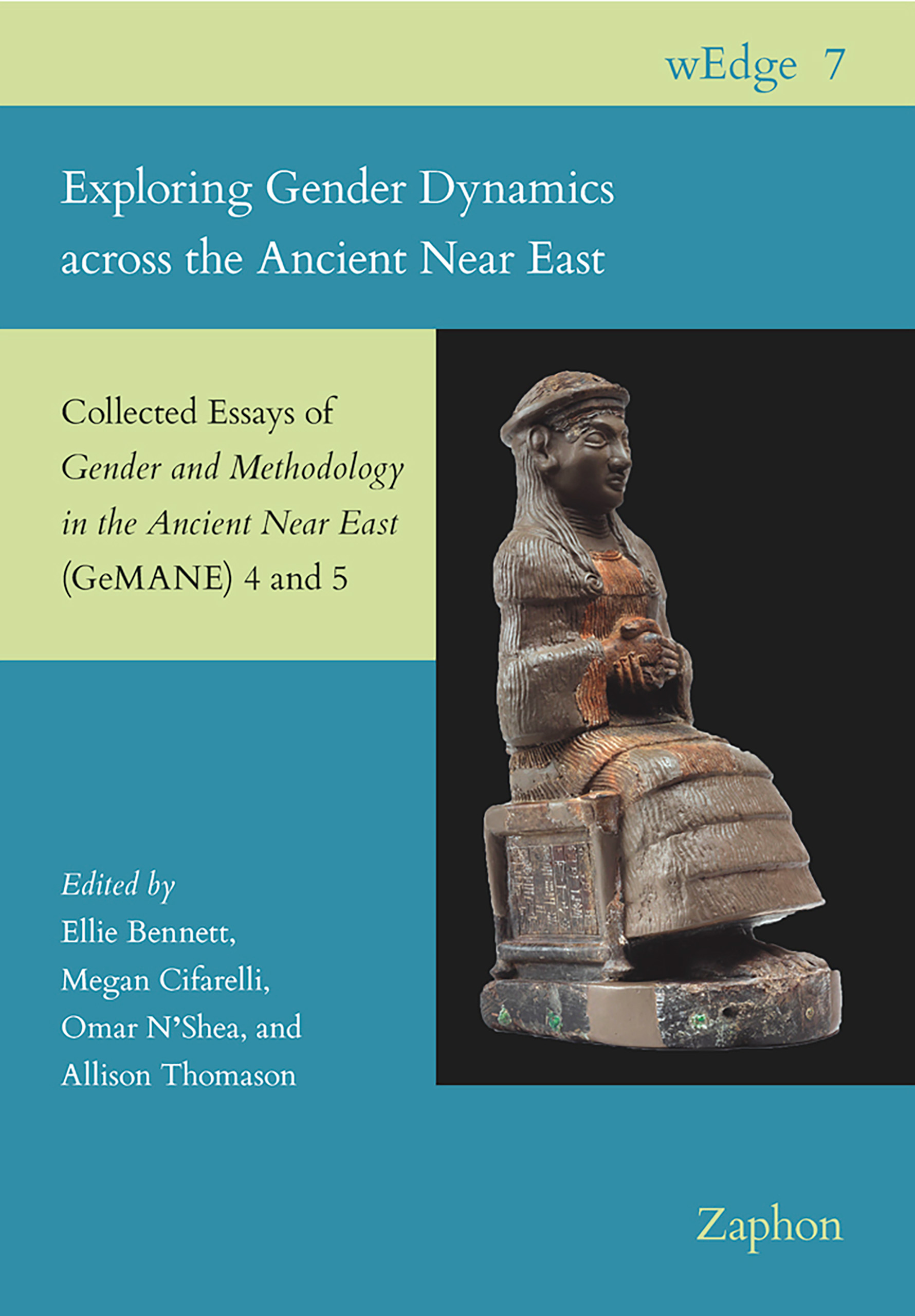 Exploring Gender Dynamics across the Ancient Near East
Collected Essays of Gender and Methodology in the Ancient Near East (GeMANE) 4 and 5
Volume 7
 Extracanonical Traditions and the Holy Land
Texts, Rituals, and Material Culture in Late Antique Palestine

 From Joseph to Jesus
The Joseph Narrative as a Compositional Template from Old Greek Esther to the Gospel of Luke
Volume 125


 Ḫattušaš utnē išḫameški
Hittite and Other Ancient Near Eastern Studies Presented to Piotr Taracha on the Occasion of His 65th Birthday


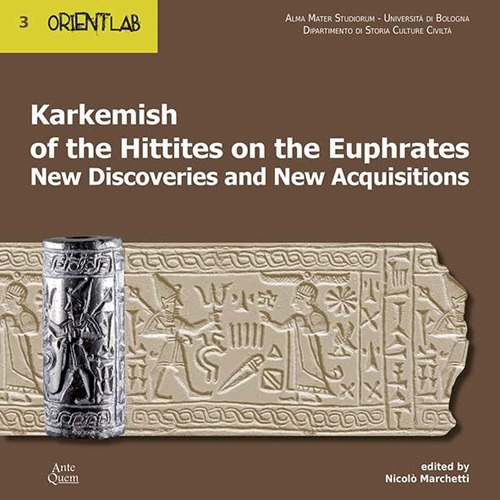


 New Research on Old Collections in Southwest Asian Archaeology
Proceedings of the Workshop Held at the British Museum, London, 31 July – 2 August, 2023
 Old Aramaic Inscriptions and their Contexts
An Epigraphic, Archaeological, and Historical Synthesis
Volume 63

 Paradise Lost in Transmission
The Return to Eden in the Apocalypse of Peter within Its Ethiopic and Early Christian Contexts


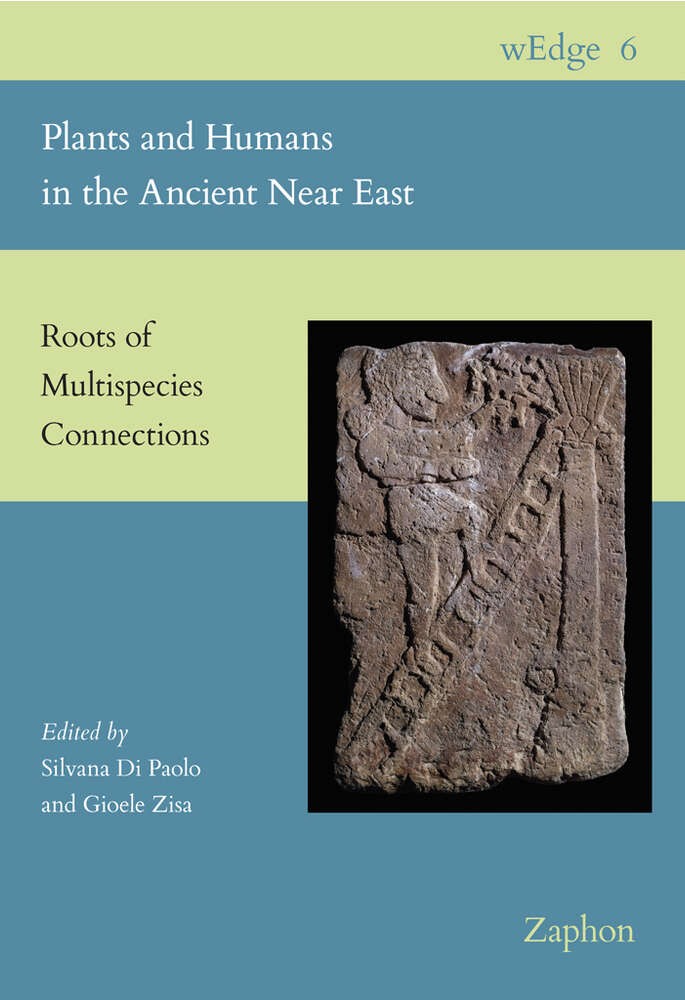
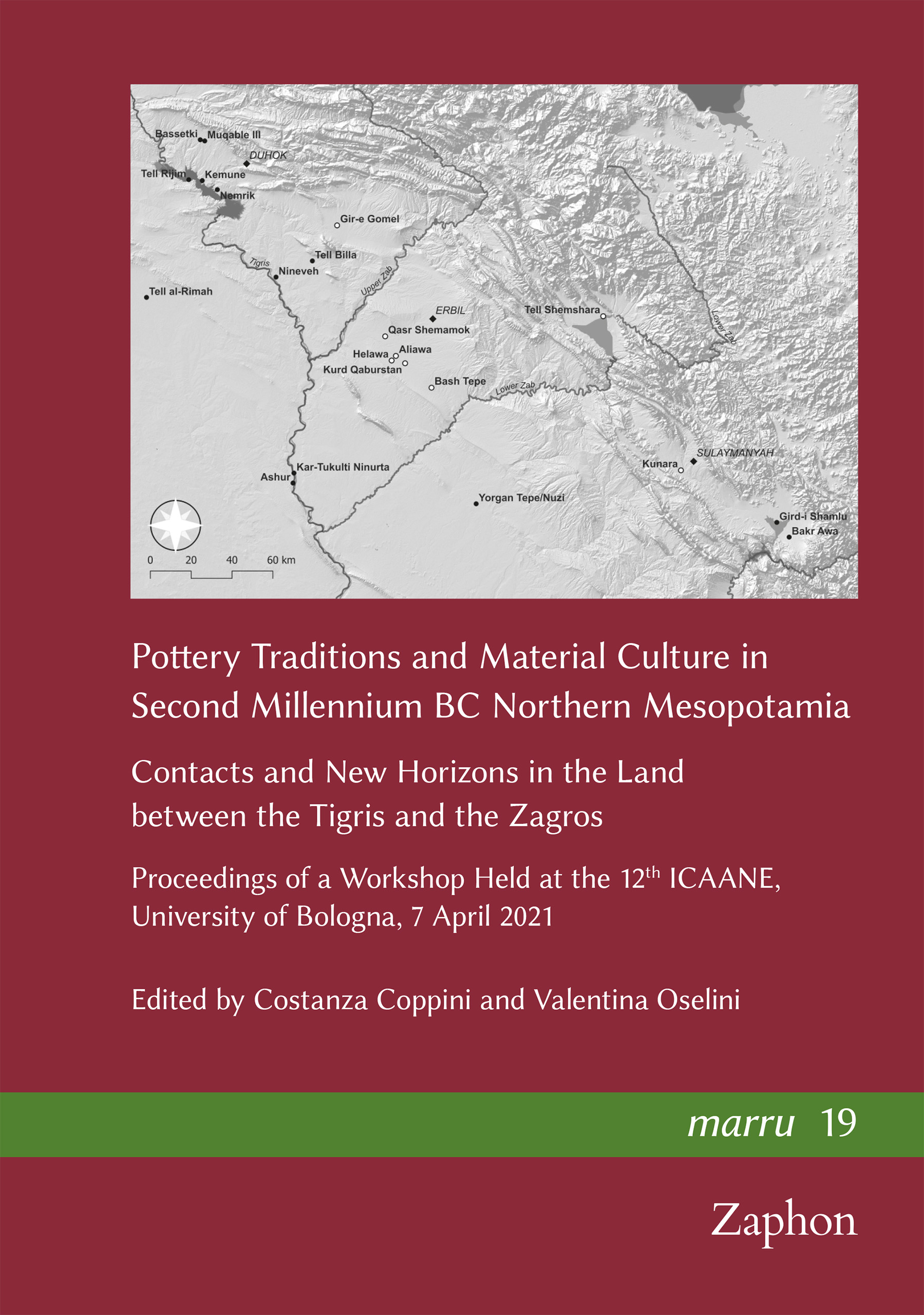 Pottery Traditions and Material Culture in Second Millennium BC Northern Mesopotamia
Contacts and New Horizons in the Land between the Tigris and the Zagros. Proceedings of a Workshop Held at the 12th ICAANE, University of Bologna, 7 April 2021
Volume 19
