
Fading Frontiers?
A Historical-Theological Investigation into the Notion of the 'Elementa Ecclesiae'
By (author) S. Arenas

One aspect of the ecclesiological renewal at Vatican II that has not received much scholarly attention so far is the doctrine of the “elements of the church” (elementa ecclesiae), previously unheard of in Roman Catholic magisterial documents. This book offers an original and comprehensive study of this notion and how it became part of the official teaching of the Roman Catholic church. Using a historical-theological approach, the author studies the origins and evolution of the concept of the “elements of the church” and gives a nuanced understanding of this doctrine as outlined in Lumen gentium § 8 and Unitatis redintegratio § 3. In this way, the author offers a renewed insight into the evolution of the position of the Roman Catholic church “in oecumenicis” during and in the aftermath of Vatican II. The development sketched in the book is characterized by a double perspective. On the one hand, there is the debate about the frontiers of the church that focuses on the relationship between the Roman Catholic church and the church of Christ. On the other hand, and closely related to the first aspect, there is the issue of the recognition of “ecclesial” elements in non-Catholic Christian communities. Both threads are closely interwoven and it is important to understand the relationship if one wants to do justice to the doctrinal balance and complexity of Vatican II’s ecumenical ecclesiology. Taking these two aspects together, one should readily acknowledge the shift that typifies Roman Catholic ecclesiology from a juridical approach to the question of defining the Roman Catholic church’s frontiers over against the outside world – and a fortiori over against other Christian denominations – towards a sacramental approach to Roman Catholic ecclesiology in which the notions of sacramentality and mystery are foundational. Along with this new approach came a renewed attention for a Christ-centred ecclesiology and a recognition of the activity and work of the Spirit outside the Roman Catholic church. All of these aspects are touched upon in this book. The author has studied original documentation in a number of archives. The book thus offers a detailed reconstruction of textual evolutions and highlights the role played by Catholic and non-Catholic theologians who have helped shape contemporary ecclesiological thought. It gives us insight into the complex background history of the elementa ecclesiae and shows how it continues to inspire post-conciliar ecclesiological and ecumenical discussions.
- By (author) S. Arenas
Other Titles in this Series

 Florilegium Lovaniense
Studies in Septuagint and Textual Criticism in Honour of FlorentinoGarcía Martínez
Volume 224
 Analyse narrative et Bible
Deuxième colloque international du RRENAB, Louvain-la-Neuve, avril2004
Volume 191


 Texts in Context
Essays on Dating and Contextualising Christian Writings from the Second and Early Third Centuries
Volume 319


 Writing, Rewriting, and Overwriting in the Books of Deuteronomy and the Former Prophets
Essays in Honor of Cynthia Edenburg
Volume 304

 The Belgian Contribution to the Second Vatican Council
International Research Conference at Mechelen, Leuven andLouvain-la-Neuve (September 12-16, 2005)
Volume 216



 Half-Truths
The Irish College, Rome, and a Select History of the Catholic Church, 1771-1826
Volume 322

 Virtuelle Vergangenheit
Die Textrekonstruktion einer verlorenen mittelniederländischenEvangelienharmonie. Die Handschrift Utrecht Universitätsbibliothek 1009
Volume 210
 The Holy Spirit, The Church, and Christian Unity
Proceedings of the Consultation Held at the Monastery of Bose, Italy(14-20 October 2002)
Volume 181
 Des communautés nouvelles dans le catholicisme contemporain
Innovations, réinventions, ruptures et régulations
Volume 345
 The Anthropological Turn, Christian Humanism, and Vatican II
Louvain Theologians Preparing the Path for 'Gaudium et spes'(1942-1965)
Volume 303
Similar Books
 ‘For You I Study, For You I Work, For You I Live, For You I Am Ready To Even Give My Life’
Essays in Honour of Francis (Frank) J Moloney, SDB

 A Connecting Polemic in the Medieval Mediterranean
The Correspondence of Leo III and ʿUmar II
Volume 6





 Ars Prophetica
Theology in the Poetry of Twentieth-Century Hebrew Poets Avraham Halfi, Shin Shalom, Amir Gilboa, and T. Carmi
 As Messianism Turns to Heresy
The Regenstein Chair Lectures On Lurianic Kabbalah and Shabbatai Tzevi at Hebrew Union College - Cincinnati



 Creating the Woman in Antiquity
Proceedings of the 16th Melammu Workshop, Innsbruck, 2–3 June 2022
Volume 13
 Cultic Kisses
Fruitful Encounters Between Deities and Humans. Festschrift for Angelika Berlejung on the Occasion of Her 65th Birthday
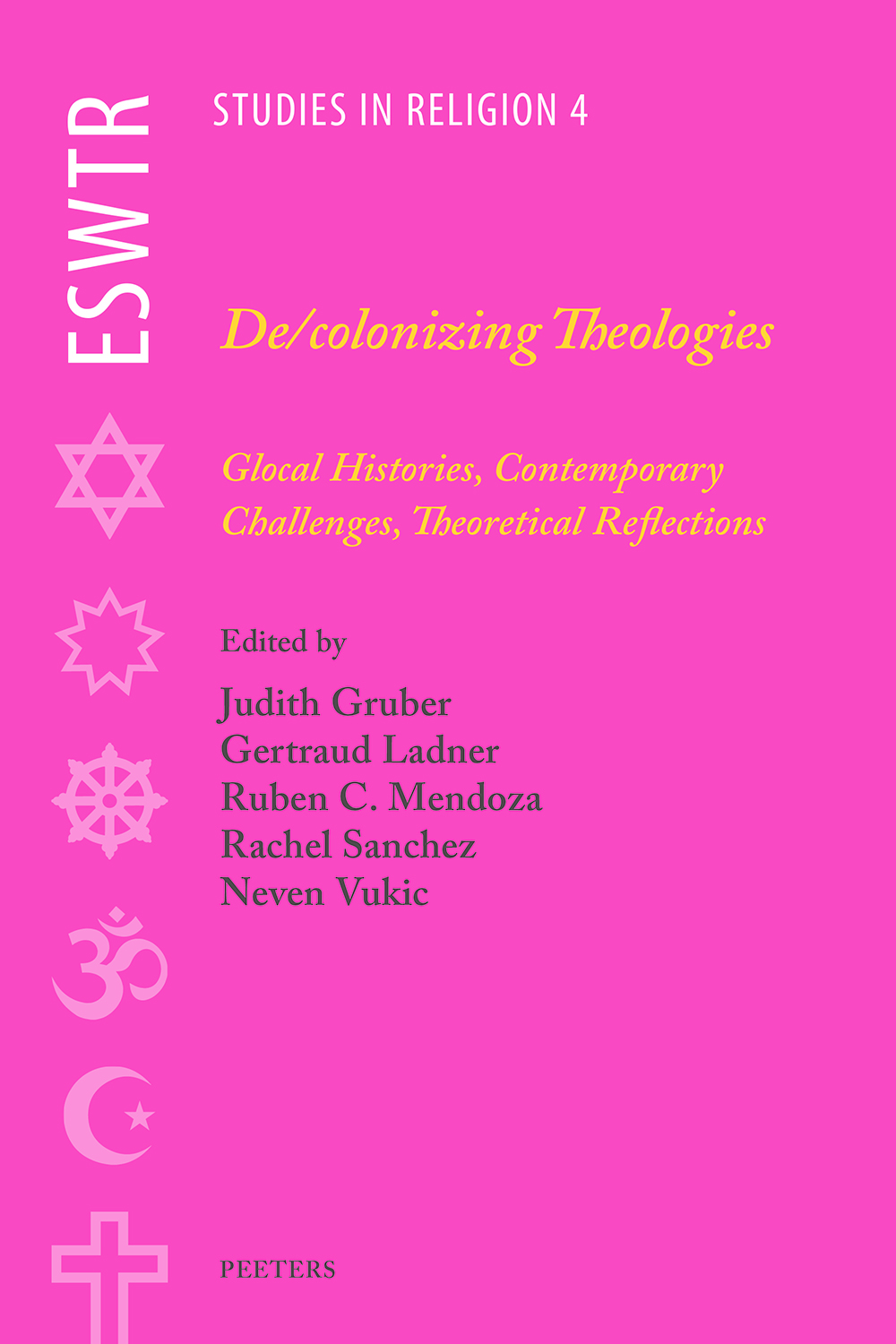 De/colonizing Theologies
Glocal Histories, Contemporary Challenges, Theoretical Reflections
Volume 4
 Drunk the Potion, No Whit Charmed
The Doctrine of Pure and Perfect Souls from Iamblichus to Damascius




 Extracanonical Traditions and the Holy Land
Texts, Rituals, and Material Culture in Late Antique Palestine
 Fear, Fear of God, God-Fearers
Philological and Historical Perspectives on the World of Ancient Judaism and Christianity


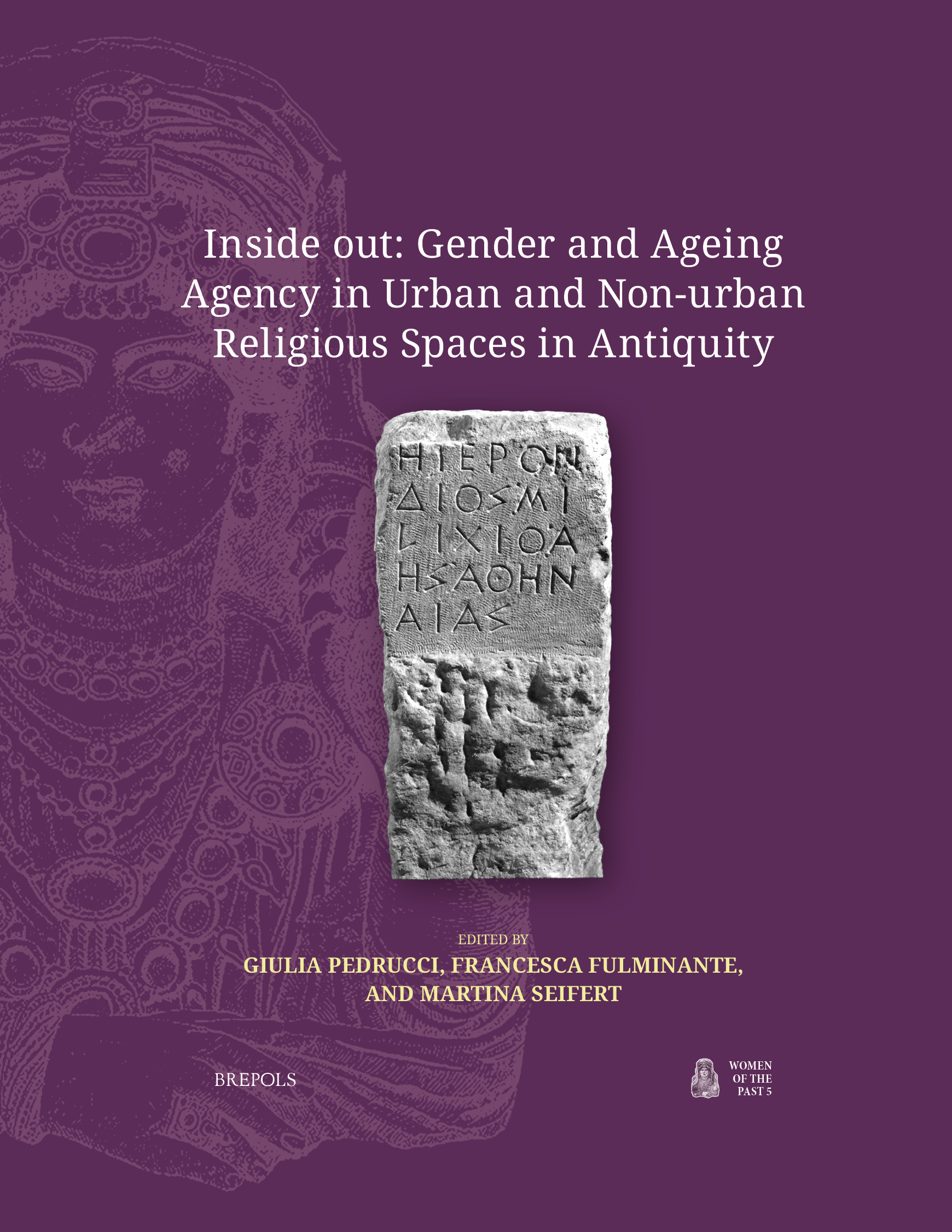
 Gender and Iconography in Antiquity
Femininities, Masculinities, Ambiguities, and Beyond in the Ancient Levant, Near East, and Mediterranean


 Hoghe minne es deen vor dander
Essays on the Christian Mystical Tradition in Honour of Rob Faesen SJ
Volume 122

 International Comparison and Transfer in Religious Education
The Projects “RE at Schools in Europe” and “International Knowledge Transfer” in Dialogue
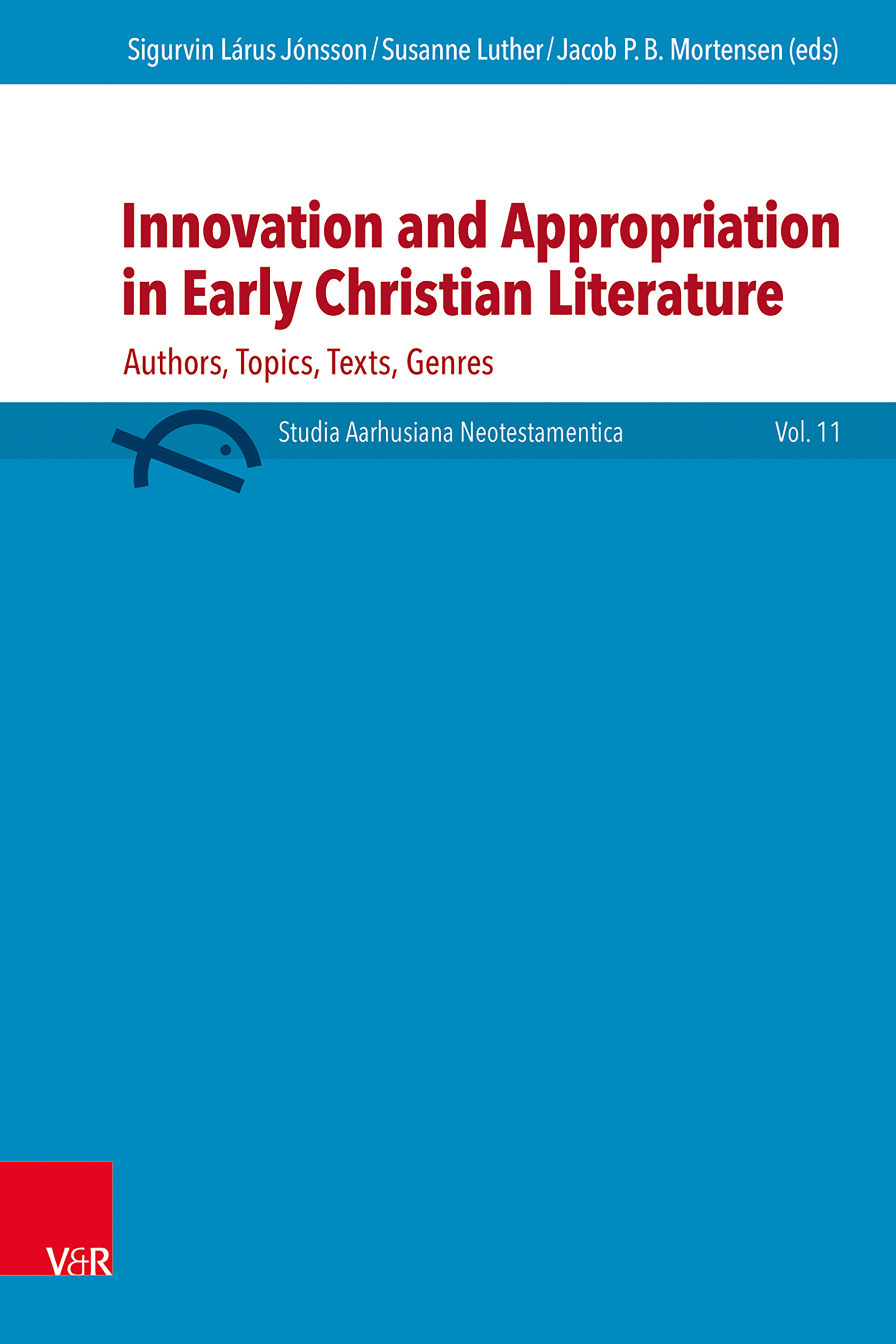
 Isaiah in the Fourth Gospel
Use of the Citations of Isaiah in John’s Gospel in Comparison to the Synoptics and Other Places in the New Testament