Civil Calendar and Lunar Calendar in Ancient Egypt
By (author) L. Depuydt

This investigation is concerned with ancient Egyptian calendars. Its specific focus is one of the oldest problems of the study of these calendars: the so-called problem of the month names. This work’s main purpose is to suggest an explanation for the Brugsch phenomenon. The Brugsch phenomenon is one of the two main aspects of the problem of the month names. The other is the Gardiner phenomenon. No new theory is presented for the Gardiner phenomenon. As a problem, the Brugsch phenomenon is slightly older than the Gardiner Phenomenon. It has occupied center stage in the study of ancient Egyptian calendars since the early days of this endeavor. In 1870, Heinrich Brugsch, the great pioneer in this subject, wrote about the phenomenon, “Here we encounter all at once the most curious contradiction.” Just recently, Rolf Krauss has described the contradiction as still “unsolved”. The Brugsch phenomenon concerns the indisputable fact that the last or twelfth month of the Egyptian civil year can be named as if it were the first. Two month names are involved. The first is wp rnpt. Its meaning “opener of the year,” refers to a beginning. The second month name is mswt r’ “birth of Re” in hieroglyphic Egyptian, Mesore in Aramaic, Greek and Coptic. Both can otherwise also refer to New Year’s Day, the quintessential calendrical beginning.
This investigation is concerned with ancient Egyptian calendars. Its specific focus is one of the oldest problems of the study of these calendars: the so-called problem of the month names. This work’s main purpose is to suggest an explanation for the Brugsch phenomenon. The Brugsch phenomenon is one of the two main aspects of the problem of the month names. The other is the Gardiner phenomenon. No new theory is presented for the Gardiner phenomenon. As a problem, the Brugsch phenomenon is slightly older than the Gardiner Phenomenon. It has occupied center stage in the study of ancient Egyptian calendars since the early days of this endeavor. In 1870, Heinrich Brugsch, the great pioneer in this subject, wrote about the phenomenon, “Here we encounter all at once the most curious contradiction.” Just recently, Rolf Krauss has described the contradiction as still “unsolved”. The Brugsch phenomenon concerns the indisputable fact that the last or twelfth month of the Egyptian civil year can be named as if it were the first. Two month names are involved. The first is wp rnpt. Its meaning “opener of the year,” refers to a beginning. The second month name is mswt r’ “birth of Re” in hieroglyphic Egyptian, Mesore in Aramaic, Greek and Coptic. Both can otherwise also refer to New Year’s Day, the quintessential calendrical beginning.
- By (author) L. Depuydt
Other Titles in this Series

 Kitab al-Ma’arif by Abu Sa’id Maymun b. Qasim al-Tabarani
Critical Edition with an Introduction
Volume 209
 ‘Abbasid Studies
Occasional Papers of the School of 'Abbasid Studies, Cambridge, 6-10 July 2002
Volume 135
 The Language of Qohelet in Its Context
Essays in Honour of Prof. A. Schoors on the Occasion of his Seventieth Birthday
Volume 164
 Des cahiers à l’histoire de la culture à Byzance
Hommage à Paul Canart, codicologue (1927-2017)
Volume 306, 27
 From Gnostics to Monastics
Studies in Coptic and Early Christianity in Honor of Bentley Layton
Volume 263

 Egypt at its Origins 2
Proceedings of the International Conference 'Origin of the State. Predynastic and Early Dynastic Egypt', Toulouse (France), 5th-8th September 2005
Volume 172
 Redefining Christian Identity
Cultural Interaction in the Middle East since the Rise of Islam
Volume 134
 Studies in Arabic and Islam
Proceedings of the 19th Congress, Union Europeenne des Arabisants et Islamisants, Halle 1998
Volume 108
 Inscriptions nabatéennes datées de la fin du IIe siècle avant notre ère au milieu du IVe siècle
Volume 279

 Koptische liturgische Melodien
Die Relation zwischen Text und Musik in der koptischen Psalmodia
Volume 197
 Honi soit qui mal y pense
Studien zum pharaonischen, griechisch-römischen und spätantiken Ägypten zu Ehren von Heinz-Josef Thissen
Volume 194
 Arabic Theology, Arabic Philosophy
From the Many to the One: Essays in Celebration of Richard M. Frank
Volume 152
 The Egyptian God Tutu
A Study of the Sphinx-God and Master of Demons with a Corpus ofMonuments
Volume 119


 Seals and Sealing Practices in the Near East. Developments in Administration and Magic from Prehistory to the Islamic Period
Proceedings of an International Workshop at the Netherlands-Flemish Institute in Cairo on December 2-3, 2009
Volume 219
 Tribes and Territories in Transition
The Central East Jordan Valley in the Late Bronze and Early Iron Ages: A Study of the Sources
Volume 130

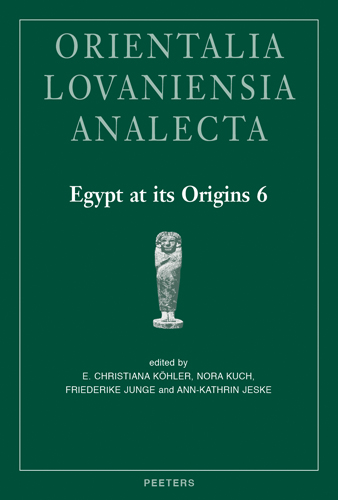 Egypt at its Origins 6
Proceedings of the Sixth International Conference "Origin of the State. Predynastic and Early Dynastic Egypt", Vienna, 10th - 15th September 2017
Volume 303


 Mythologie et Religion des Sémites Occidentaux
Vol. I: Ebla, Mari. Vol. II: Émar, Ougarit, Israël, Phénicie, Aram, Arabie
Volume 162
 Egypt and Syria in the Fatimid, Ayyubid and Mamluk Eras IV
Proceedings of the 9th and 10th International Colloquium organized at the Katholieke Universiteit Leuven in May 2000 and May 2001
Volume 140
Similar Books


 Cahiers de lexicologie
Particules floues — Nouvelles études sur le français et l'espagnol
Volume 128
 Des mots aux actes
Traduction épistémique et littéraire. Nouvelles tendances en histoire et didactique
Volume 15


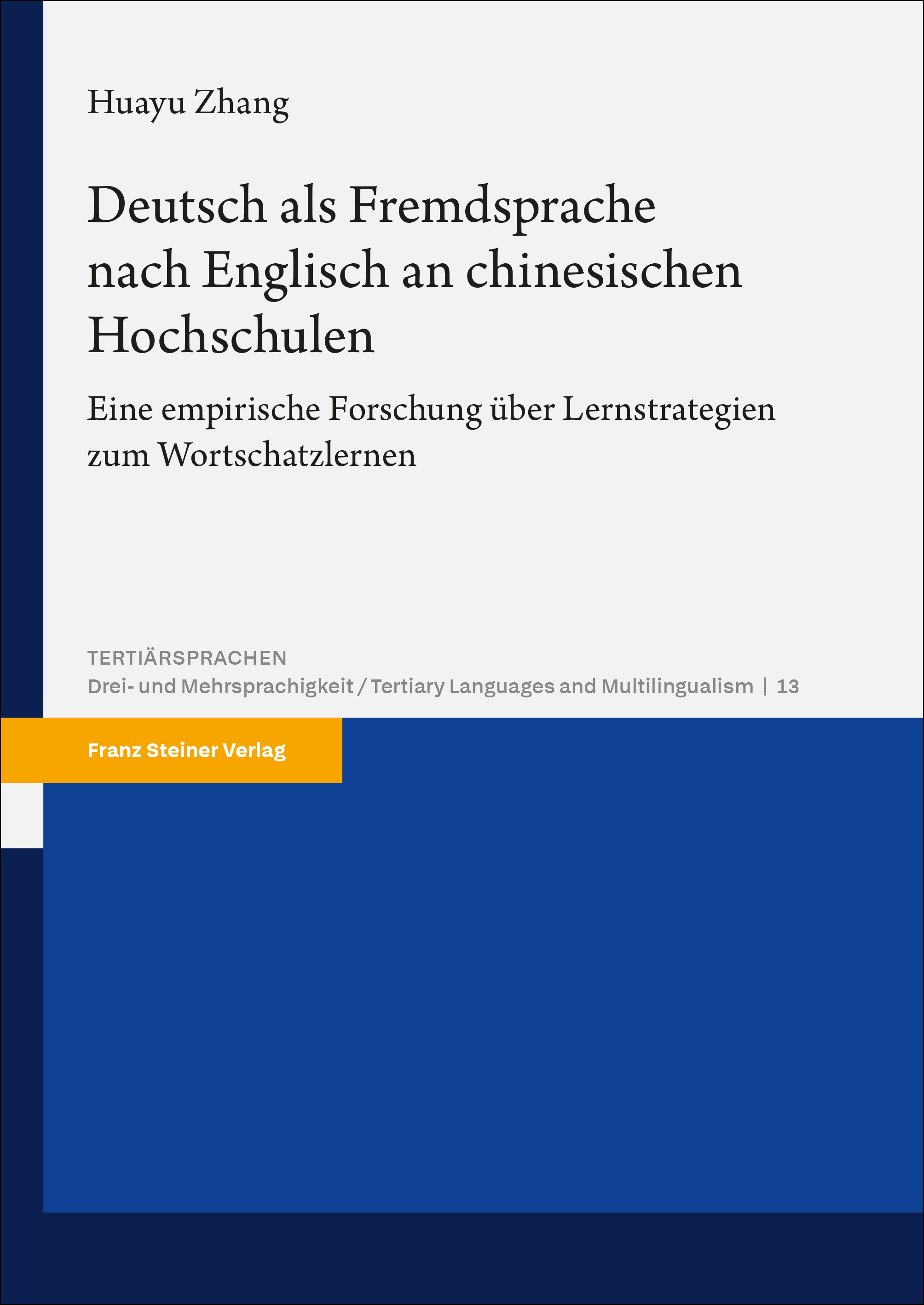 Deutsch als Fremdsprache nach Englisch an chinesischen Hochschulen
Eine empirische Forschung über Lernstrategien zum Wortschatzlernen












 Punning in Odd or Elegant Constructions in Jeremiah
The Convergence of Linguistics, Rhetoric, and Textuality in the Hebrew Text of Jeremiah


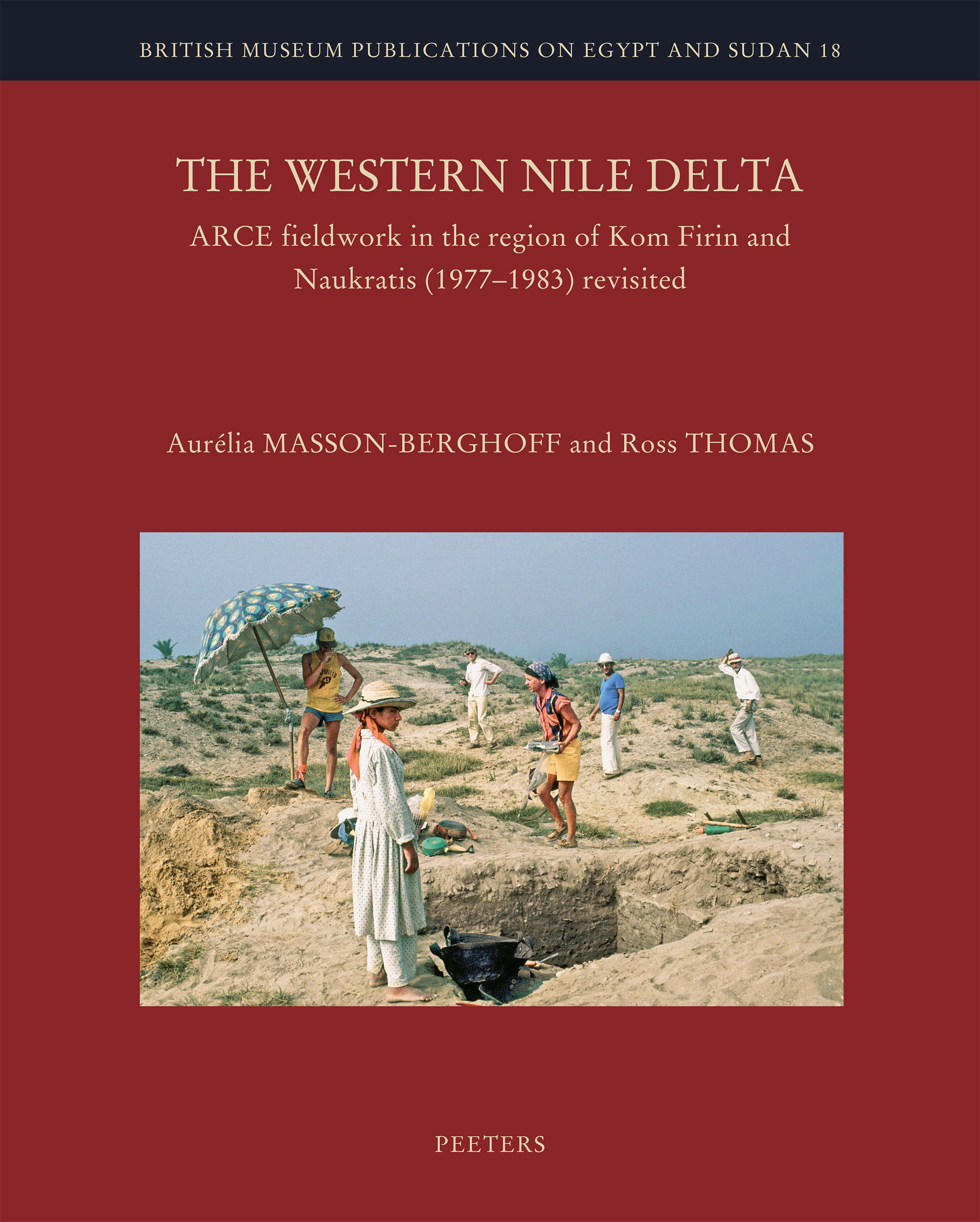 The Western Nile Delta
ARCE Fieldwork in the Region of Kom Firin and Naukratis (1977-1983) Revisited