
The Door to My Household
The phenomenon of decorated doors in Middle Egypt
By (author) Katarzyna Molga By (author) Teodozja I. Rzeuska

Paperback (Published)
(July 2026)
ISBN: 9783447118217
8.31 x 11.69 inches
Price: $57.00
In stock
The Door to My Household is a catalogue and the first part of a monograph that presents a series featuring dozens of unique wooden doors from the Middle Egypt region. These doors were crafted by several carpentry families over a period of at least a hundred years, from the 19th to the late 20th century. These unusual objects are decorated with reliefs depicting floral motifs, humans as well as animals. Both the style of representation and the symbolism of these motifs seem to date back to Pharaonic times. They refer to the essential and eternal role of the door as a passage between two worlds – the outside world and the inside world of the home. Doors decorated this way are no longer manufactured; the tradition died out with the last craftsman. Moreover, many of the doors presented on the pages of this book no longer exist. The intensive construction activity of our time has destroyed many of the old buildings and with them these extraordinary doors. The authors have succeeded in capturing literally the last moment in the existence of this craft tradition, which is unusual for other parts of Egypt.
The Door to My Household is a catalogue and the first part of a monograph that presents a series featuring dozens of unique wooden doors from the Middle Egypt region. These doors were crafted by several carpentry families over a period of at least a hundred years, from the 19th to the late 20th century. These unusual objects are decorated with reliefs depicting floral motifs, humans as well as animals. Both the style of representation and the symbolism of these motifs seem to date back to Pharaonic times. They refer to the essential and eternal role of the door as a passage between two worlds – the outside world and the inside world of the home. Doors decorated this way are no longer manufactured; the tradition died out with the last craftsman. Moreover, many of the doors presented on the pages of this book no longer exist. The intensive construction activity of our time has destroyed many of the old buildings and with them these extraordinary doors. The authors have succeeded in capturing literally the last moment in the existence of this craft tradition, which is unusual for other parts of Egypt.
- By (author) Katarzyna Molga
- By (author) Teodozja I. Rzeuska
Other Titles in this Series
 The iconography of the pharaoh’s face in the Eighteenth Dynasty relief – metric analysis
Catalogue
Volume 9
 Greeks, Latins and Muslims in Lusignan Cyprus
The Depiction of Interdenominational Relations in the Chronicle of Leontios Makhairas
Volume 12


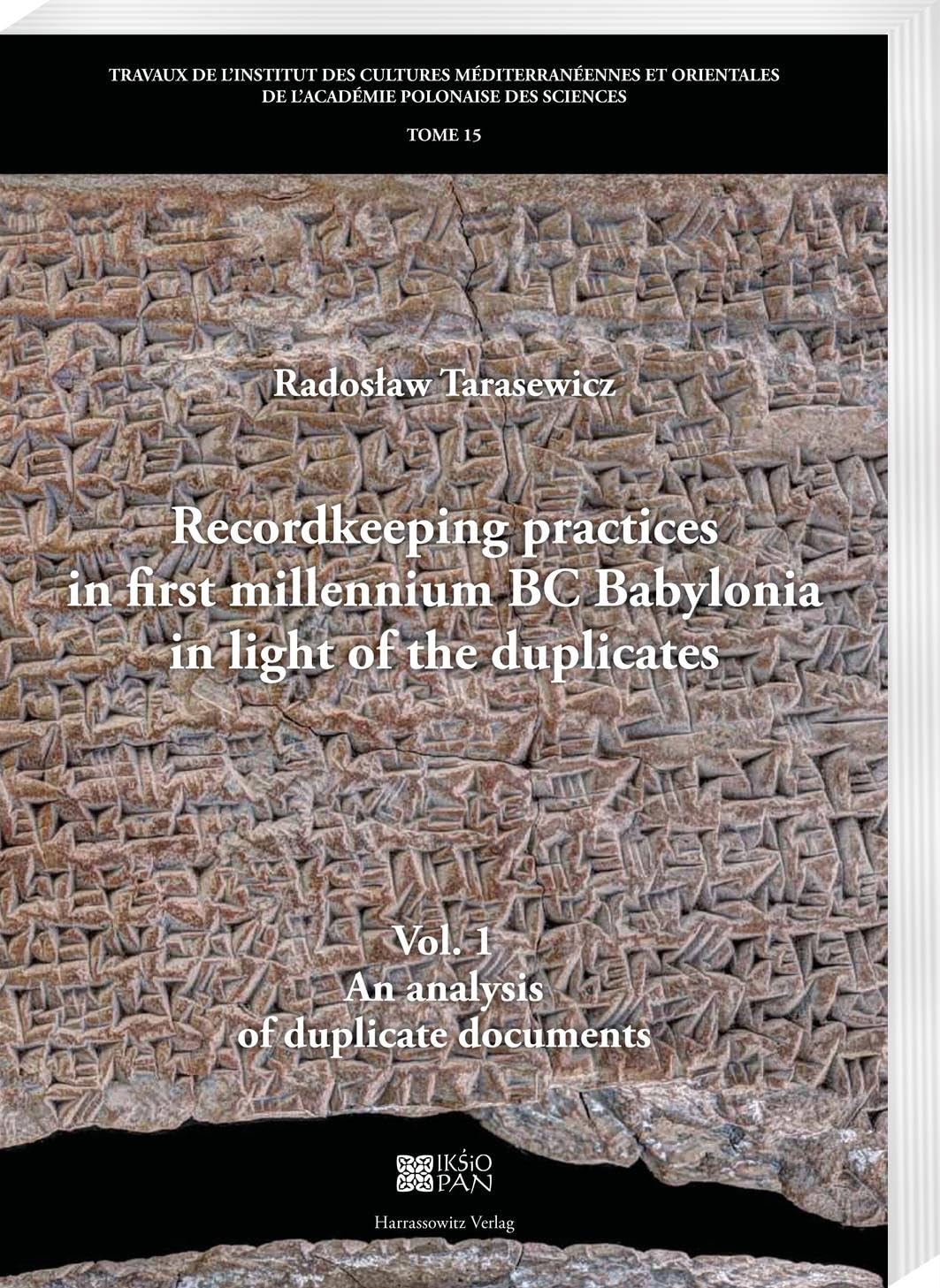 Recordkeeping practices in first millennium BC Babylonia in light of the duplicates.
Vol. 1. An analysis of duplicate documents
Volume 15

Similar Books
 A Collaborative Tapestry in Honour of Shirley Ann Brown / Une fresque brodée en l’honneur de Shirley Ann Brown
The Bayeux Tapestry Seen by her Colleagues and Friends / La Tapisserie de Bayeux vue par ses collègues et amis



 Balthasar Caymox of Nuremberg
Early Modern German Print Publishers: Popular Prints of the Seventeenth Century




 ENTANGLED AFRICA
Intra-African Relations Between Rain Forest and Mediterranean from Around 4,000 BCE to 1,500 CE


 Gold, Silver and Glass: Power Networks, Cultural Identities, Technology Transfers and Agency across the Old World (7th Century BC – 1st Century AD)
Proceedings of a Conference Held at the British Museum, 16–18 June 2023




 Legal Visuality
Exegesis, Ambiguity, and Dissimulation of the Donation of Constantine in the Early Modern Period

 Listening to the Swan Song
More-than-Human Beings and Sounds in Literature and Culture Through the Ages


 Monastic Manuscripts from the Eastern Mediterranean (Sinai, Jerusalem, Antioch)
Production, Use, and Contexts



 Naples as Laboratory / Laboratorium Neapel
Style Options, Artistic Rivalry and Self Fashioning in Neapolitan Baroque Painting / Plurale Stilbildung, Kunstlerkonkurrenz und Self Fashioning in der neapolitanischen Barockmalerei

 Nurturing the Elite
Representations of Drinking, Eating, and Religious Vessels in Palmyrene Funerary Iconography
Volume 13


 Portraying the Individual in the Roman East
Local–Imperial Entanglements in Sculpture, Mosaics, and Paintings (First–Fourth Centuries AD)
Volume 18

