
Agrarian Change and Imperfect Property
Emphyteusis in Europe (16th to 19th centuries)
Edited by Maria Rosa Congost Edited by Pablo Luna

This book is situated at the crossroads of two recurring themes in rural history: agrarian contracts and property rights. Emphyteusis is at the heart of agrarian history in that it brings together agricultural history and the nature of social relations in traditional societies. Despite this, many such contracts have been blithely ignored, or unjustly dismissed, either because they are hard to identify, given the many variants that existed, or because, as a form of divided property, they are generally perceived in a negative light. Nevertheless, emphyteusis is to be found everywhere, even in regions which deny its existence, and it is far from being obsolete. Rather, it is flourishing, prospering and long-lived, particularly in urban areas. Emphyteusis has a long history and has played a central role, sometimes misleading, but always crucial, in the process of agricultural development. It has held sway as a substitute when access to property has been impossible, and as a source of conflicts has often revealed the nature of power relations between property owners on the one hand, whether seigneurial or not, and cultivators, short-term and long-term tenants on the other. The different chapters in this volume illuminate these multiple facets and forms of this type of contract and imperfect property rights. Though the focus is on Mediterranean societies, the questions raised have relevance far beyond this specific area.
This book is situated at the crossroads of two recurring themes in rural history: agrarian contracts and property rights. Emphyteusis is at the heart of agrarian history in that it brings together agricultural history and the nature of social relations in traditional societies. Despite this, many such contracts have been blithely ignored, or unjustly dismissed, either because they are hard to identify, given the many variants that existed, or because, as a form of divided property, they are generally perceived in a negative light. Nevertheless, emphyteusis is to be found everywhere, even in regions which deny its existence, and it is far from being obsolete. Rather, it is flourishing, prospering and long-lived, particularly in urban areas. Emphyteusis has a long history and has played a central role, sometimes misleading, but always crucial, in the process of agricultural development. It has held sway as a substitute when access to property has been impossible, and as a source of conflicts has often revealed the nature of power relations between property owners on the one hand, whether seigneurial or not, and cultivators, short-term and long-term tenants on the other. The different chapters in this volume illuminate these multiple facets and forms of this type of contract and imperfect property rights. Though the focus is on Mediterranean societies, the questions raised have relevance far beyond this specific area.
- Edited by Maria Rosa Congost
- Edited by Pablo Luna
Other Titles in this Series

 Property Rights, Land Markets and Economic Growth in the European Countryside (13th-20th Centuries)
Volume 1
 The Formation of Agricultural Governance
The Interplay between State and Civil Society in European Agriculture, 1870-1940
Volume 19
 Integration through Subordination
The politics of Agricultural Modernisation in Industrial Europe
Volume 8
 From Breeding & Feeding to Medicalization
Animal farming, veterinarization and consumers in the 20th c. Western Europe
Volume 17


 Agriculture in the Age of Fascism
Authoritarian Technocracy and rural modernization, 1922-1945
Volume 13

 Contexts of Property in Europe
The Social Embeddedness of Property Rights in Land in Historical Perspective
Volume 5

 Inheritance Practices, Marriage Strategies and Household Formation in European Rural Societies
Volume 7

 The Golden Age of State Enquiries
Rural Enquiries in the Nineteenth Century. From Fact Gathering to Political Instrument
Volume 14


 Agrosystems and Labour Relations in European Rural Societies
(Middle Ages-Twentieth Century)
Volume 3
 Rural Societies and Environments at Risk
Ecology, Property Rights and Social Organisation in Fragile Areas (Middle Ages-Twentieth Century)
Volume 9
Similar Books


 Balthasar Caymox of Nuremberg
Early Modern German Print Publishers: Popular Prints of the Seventeenth Century
 Beyond Sovereign Courts
Agents and Practices in Early Modern Spanish and Habsburg Diplomacy
Volume 3


 Circulation, Use, Impact
The Consumption of Architectural Books in the Early Modern Eastern Adriatic
Volume 1

 Councils, Conflicts, Correspondence
Urban Diplomacy in Reval (Tallinn) and Lübeck (c. 1470–1570)
Volume 67


 European Drama and Performance Studies
Dramatisations politiques. Théâtre, politique et idéologie au XIXe siècle (1806-1914)
Volume 27


 Innovationes Lovanienses: Arts, Law and Theology at the University of Louvain (1425–1797)
Studium Lovaniense: Learning across Borders, 2
Volume 18

 Legal Pluralism and the Tajik Experience of Xinjiang
Between Custom and the Chinese State: An Ethnographic Perspective
 Legal Visuality
Exegesis, Ambiguity, and Dissimulation of the Donation of Constantine in the Early Modern Period
 Liturgia semper reformanda
Adaptations and accommodations in the liturgy in light of canon 838 of the Code of Canon Law


 Modernization, Crises, Cultural Revolutions
Yugoslavia’s 1960s and 1970s through the amateur film lens

 Naples as Laboratory / Laboratorium Neapel
Style Options, Artistic Rivalry and Self Fashioning in Neapolitan Baroque Painting / Plurale Stilbildung, Kunstlerkonkurrenz und Self Fashioning in der neapolitanischen Barockmalerei


 Power and Women in Southeast and Central Europe in Late Medieval and Early Modern Period (1300-1600)
Volume 10


 Staging the Spectacle of Majesty
Ceremonial, Courtly Space, and Collecting under the Spanish Habsburgs
Volume 9
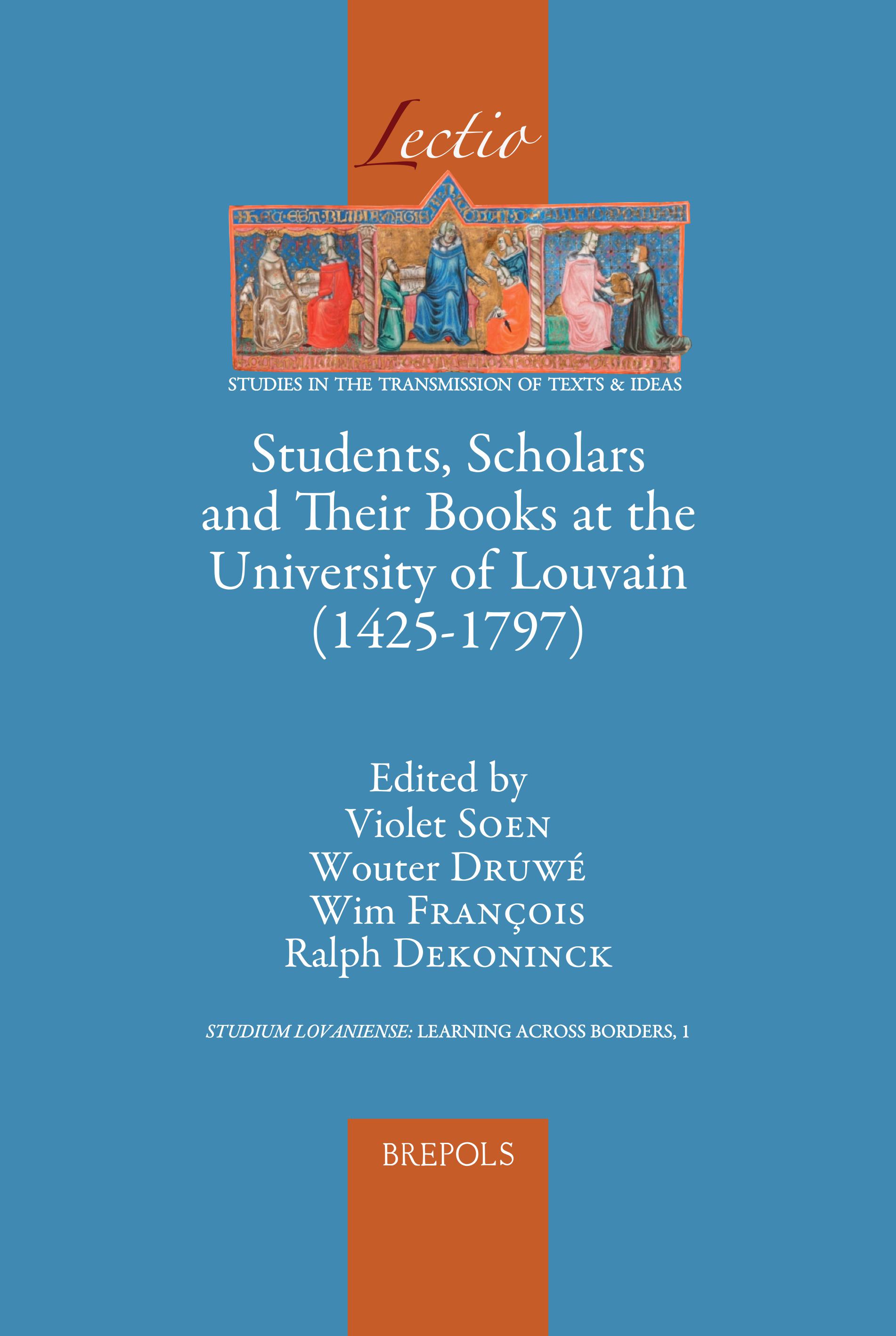 Students, Scholars and Their Books at the University of Louvain (1425-1797)
Studium Lovaniense: Learning across Borders, 1
Volume 17

