
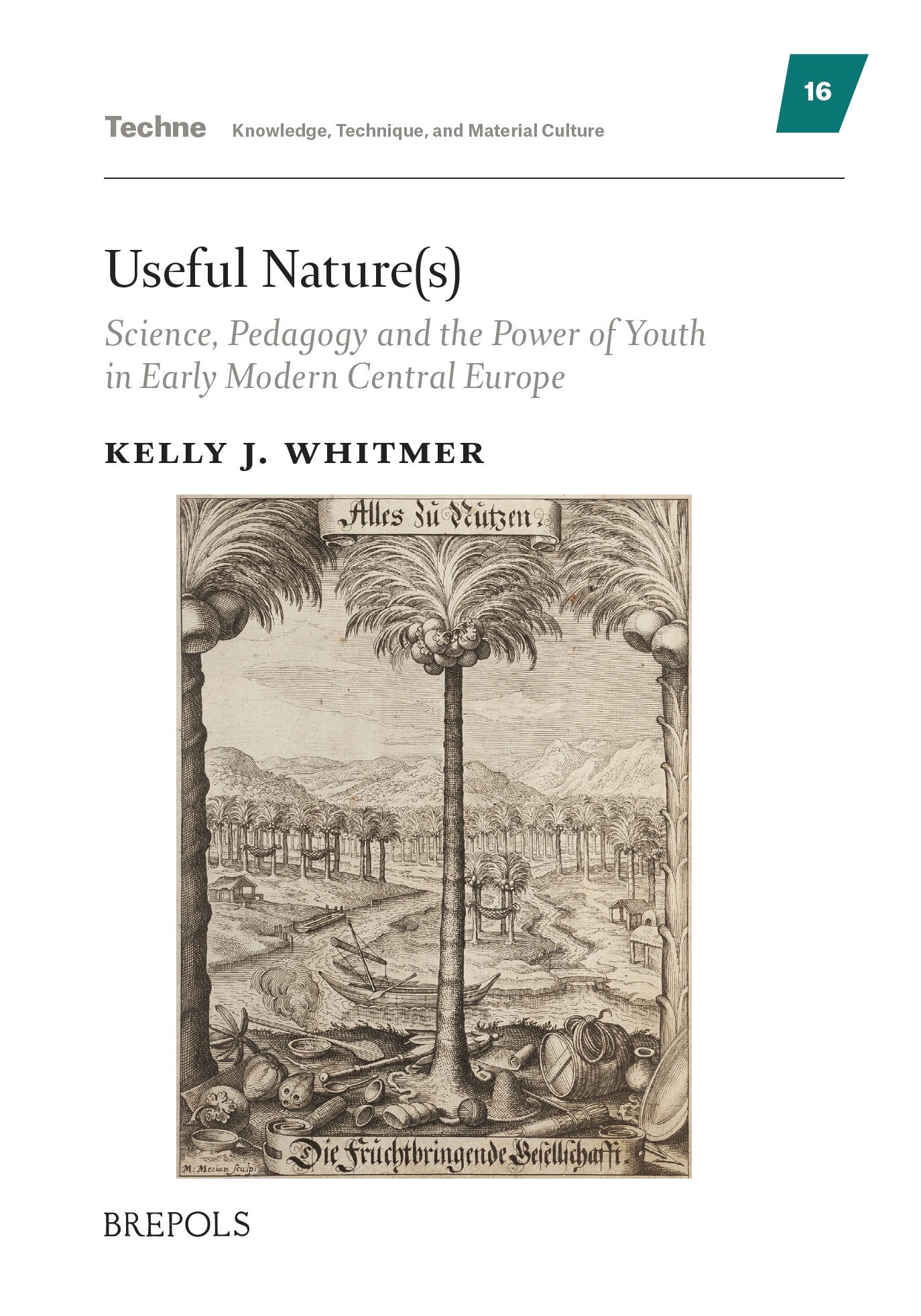
Useful Nature(s)
Science, Pedagogy and the Power of Youth in Early Modern Central Europe
By (author) Kelly J. Whitmer
Hardback (Published)
(April 2026)
ISBN: 9782503619415
7.01 x 10 inches
Price: $100.00
In stock
The study of youth
remains a tantalizing prospect in the sciences today, particularly as a means
of extending life. Many institutions rely on the flexibility, cheaper labor
and creative approaches to problem solving that young people often carry with
them into research and professional environments. Now, as in the past,
practitioners of the sciences are drawn to evidence of intellectual precocity
or signs of premature ingenuity. Useful Nature(s) recovers the largely untold
story of science’s preoccupation with the power of the young, including their
heightened capacities to “know use” and to embody playful, yet productive,
forms of physical labor. It focuses on a pivotal moment in the history of
early modern Central European communities, when scholars, physicians,
teachers and administrators began calling for intensified investigations of
the young body, particularly its tendency to play, to move constantly,
and to deploy tools and materials strategically. Drawing much needed
attention to science’s fascination with youth’s power, Useful Nature(s)
highlights efforts to derive benefit from the young person’s relationship to
the future and potential to dramatically reconfigure knowledge-making
practices and communities.
The study of youth
remains a tantalizing prospect in the sciences today, particularly as a means
of extending life. Many institutions rely on the flexibility, cheaper labor
and creative approaches to problem solving that young people often carry with
them into research and professional environments. Now, as in the past,
practitioners of the sciences are drawn to evidence of intellectual precocity
or signs of premature ingenuity. Useful Nature(s) recovers the largely untold
story of science’s preoccupation with the power of the young, including their
heightened capacities to “know use” and to embody playful, yet productive,
forms of physical labor. It focuses on a pivotal moment in the history of
early modern Central European communities, when scholars, physicians,
teachers and administrators began calling for intensified investigations of
the young body, particularly its tendency to play, to move constantly,
and to deploy tools and materials strategically. Drawing much needed
attention to science’s fascination with youth’s power, Useful Nature(s)
highlights efforts to derive benefit from the young person’s relationship to
the future and potential to dramatically reconfigure knowledge-making
practices and communities.
Introduction: Young and Useful Natures
Chapter 1. Coconut palm: Cultivating Trees of a Thousand Uses
Chapter 2. School: Imitation and Realia in the School of Play
Chapter 3. Games & Collections: Purposeful Nature(s): Youth as Players, Collectors and Economists
Chapter 4. Prodigy: The Body Of the Prodigy: Precocity and Futurity in the Young Ingenium
Conclusion
- By (author) Kelly J. Whitmer
Other Titles in this Series
 Temps, sciences et empire
Cosmographie et navigation dans les monarchies iberiques au XVIe siecle
Volume 13


 The Making of Technique in the Arts
Theories and Practice from the Sixteenth to the Twentieth Century
Volume 11
 Femmes, vulgarisation et pratique des sciences au siecle des Lumieres
Les Dialogues sur l'astronomie et la Lettre sur la figure de la Terre de Cesar-Francois Cassini de Thury
Volume 4


Similar Books


 Balthasar Caymox of Nuremberg
Early Modern German Print Publishers: Popular Prints of the Seventeenth Century
 Beyond Sovereign Courts
Agents and Practices in Early Modern Spanish and Habsburg Diplomacy
Volume 3

 Circulation, Use, Impact
The Consumption of Architectural Books in the Early Modern Eastern Adriatic
Volume 1

 Councils, Conflicts, Correspondence
Urban Diplomacy in Reval (Tallinn) and Lübeck (c. 1470–1570)
Volume 67


 Innovationes Lovanienses: Arts, Law and Theology at the University of Louvain (1425–1797)
Studium Lovaniense: Learning across Borders, 2
Volume 18
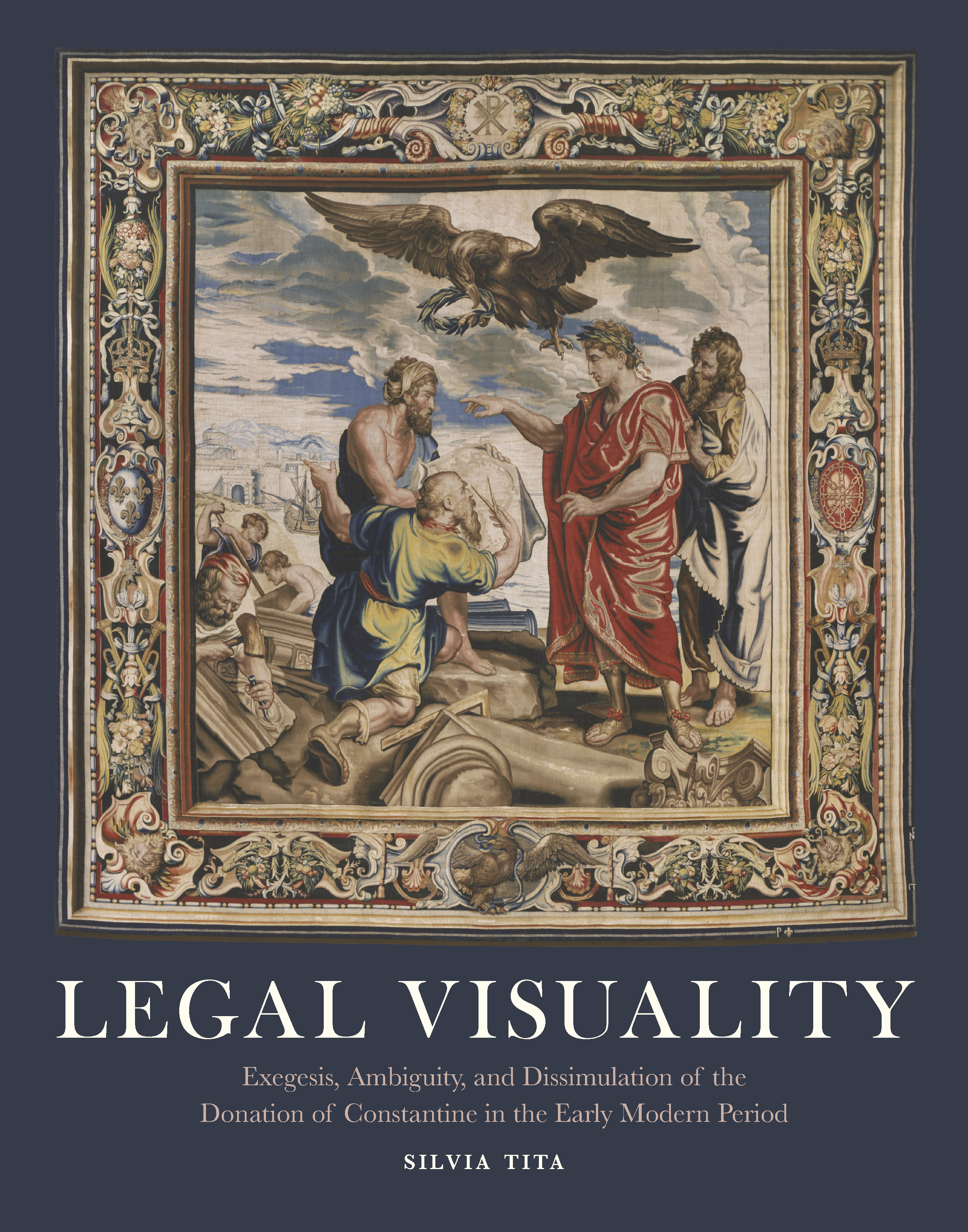 Legal Visuality
Exegesis, Ambiguity, and Dissimulation of the Donation of Constantine in the Early Modern Period

 Naples as Laboratory / Laboratorium Neapel
Style Options, Artistic Rivalry and Self Fashioning in Neapolitan Baroque Painting / Plurale Stilbildung, Kunstlerkonkurrenz und Self Fashioning in der neapolitanischen Barockmalerei
 Power and Women in Southeast and Central Europe in Late Medieval and Early Modern Period (1300-1600)
Volume 10


 Staging the Spectacle of Majesty
Ceremonial, Courtly Space, and Collecting under the Spanish Habsburgs
Volume 9
 Students, Scholars and Their Books at the University of Louvain (1425-1797)
Studium Lovaniense: Learning across Borders, 1
Volume 17


 The Embodied Court in the Premodern World
Understanding the Physicality, Performativity and Lifecycle of Bodies at Court in Europe and Beyond, 1400-1800
Volume 4

 The Sacred and the Secular in Renaissance Florence
Vallombrosan Exorcisms and the Rise of Observant Mendicancy
Volume 31
 Tradition, Interpretation, and Change
Developments in the Liturgy of Medieval and Early Modern Ashkenaz


 À la recherche des normes de traduction
Textes spécialisés dans le monde hispanophone et francophone (1450–1850)

 Briefe einer Fürstin aus dem Dreißigjährigen Krieg
Die Korrespondenz der Kaiserin Maria aus den Jahren 1629 bis 1645
 Die Lutherbibel (1541) des Seidenstickers Hans Plock
Eine buchbiographische und kulturhistorische Untersuchung
Volume 89


