
Studies in New Testament Lexicography
Advancing toward a Full Diachronic Approach with the Greek Language
by David S. Hasselbrook

In the latter half of the nineteenth century, scholars begin to publish works recognizing and demonstrating the early beginnings of Modern Greek, finding features in Greek writings of the first century and earlier that continue to exist in the modern language. Despite such research, New Testament lexicographers fail to systematically consult this later stage of the language when analyzing word meanings. After establishing an important unity of the New Testament with Modern Greek and a deficiency in New Testament lexicons in exploiting this unity, David S. Hasselbrook makes use of insights gained from the modern phase of the language to advance the understanding of general word senses, the construction of definitions, and the presentati0n of lexical entries.
David S. Hasselbrook, Born 1969; Pastor of Messiah Lutheran Church, Missoula, Montana.
- By (author) David S Hasselbrook
Other Titles in this Series

 John among the Other Gospels
The Reception of the Fourth Gospel in the Extra-Canonical Gospels
Volume 347

 Spirits and the Proclamation of Christ
1 Peter 3:18-22 in Light of Sin and Punishment Traditions in Early Jewish and Christian Literature
Volume 305


 Jesus as the Eschatological Davidic Shepherd
Studies in the Old Testament, Second Temple Judaism, and in the Gospel of Matthew
Volume 216
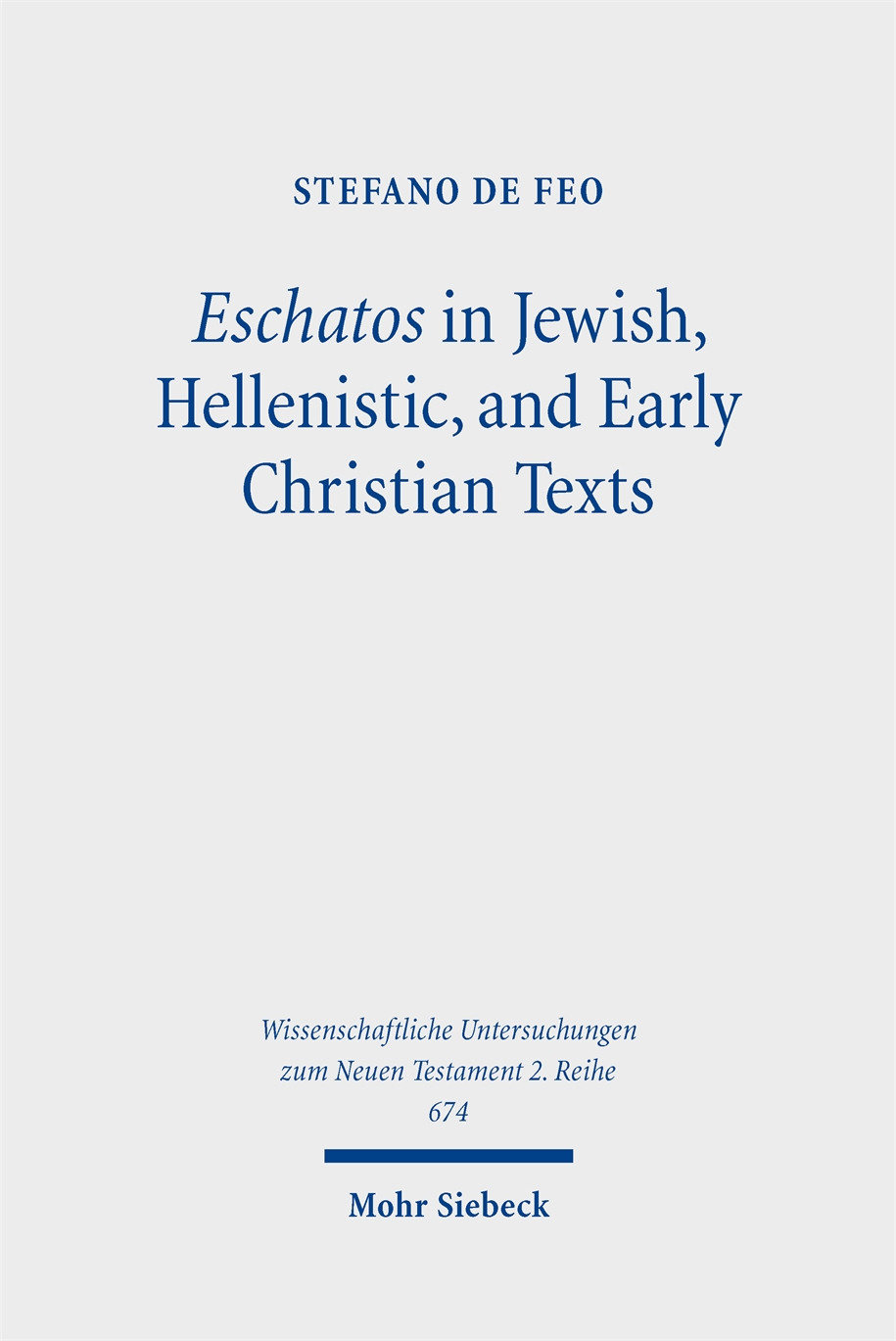 Eschatos in Jewish, Hellenistic, and Early Christian Texts
A Diachronic Analysis (3rd cent. BCE – 1st cent. CE)
 Der verborgene Vater im Matthausevangelium
Ein Beitrag zum Gottesbild und zur Gebetstheologie von Mt 6,1-6.16-18
Volume 617
 Intercession of Jesus in Hebrews
The Background and Nature of Jesus' Heavenly Intercession in the Epistle to the Hebrews
Volume 585


 Participation, Justification, and Conversion
Eastern Orthodox Interpretation of Paul and the Debate between Old and New Perspectives on Paul
Volume 442
 Temporal Dimensions of the Apocalypse
Ancient Christian Reception and Contemporary Hermeneutical Reflections

 Renaming Abraham’s Children
Election, Ethnicity, and the Interpretation of Scripture in Romans 9
Volume 421


 Paul’s Inclusive Ethic
Resolving Community Conflicts and Promoting Mission in Romans 14-15
Volume 252
 From Messiah to Preexistent Son
Jesus' Self-Consciousness and Early Christian Exegesis of Messianic Psalms
Volume 192
 The Colossian Hymn in Context
An Exegesis in Light of Jewish and Greco-Roman Hymnic and Epistolary Conventions
Volume 228
 Forgiveness as a Hermeneutical Key to the Gospel of Matthew
An Exegetical Investigation of the ?f??µ? Logia in the Matthean Gospel


 The Strength Needed to Enter the Kingdom of God
An Exegetical and Theological Study of Luke 16:16 in Context
Volume 485


Similar Books


 Apocrypha, Magic, Liturgy
The Multiple Identities of Coptic Prayers in Late Antique and Early Islamic Egypt
 Athanasius of Alexandria, Epistula ad episcopos Aegypti et Libyae
Old Slavonic Version and English Translation
Volume 261



 Contesting Labeled Identities
The Sociology of Gentilics in Biblical and Northwest Semitic Literature
 Cyril of Alexandria’s Christological Exegesis
Explorations of Partitive Exegesis in the Dialogues on the Trinity
Volume 70

 Epiphanies of the Divine in the Septuagint and the New Testament
Fifth International Symposium of the Corpus Judaeo-Hellenisticum Novi Testamenti (CJHNT), 14-17 May 2015, Nottingham


 Extracanonical Traditions and the Holy Land
Texts, Rituals, and Material Culture in Late Antique Palestine
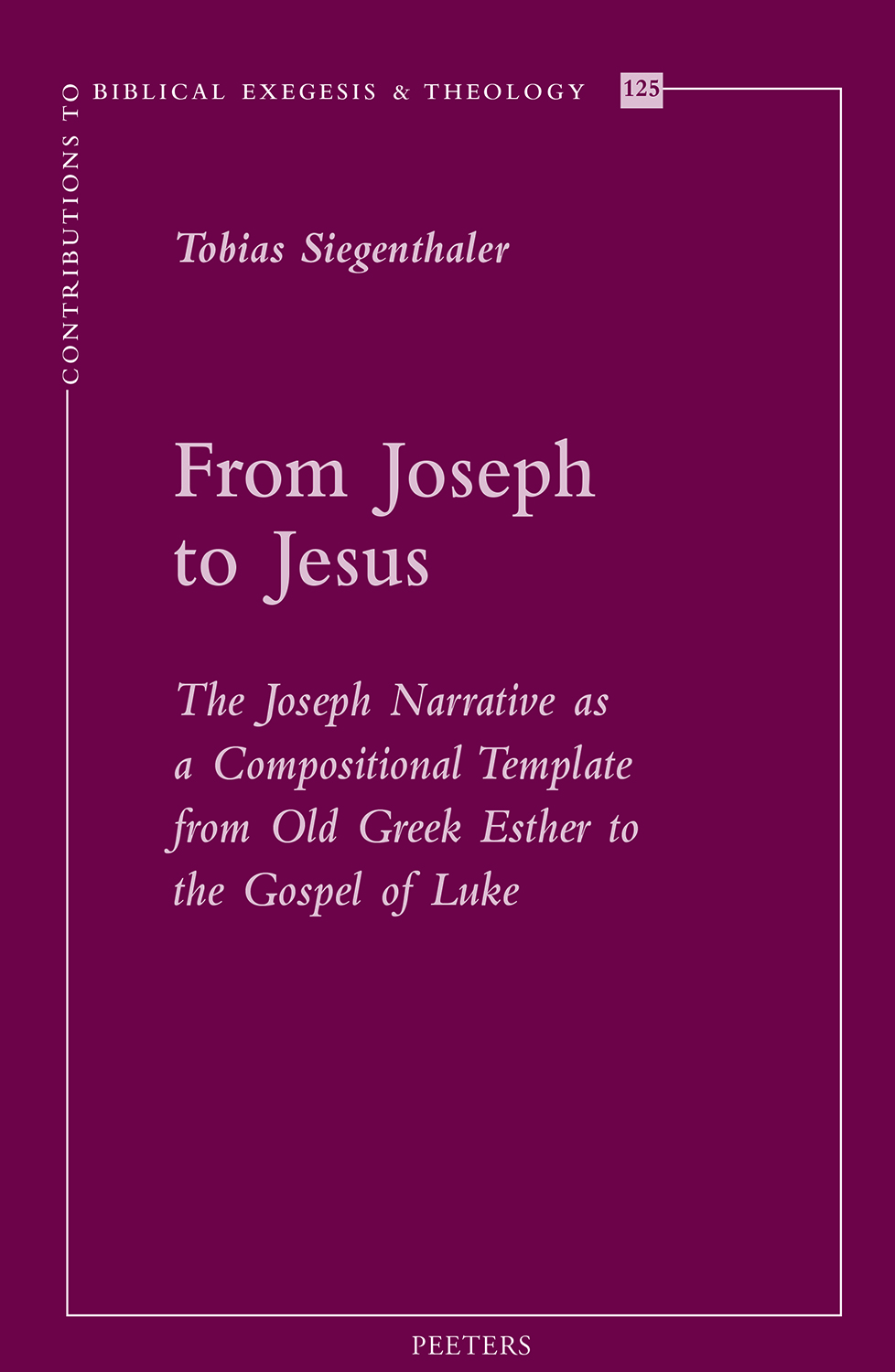 From Joseph to Jesus
The Joseph Narrative as a Compositional Template from Old Greek Esther to the Gospel of Luke
Volume 125





 Nicholas of Lyra’s Commentaries on the Gospels of Matthew and Luke
Franciscan Exegesis in a Time of Crisis
 Paradise Lost in Transmission
The Return to Eden in the Apocalypse of Peter within Its Ethiopic and Early Christian Contexts



 Punning in Odd or Elegant Constructions in Jeremiah
The Convergence of Linguistics, Rhetoric, and Textuality in the Hebrew Text of Jeremiah

 Reformed Covenantal Eudaimonism
Wilhelmus à Brakel (1635–1711) on Highest Good, Virtue, and Law
Volume 87