
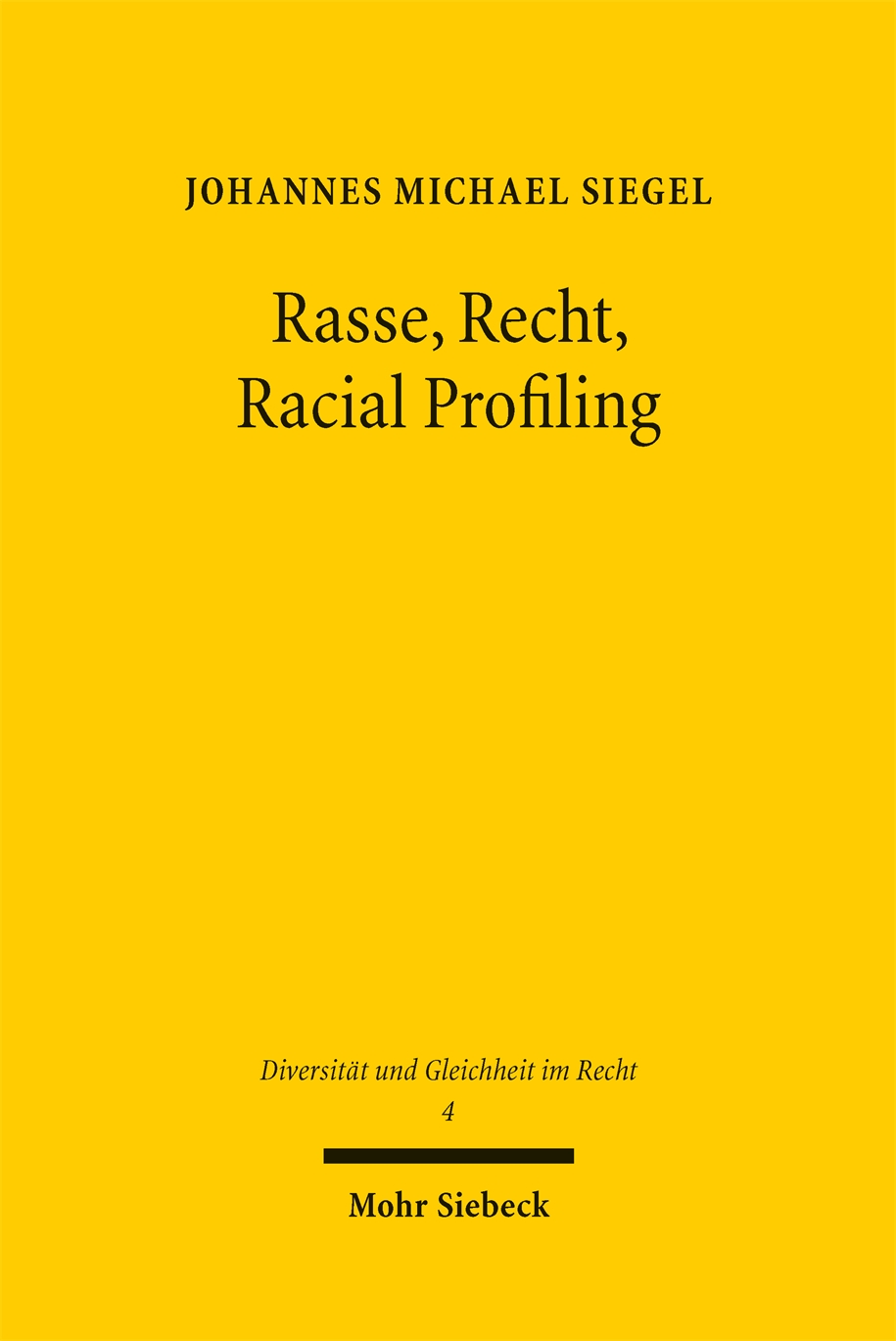
Rasse, Recht, Racial Profiling
By (author) Johannes Michael Siegel
Hardback (Published)
(October 2026)
ISBN: 9783162001863
6.1 x 9.13 inches
Price: $164.00
On back order
Johannes Michael Siegel examines racial profiling in policing from a legal perspective. He develops a coherent definition, analyses statutory powers at federal and state level, and explores how discretion and institutional practices may lead to structural discrimination. In addition, legal responses are discussed.
Johannes Michael Siegel places the focus of his study on the legal conceptualization of racial profiling beyond the individual case. He develops a doctrinal definition of racial profiling and demonstrates that it does not consist of isolated instances of unlawful conduct but rather constitutes a structural problem of police law enforcement. He bases this on a precise interpretation of the legal concept of race as a process of social ascription within the meaning of Article 3(3) of the German Basic Law. On this basis, the author conceptualizes racial profiling as an executive measure based on a racializing discretionary decision – also when unintentional – operating to the detriment of structurally discrimination-vulnerable groups. He shows that racial profiling is invariably unlawful and yet continues to be reproduced within the existing framework of police law. The study systematically examines the relevant statutory authorization bases of federal and state police law as well as their application in practice. By combining doctrinal legal analysis with empirical insights from policing research, it becomes apparent that discretion, institutional routines, and police knowledge structures interact in a problematic manner. This synergy gives rise to structural racial profiling, even though the legal norms themselves are not necessarily designed in a discriminatory way. Finally, Johannes Michael Siegel develops concrete strategies of containment, demonstrating how effective legal responses to racial profiling can be achieved through procedural safeguards, external oversight mechanisms, and institutional reforms. In doing so, he makes a fundamental contribution to anti-discrimination doctrine, police law, and the socio-legal analysis of state action.
Einleitung
A. Gegenstand der Arbeit
B. Forschungsstand
C. Methode
D. Gang der Arbeit
Kapitel 1 - Der Begriff der Rasse
A. Dynamische Begriffsgeschichte
B. Biowissenschaftliches und sozial- und geisteswissenschaftliches Verständnis
C. Rasse als Rechtsbegriff
D. Gesamtfazit
Kapitel 2 - Die Polizei und Racial Profiling
A. Polizei als Institution im Wandel
B. Profiling
C. Von präventivem Profiling zu Racial Profiling
D. Stets rechtswidrig?
Kapitel 3 - Die Ermächtigungsgrundlagen
A. Gefahrenabwehr und Gefahrenvorsorge
B. Struktur der Ermächtigungsgrundlagen
C. Bundesrecht
D. Landesrecht
E. Zwingendes Racial Profiling per Rechtsnorm?
F. Fazit
Kapitel 4 - Das strukturelle Racial Profiling
A. Institution trifft auf Rechtsgrundlage
B. Eine Struktur, die zu institutionellem Rassismus führt
Kapitel 5 - Die Einhegung
A. Kontrollvorgang
B. Externe Kontrolle der Polizei
C. Reformierung der Polizei
D. Fazit
Gesamtbetrachtung
A. Antworten
B. Schlüsse
Literaturverzeichnis
Born 1990; studied law at the University of Konstanz and at the University of Cardiff; 2017 First State Examination in Law; legal clerkship (Referendariat) at the Berlin Higher Regional Court; research associate at Freie Universität Berlin; 2019 Second State Examination in Law; research associate at the University of Konstanz and at the Research Institute on Social Cohesion; 2025 PhD; government councilor at the Federal Ministry for Economic Affairs and Energy, Berlin.
- By (author) Johannes Michael Siegel
Other Titles in this Series
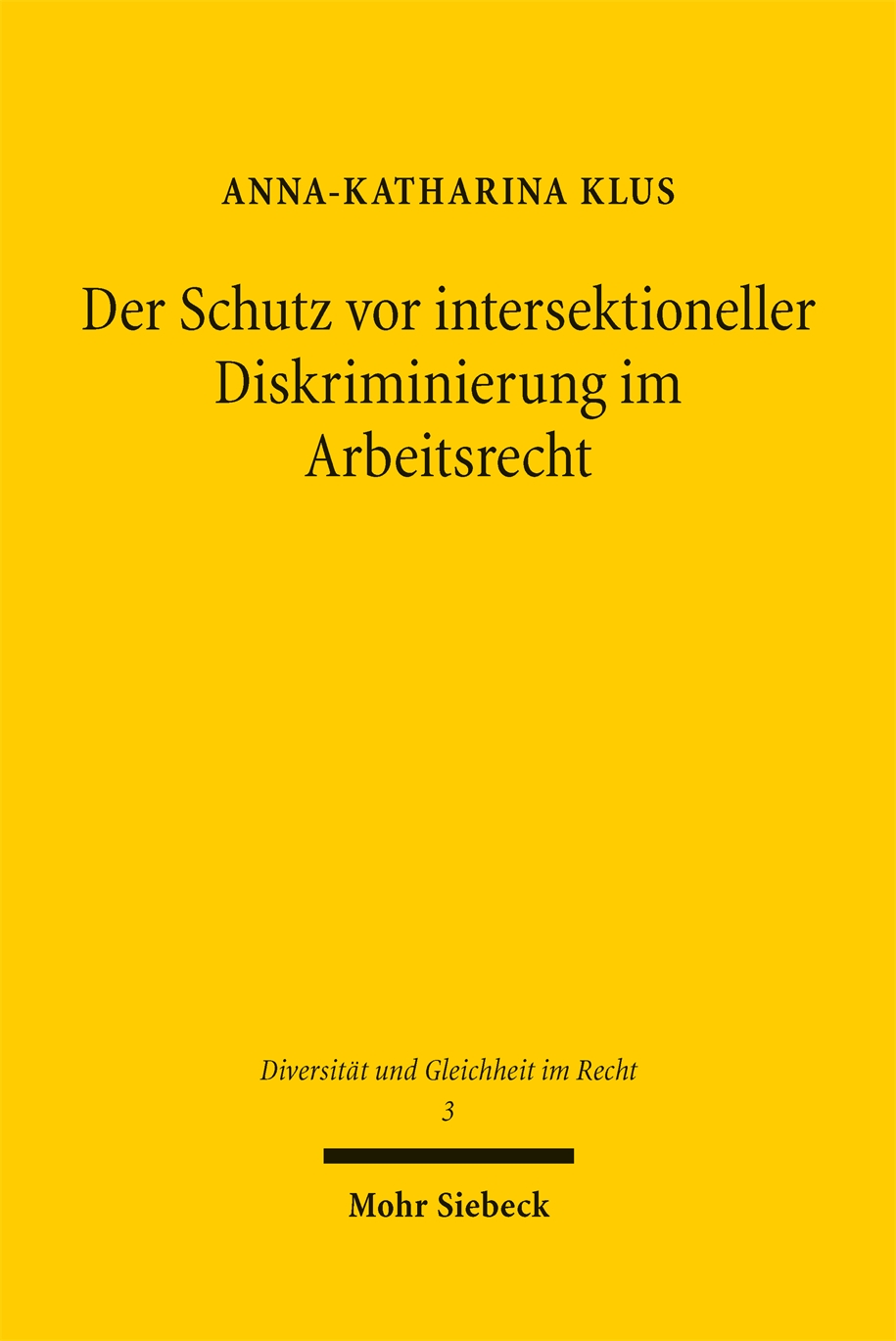 Der Schutz vor intersektioneller Diskriminierung im Arbeitsrecht
Eine rechtsvergleichende Untersuchung des US-amerikanischen und des europäischen Antidiskriminierungsrechts

Similar Books


 Balthasar Caymox of Nuremberg
Early Modern German Print Publishers: Popular Prints of the Seventeenth Century
 Constitutional Conflict as Judicial Civil Disobedience and Conscientious Objection
Reconceptualising National Constitutional Court Rulings in the European Union Legal Space

 Formulary apportionment in international tax law
An allocation method for the age of globalization and digitalization
Volume 210


 Hofmann oder Vorkämpfer der „philosophes“?
Deutsche Voltaire-Bildnisse und -Imaginationen im Zeitalter der Aufklärung

 Legal Unification through Case Law?
Supreme Courts and the Emergence of Uniform Law in the Modern Era
Volume 242

 The Documentation of Historical Facts in Trial Judgments of the International Criminal Court
A Constitutional Theory of International Criminal Proceedings
Volume 66


 Linguistic and Cultural Dynamics in a Frontier Society
New Perspectives on Northeastern Bavaria and Western Bohemia in the Early Middle Ages
Volume 9
 The Law of the International Civil Service
Institutional Law and Practice in International Organisations
 “Aktenzeichen XY … ungelöst”, Facebook und Co.
Chancen und Risiken der Einbeziehung der Öffentlichkeit in das strafprozessuale Ermittlungsverfahren
Volume 476
 “Das Grundgesetz ist unsere Leitkultur”
Eine verfassungsrechtliche und -theoretische Annäherung an die Gleichsetzung von Grundgesetz und Leitkultur
Volume 1595
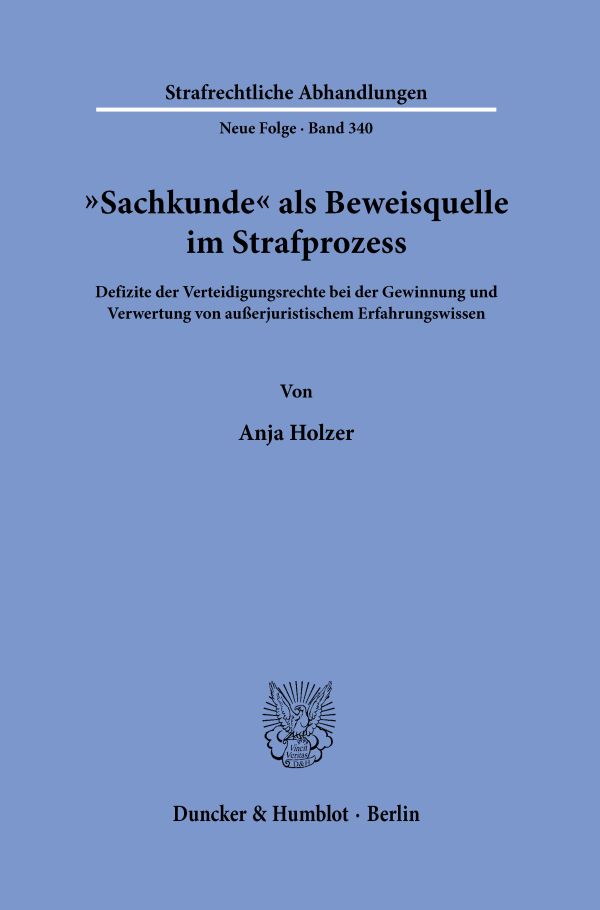 “Sachkunde” als Beweisquelle im Strafprozess
Defizite der Verteidigungsrechte bei der Gewinnung und Verwertung von außerjuristischem Erfahrungswissen
Volume 340

 (Bloß) symbolische Rechtsetzung
Eine interdisziplinäre Untersuchung der deutschen Glücksspielregulierung auf ihre funktionelle und symbolische Wirkung
 (Keine) Haftung für Produktfehler?
Eine Untersuchung des deutschen und neuseeländischen Rechts zum Ausgleich von Personenschäden durch fehlerhafte Produkte
 (Personen-)Gesellschaften im Erbschaftsteuerrecht
Vorgaben des Leistungsfähigkeitsprinzips für die Besteuerung. Zugleich eine kritische Auseinandersetzung mit § 2a ErbStG
 Aktionärsklagen in Deutschland und Hongkong
Rechtsdogmatik. Rechtsökonomik. Rechtsvergleich.
Volume 37
 Aktuelle Perspektiven für eine Europäische Sozialunion –
mit Bezügen zum Sozialversicherungsrecht
Volume 42
 Althochdeutsche Stabreimdichtungen
Hildebrandslied, Muspilli und kleinere Denkmaler. Von Grund auf neu ediert, mit Erschliessungshilfen versehen, ubersetzt und eingeleitet von Frank Schafer

 Anlasslose Finanzermittlungen zur Geldwäschebekämpfung
Automatisierte Überwachung in der Sicherheitsgesellschaft und ihre verfassungsrechtlichen Grenzen
Volume 12
 Arkane Algorithmen
Algorithmische Systeme als Handlungsform der Verwaltung und Rechtsschutzmöglichkeiten gegen diese
 Auf Gedeih und Verderb
Die Pestiziddebatte seit dem Kaiserreich zwischen Hunger, Profit und Massenmord


 Auskunftsansprüche und prozessuale Mitwirkungspflichten
Instrumente zur Bewältigung von Informationsungleichgewichten

 Becoming German American
Eine generationenübergreifende deutsche Migrationsgeschichte in Amerika nach 1945


 Berthold von Neuffen. Ein heimlicher Ratgeber Kaiser Ludwigs des Bayern
Forschungen zu Kaiser- und Papstgeschichte des Mittelalters. Beihefte zu J. F. Böhmer, Regesta Imperii

 Beschleunigung der Umweltverträglichkeitsprüfung und der Strategischen Umweltprüfung
Notwendigkeit einer behördlichen Vorprüfung im Einzelfall
Volume 221
