
Wagner
The Invention of a Monster
By (author) Derek Hughes

Hardback (No longer our product)
(July 2026)
ISBN: 9780718898670
6 x 9 inches
Price: $75.00
On back order
Wagner: The Invention of a Monster is an invitation to reassess one of the greatest German composers, and consider whether he merits the darkening of his image during the past 60 years.
Wagner has the most villainous reputation of any figure in the arts. He is often held to have inspired Hitler’s murderous anti-Semitism, and an army of ruthless mercenaries—the Wagner Group—has taken its name from him. Yet many of the worst things laid to his charge are based on misconstruction or even fabrication: on a letter he never wrote, or opinions he never expressed. Key passages in Cosima Wagner’s diaries have been misinterpreted through failure to check their background.
In Wagner: The Invention of a Monster, Derek Hughes re-examines this controversial figure, tracing the progressive falsifications of his opinions from the 1960s to the present day. There is much new research into the early reception and understanding of his operas, and Hughes contrasts modern assessments of the composer with those current in Wagner’s own era, and then during the Third Reich. Ultimately, the book reaches a perhaps surprising conclusion: many modern critics see more Nazism in Wagner than the Nazis ever did.
Wagner: The Invention of a Monster is an invitation to reassess one of the greatest German composers, and consider whether he merits the darkening of his image during the past 60 years.
Acknowledgments
Illustrations
Texts and Abbreviations
Section I. Rabid and Virulent
Chapter 1: The Accusations
Chapter 2: A Pogrom in Russia
Chapter 3: A Theatre Fire
Section II. The Road to ‘Das Judenthum in der Musik‘
Chapter 4: Meyerbeer
Chapter 5: Revolution
Chapter 6: ‘Das Judenthum in der Musik’
Section III : Jewish Villains?
Chapter 7: Tannhäuser and Lohengrin
Chapter 8: The Ring Alberich and Mime
Chapter 9: The Jew in the Thornbush
Chapter 10: Parsifal. Rassenschande?
Section IV: Views of Wagner to 1945
Chapter 11: Alberich and Mime. Two Early Views
Chapter 12: Alberich and Mime. Further Early Views
Chapter 13: Die Meistersinger, from Wagner to Hitler
Chapter 14: Parsifal. The Fortunes of Kundry
Chapter 15: Wagner’s Reputation
Section V. Wagner without Sensationalism
Chapter 16: Race (1)
Chapter 17: Jewish Genes
Chapter 18: Race (2)
Chapter 19: Good Jews and Jewish Friends
Chapter 20: Nationalism
Chapter 21: Jews in the Press. Three Case Studies
1. Usury
2. Darabani
3. A Harsh Winter
Appendix
Fœtor Judaïcus: A Cautionary Tale
Wagner and ‘the Jew Guggenheim’
Bibliography
- By (author) Derek Hughes
Similar Books


 Balthasar Caymox of Nuremberg
Early Modern German Print Publishers: Popular Prints of the Seventeenth Century


 Constitutional Conflict as Judicial Civil Disobedience and Conscientious Objection
Reconceptualising National Constitutional Court Rulings in the European Union Legal Space


 European Drama and Performance Studies
Dramatisations politiques. Théâtre, politique et idéologie au XIXe siècle (1806-1914)
Volume 27

 Formulary apportionment in international tax law
An allocation method for the age of globalization and digitalization
Volume 210


 Hofmann oder Vorkämpfer der „philosophes“?
Deutsche Voltaire-Bildnisse und -Imaginationen im Zeitalter der Aufklärung


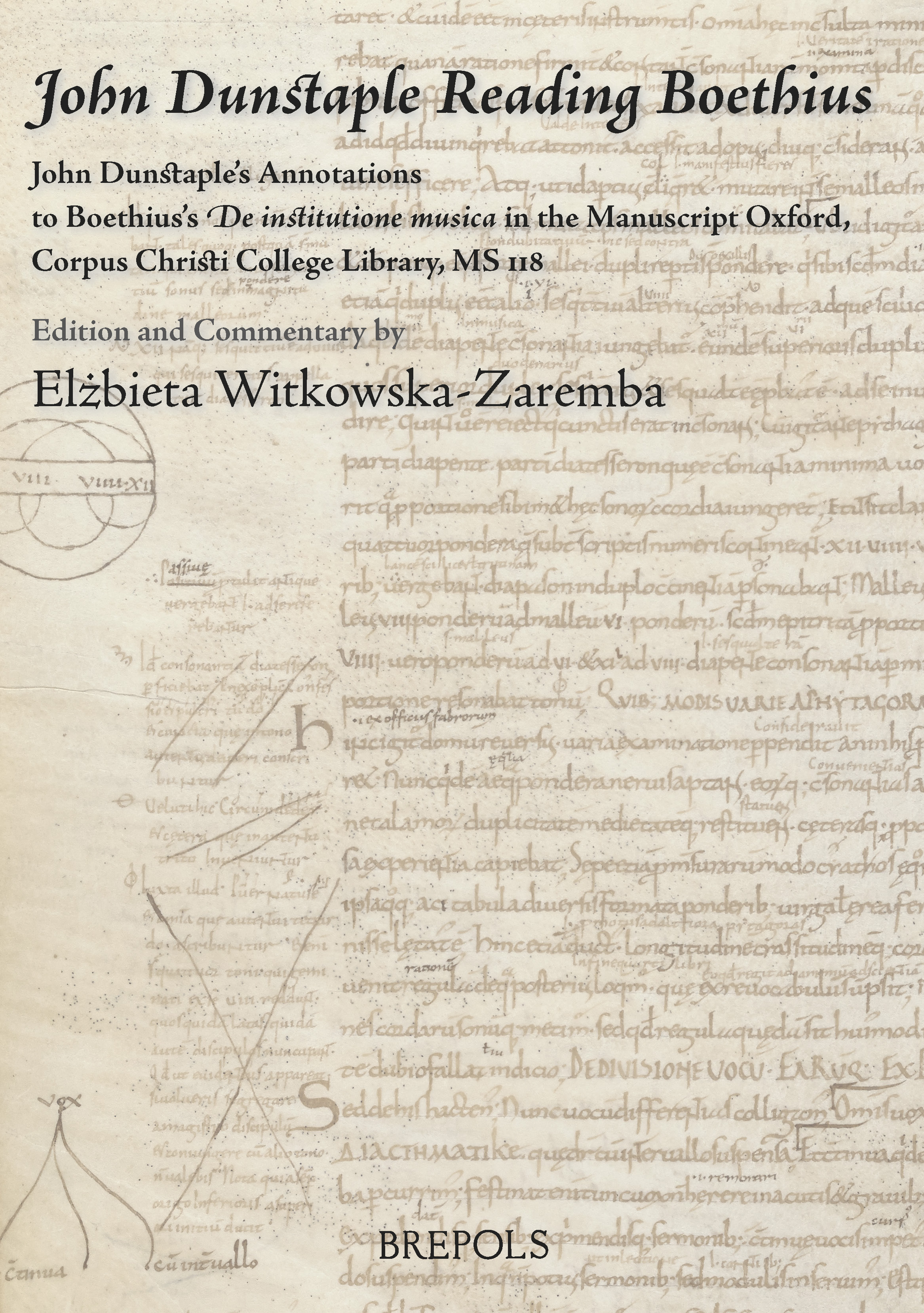 John Dunstaple Reading Boethius
John Dunstaple’s Annotations to Boethius’s “De institutione musica” in the Manuscript Oxford, Corpus Christi College Library, MS 118
 Linguistic and Cultural Dynamics in a Frontier Society
New Perspectives on Northeastern Bavaria and Western Bohemia in the Early Middle Ages
Volume 9
 Music and Colonialism in Fascist Italy
Identity, Propaganda, and Ethnographic Representation
Volume 13



 Performing Science, Mediating Knowledge
Science, Showmanship, and the Performance of Authority in the Long Nineteenth Century
Volume 21


 The Antiquarian Book-trade in Switzerland
Sir Thomas Phillipps's Acquisitions in the 1820s and their Later Dispersal
Volume 69


 The Documentation of Historical Facts in Trial Judgments of the International Criminal Court
A Constitutional Theory of International Criminal Proceedings
Volume 66


 Legal Unification through Case Law?
Supreme Courts and the Emergence of Uniform Law in the Modern Era
Volume 242