
Echoes of Eden
Genesis 2-3 and Symbolism of the Eden Garden in Biblical Hebrew Literature
By (author) T. Stordalen

Paperback (Published)
(June 2000)
ISBN: 9789042908543
Price: $57.00
On back order
Echoes of Eden attempts to establish what is called a comprehensive perspective on the Story of Eden. This includes, first, an investigation into the symbolic significance of a garden to an ancient Hebrew audience, considering actual garden constructions from the ancient Near East as well as text and figures of speech relating to the garden subject. Secondly, the book engages in a historical literary analysis of the Eden Story. It is argued that the passage derives from the Early Persian era, that it is a tightly knit literary unit, and that it extends a rather ambiguous argument on human nature. By way of a “comprehensive perspective”, other biblical passages making reference to Eden are also considered. Found in a number of similes, metaphors, alegories, these passages seem to presuppose knowledge of an Eden (Story) similar to the one in Genesis 2-3. In this material emerges an impression as to what Eden “meant” to a biblical audience in Persian Age. Apparently – and quite in harmony with the picture in Genesis 2-3 – such an audience imagined a “primeval Eden” outside space and time. They did, however, also perceive several echoes of that Eden in their everyday world. Presuming this as the communicative competence in the audience, the book concludes by hinting at the significance of the Eden Garden to its implied readers.
Echoes of Eden attempts to establish what is called a comprehensive perspective on the Story of Eden. This includes, first, an investigation into the symbolic significance of a garden to an ancient Hebrew audience, considering actual garden constructions from the ancient Near East as well as text and figures of speech relating to the garden subject. Secondly, the book engages in a historical literary analysis of the Eden Story. It is argued that the passage derives from the Early Persian era, that it is a tightly knit literary unit, and that it extends a rather ambiguous argument on human nature. By way of a “comprehensive perspective”, other biblical passages making reference to Eden are also considered. Found in a number of similes, metaphors, alegories, these passages seem to presuppose knowledge of an Eden (Story) similar to the one in Genesis 2-3. In this material emerges an impression as to what Eden “meant” to a biblical audience in Persian Age. Apparently – and quite in harmony with the picture in Genesis 2-3 – such an audience imagined a “primeval Eden” outside space and time. They did, however, also perceive several echoes of that Eden in their everyday world. Presuming this as the communicative competence in the audience, the book concludes by hinting at the significance of the Eden Garden to its implied readers.
- By (author) T. Stordalen
Other Titles in this Series
 Law, Prophets, and Wisdom
On the Provenance of Translators and their Books in the Septuagint Version
Volume 68


 Heilige oder Hure?
Die Rezeptionsgeschichte von Juda und Tamar (Genesis 38) von der Antike bis zur Reformationszeit
Volume 48

 Texts and Contexts of Jeremiah
The Exegesis of Jeremiah 1 and 10 in Light of Text and Reception History
Volume 82
 Transformations in the Septuagint
Towards an Interaction of Septuagint Studies and Translation Studies
Volume 47
 Oh God of Battles! Steal My Soldier’s Hearts!
A Study of the Hebrew and Greek Text Forms of Jeremiah 10:1-18
Volume 83

 Like Nails Firmly Fixed (Qoh 12:11)
Essays on the Text and Language of the Hebrew and Greek Scriptures Presented to Peter J. Gentry on the Occasion of His Retirement
Volume 115

 The Akedah Servant Complex
The Soteriological Linkage of Genesis 22 and Isaiah 53 in Ancient Jewish and Early Christian Writings
Volume 69
 In Spirit and Truth
An Exegetical Study of John 4:19-26 and a Theological Investigation of the Replacement Theme in the Fourth Gospel
Volume 46
 Insights into Editing in the Hebrew Bible and the Ancient Near East
What Does Documented Evidence Tell Us about the Transmission of Authoritative Texts?
Volume 84

 Synopsis of the Book of Esther
Masoretic Text, Old Greek, Alpha Text, Old Latin, Vulgate, Jewish Antiquities
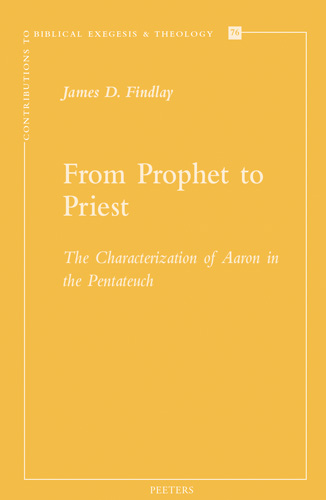
 Prophecy after the Prophets?
The Contribution of the Dead Sea Scrolls to the Understanding of Biblical and Extra-Biblical Prophecy
Volume 52





Similar Books

 A Companion to Christianity and Sport in Europe and North America (19th-21st centuries)
Volume 1: Western and Eastern Europe
 A Connecting Polemic in the Medieval Mediterranean
The Correspondence of Leo III and ʿUmar II
Volume 6





 Ars Prophetica
Theology in the Poetry of Twentieth-Century Hebrew Poets Avraham Halfi, Shin Shalom, Amir Gilboa, and T. Carmi
 As Messianism Turns to Heresy
The Regenstein Chair Lectures On Lurianic Kabbalah and Shabbatai Tzevi at Hebrew Union College - Cincinnati


 Creating the Woman in Antiquity
Proceedings of the 16th Melammu Workshop, Innsbruck, 2–3 June 2022
Volume 13
 Cultic Kisses
Fruitful Encounters Between Deities and Humans. Festschrift for Angelika Berlejung on the Occasion of Her 65th Birthday
 De/colonizing Theologies
Glocal Histories, Contemporary Challenges, Theoretical Reflections
Volume 4
 Drunk the Potion, No Whit Charmed
The Doctrine of Pure and Perfect Souls from Iamblichus to Damascius






 Extracanonical Traditions and the Holy Land
Texts, Rituals, and Material Culture in Late Antique Palestine
 Fear, Fear of God, God-Fearers
Philological and Historical Perspectives on the World of Ancient Judaism and Christianity


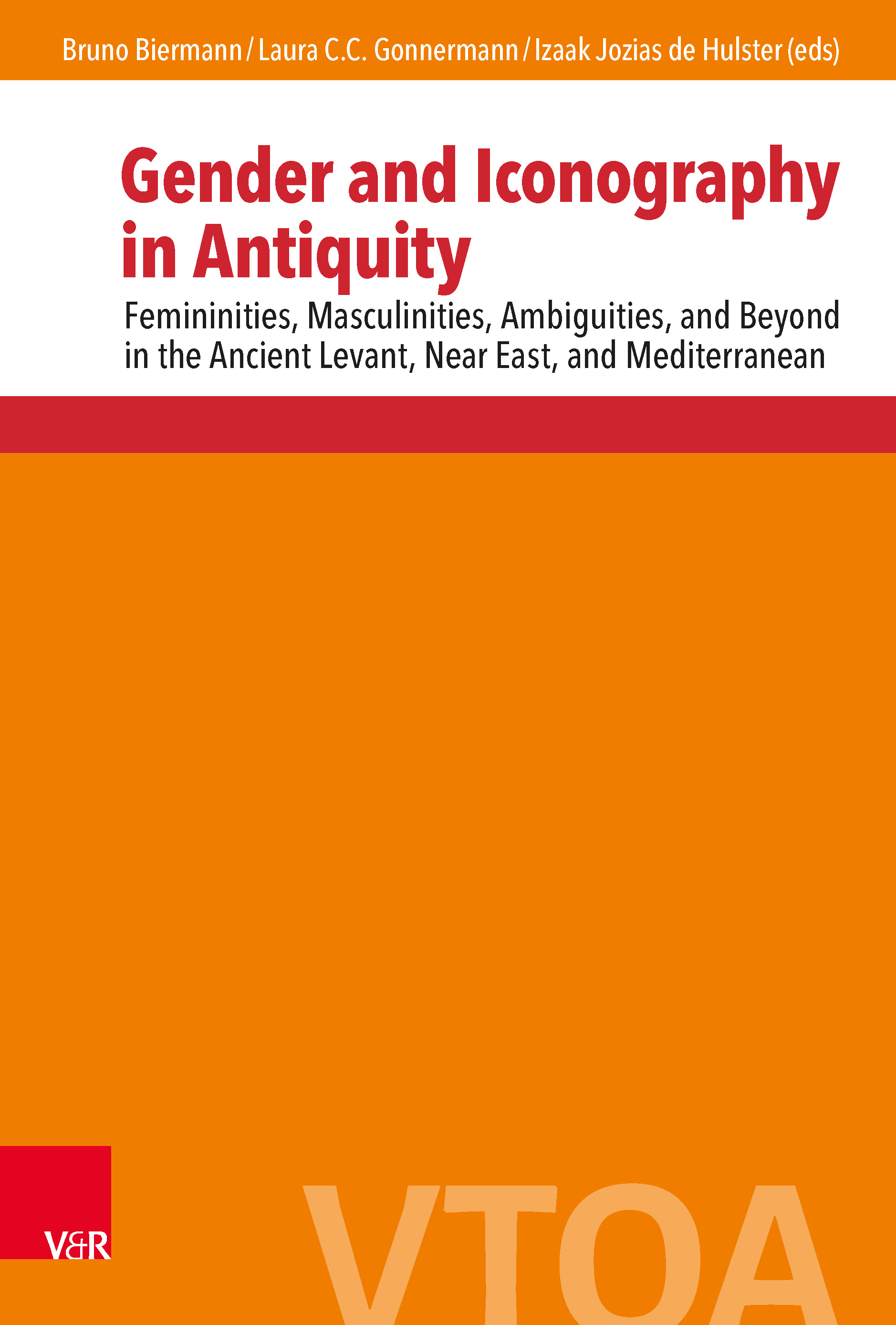 Gender and Iconography in Antiquity
Femininities, Masculinities, Ambiguities, and Beyond in the Ancient Levant, Near East, and Mediterranean