
Double-Sided Antler and Bone Combs in Late Roman Britain
Stylistic Groups, Context and Status
By (author) Nina Crummy By (author) Richard Henry Illustrated by Nick Griffiths

Paperback (Published)
(May 2024)
ISBN: 9781803276441
8.07 x 11.42 inches
Price: $42.00
In stock
This is the first detailed study and catalogue of a comb type that represents a new technology introduced into Britain towards the end of the 4th century AD and a major signifier of the late fourth- to fifth-century transition.
Double-Sided Antler and Bone Combs in Late Roman Britain offers the first detailed study and catalogue of a comb type that represents a new technology introduced into Britain towards the end of the 4th century AD and a major signifier of the late fourth- to fifth-century transition. Their end-plates were worked into a variety of decorative profiles, some clearly zoomorphic. Over time this decorative styling passed from elaborate to rudimentary, adding to the dating evidence for individual combs. As many combs survive only as small fragments, data collection has not been absolute but has concentrated on combs from burials, or with stylistically relevant end-plates, or those providing good dating or contextual evidence, the main aim of the study being to answer questions of typology, chronology and social distribution. A particularly distinctive feature within the assemblage from funerary contexts is the substantial number of these combs from Winchester, which together make up nearly a quarter of the wider British assemblage. It is proposed that a comb workshop was established in the town, and there is some evidence based on style and distribution that points to other workshops in the north and east, but these were not necessarily large and in some cases they appeared to serve only a local community, while Winchester and its hinterland appear to lie at the heart of the comb data.
Preface and Acknowledgements Chapter 1: Introducing the combs The dataset Terminology The combs in a wider context Combs and Winchester: a preliminary note Chapter 2: Their date of arrival in Britain The evidence Anomalies explained Contemporary material and events Chapter 3: Manufacture and marketing Manufacture Marketing Chapter 4: Aspects of the assemblage Late Roman or Anglo-Saxon? Other forms of composite comb used in late Roman Britain An unusual variant Chapter 5: Stylistic groups Customised combs or devolved designs? Horse combs Dolphin and Devolved Dolphin combs Owl combs Straight-centred combs with long connecting-plates: very Devolved Dolphins/Owls Concave-ended combs End-plate groups and connecting-plate design Chapter 6: Distribution and context Distribution and possible production centres Distribution by end-plate group Archaeological contexts: baths, votives and burials Site type Chapter 7: Combs from funerary contexts Gender The importance of age Female status and identity Comb position Body position Ethnicity Chapter 8: Conclusion Concentrations and gaps Burial data and typology Valued objects, further research Catalogue Combs from inhumation burials Other combs from cemeteries (disturbed grave goods?) Combs from non-funerary contexts Sites with double-sided composite combs not in the catalogue but used in Figure 6.1 Appendix 1: Combs by the sex and age of the human remains Appendix 2: Concordance by end-plate group Appendix 3: Concordance by site type Bibliography,
Preface and Acknowledgements
Chapter 1: Introducing the combs
The dataset
Terminology
The combs in a wider context
Combs and Winchester: a preliminary note
Chapter 2: Their date of arrival in Britain
The evidence
Anomalies explained
Contemporary material and events
Chapter 3: Manufacture and marketing
Manufacture
Marketing
Chapter 4: Aspects of the assemblage
Late Roman or Anglo-Saxon?
Other forms of composite comb used in late Roman Britain
An unusual variant
Chapter 5: Stylistic groups
Customised combs or devolved designs?
Horse combs
Dolphin and Devolved Dolphin combs
Owl combs
Straight-centred combs with long connecting-plates: very Devolved Dolphins/Owls
Concave-ended combs
End-plate groups and connecting-plate design
Chapter 6: Distribution and context
Distribution and possible production centres
Distribution by end-plate group
Archaeological contexts: baths, votives and burials
Site type
Chapter 7: Combs from funerary contexts
Gender
The importance of age
Female status and identity
Comb position
Body position
Ethnicity
Chapter 8: Conclusion
Concentrations and gaps
Burial data and typology
Valued objects, further research
Catalogue
Combs from inhumation burials
Other combs from cemeteries (disturbed grave goods?)
Combs from non-funerary contexts
Sites with double-sided composite combs not in the catalogue but used in Figure 6.1
Appendix 1: Combs by the sex and age of the human remains
Appendix 2: Concordance by end-plate group
Appendix 3: Concordance by site type
Bibliography
- By (author) Nina Crummy
- By (author) Richard Henry
- Illustrated by Nick Griffiths
Other Titles in this Series

 Roman Frontier Archaeology – in Britain and Beyond
Papers in Honour of Paul Bidwell Presented on the Occasion of the 30th Annual Conference of the Arbeia Society


 The Changing Landscapes of Rome’s Northern Hinterland
The British School at Rome’s Tiber Valley Project


 Un insediamento di età romana dimenticato nel tempo
Rinvenimenti e ricerche archeologiche a Tezze di Arzignano e nella vallata dell'Agno-Guà (Vicenza)

 Immagini del tempo degli dei, immagini del tempo degli uomini
Un’analisi delle iconografie dei mesi nei calendari figurati romani e bizantini e del loro contest storico-culturale


 Villas, Sanctuaries and Settlement in the Romano-British Countryside
New Perspectives and Controversies

Similar Books

 Caesar’s Visions and Impact on the Roman Empire
Revisiting the Archaeological and Historical Record of the 40s BC
Volume 2


 Etruscan and Roman Hellenistic Anatomical ex votos
Reassessing Popular Religious Expressions in Central Italy
Volume 8



 Invisible Labour in Antiquity
Visualizing Obscure Work in the Ancient Mediterannean and West Asia
Volume 1

 Late Antique villae in the Balkans (3rd–7th c. AD): Current Research Questions and Perspectives
HAEMUS Companion to the Late Antique Balkans 1
Volume 4


 Portraying the Individual in the Roman East
Local–Imperial Entanglements in Sculpture, Mosaics, and Paintings (First–Fourth Centuries AD)
Volume 18

 Small Worlds and Relational Agencies: Local Societies in Early Medieval Iberia
Pequeños mundos y Agencias relacionales: Sociedades locales altomedievales en la Península Ibérica

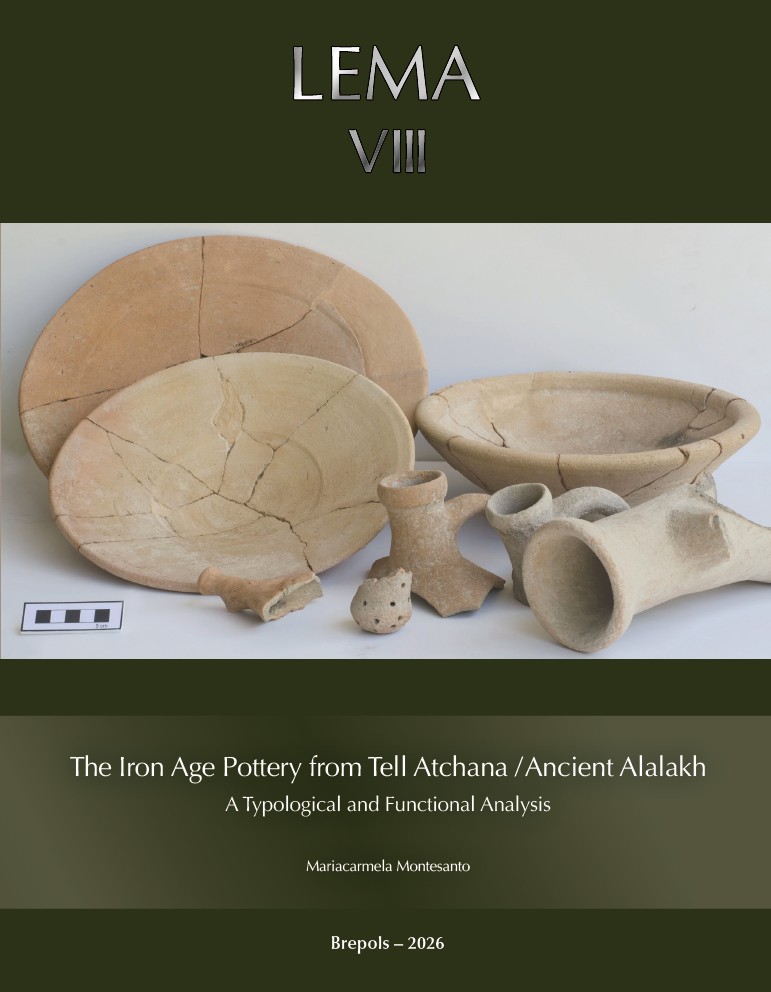 The Iron Age Pottery from Tell Atchana / Ancient Alalakh
A Typological and Functional Analysis
Volume 8
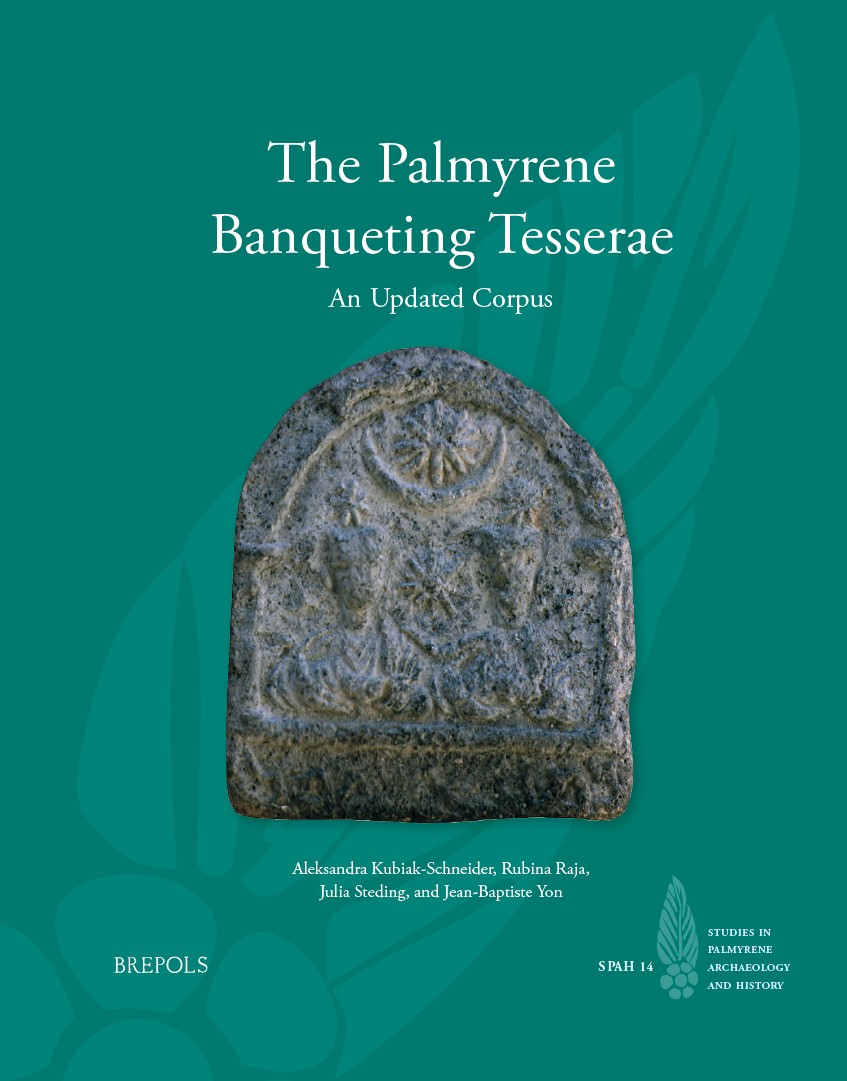

 Writing in the Church of the Nativity in Bethlehem
Inscription and Graffiti in a Multilingual and Multigraphic Perspective
Volume 45




 Atlante tematico di topografia antica 36-2026
Urbanistica e monumenti, porti, Roma. Ricerche sui monti Aurunci
Volume 36
 Cerámica común romana y ciclo haliéutico
Análisis de los contextos de las cetariae de Iulia Traducta

 Nuove scoperte e progressi nelle metodologie di rilievo e analisi dell’arte rupestre post-paleolitica in Italia
New discoveries and progress in the tracing and analysis methodologies of the post-Paleolithic rock art in Italy


 A Dramatic Event in Late Roman Florence
The Anomalous Burial Site Discovered beneath the Uffizi Gallery

 Alexander the Great and the Campaign of Gaugamela
New Research on Topography and Chronology. IAMNI 1 (Italian Archaeological Mission to Northern Iraq)
Volume 53


 Approaching Ancient Greek Coastal and Inland Poleis in the Northern Peloponnese
New Research in the Microregions of Aigeira, Lousoi and Sikyon
Volume 4