
Fores et Fenestrae: A Computational Study of Doors and Windows in Roman Domestic Space
By (author) Lucia Michielin

Paperback (Published)
(June 2021)
ISBN: 9781789696172
8.07 x 11.42 inches
Price: $68.00
In stock
The role doors and windows play in shaping the life and structure of Roman private dwellings has been underestimated; they are structures that connect not only rooms but houses to the outside world, and they relate to privacy, security, and light in domestic spaces. This volume analyses these structures as an essential part of daily
Fores et Fenestrae aims to analyse Roman doors and windows and their role as an essential part of daily life. They are the structures that connect not only rooms but also houses themselves to the outside world. They relate to privacy, security, and light in domestic spaces. Until very recently, the role of doors and windows in shaping the life and structure of Roman private dwellings has been greatly underestimated. The reason for this lies primarily in the difficulties linked to their study. The low level of preservation of walls and the widespread use of perishable and recyclable materials hinder in many cases a correct assessment of these structures. To achieve greater understanding, the author followed a computational approach. The two cores of the research are the analysis of the database and the observation of results based on new 3D models. 1855 doors and windows were surveyed across eight towns of Roman imperial Italy. The information collected has been organised in a database comprised of nine tables and mined through statistical analyses. Three 3D models of different dwelling types have been generated simulating natural materials and light conditions to observe the role of doors and windows in context. The work is subdivided into three sections. The first explains the study’s methodology and analyses previous scholarship on the topic, highlighting how the issue of doors and windows has often be ignored or only superficially considered. The second section collects typologies of complementary sources to better comprehend the results of the statistical analyses and to integrate the 3D models; literary, epigraphic, and visual sources are considered. To these are added the analysis of the archaeological sources. The third part constitutes the core of the analysis. It is composed of two chapters, the fi rst of which provides a detailed overview of the statistical analyses produced from the sample collected. The latter chapter investigates the results of the renders and analyses views and natural light in the Roman house.
Preface Part A: Background and Approaches Introduction Literature Review Methodology Part B: Sources Literary and Epigraphic Sources 1 Doors 2 Windows 3 Words for elements of doors and windows 4 Doors and windows in Roman law Visual Sources 1 Doors 2 Windows Archaeological Material 1 Lintels and doorjambs 2 Door-leaves 3 Shutters 4 Curtains 5 Glazed doors and windows 6 Other translucent media windows 7 Grills 8 Locking systems: bars, deadbolt, locks, and keys 9 Hinges Part C: Data Mining Patterns in Doors and Windows 1 General patterns of doorways and windows 2 Doors and Doorways 3 Windows 4 Thresholds and Sills Openings, Views, and Natural Light in the Roman House 1 Different types of barriers and partitions 2 Different types of rooms 3 Different types of houses Final Considerations Bibliography Appendix 1: DAWD - The Doors and Windows Database Appendix 2: Renders Appendix 3: Written Sources, Preface ;
Part A: Background and Approaches Part B: Sources1 Doors2 Windows3 Words for elements of doors and windows4 Doors and windows in Roman law1 Doors2 Windows1 Lintels and doorjambs2 Door-leaves3 Shutters4 Curtains5 Glazed doors and windows6 Other translucent media windows7 Grills8 Locking systems: bars, deadbolt, locks, and keys9 Hinges Part C: Data Mining1 General patterns of doorways and windows2 Doors and Doorways3 Windows4 Thresholds and Sills1 Different types of barriers and partitions2 Different types of rooms3 Different types of houses Final Considerations ;
Bibliography ;
Appendix 1: DAWD - The Doors and Windows Database ;
Appendix 2: Renders ;
Appendix 3: Written Sources
- By (author) Lucia Michielin
Other Titles in this Series


 Investigations into the Dyeing Industry in Pompeii
Experimental Archaeology and Computer Simulation Techniques


 Between Roman Culture and Local Tradition
Roman Provincial Coinage of Bithynia and Pontus during the Reign of Trajan (98-117 AD)


 Roman Military Tribunes (First Century BC to Third Century AD): A Historical and Prosopographical Study. Volume I
Prosopographical Catalogue, Part 1: Roman Military Tribunes (tribuni militum in exercitu) and in the Garrison of the Roman Capital (tribuni militum in praetorio)
 The Urbanisation of the North-Western Provinces of the Roman Empire
A Juridical and Functional Approach to Town Life in Roman Gaul, Germania Inferior and Britain


 Late Roman Dorset Black-Burnished Ware (BB1)
A Corpus of Forms and Their Distribution in Southern Britain, on the Continent and in the Channel Islands


 Ländliche Siedlungsstrukturen im römischen Spanien
Das Becken von Vera und das Camp de Tarragona –zwei Mikroregionen im Vergleich


Similar Books


 Behind the Scenes of Medieval Roofs
An Overview of the Roofing Systems of Italian Churches
Volume 90
 Caesar’s Visions and Impact on the Roman Empire
Revisiting the Archaeological and Historical Record of the 40s BC
Volume 2

 Circulation, Use, Impact
The Consumption of Architectural Books in the Early Modern Eastern Adriatic
Volume 1




 Drunk the Potion, No Whit Charmed
The Doctrine of Pure and Perfect Souls from Iamblichus to Damascius

 Epiphanies of the Divine in the Septuagint and the New Testament
Fifth International Symposium of the Corpus Judaeo-Hellenisticum Novi Testamenti (CJHNT), 14-17 May 2015, Nottingham


 Etruscan and Roman Hellenistic Anatomical ex votos
Reassessing Popular Religious Expressions in Central Italy
Volume 8




 Invisible Labour in Antiquity
Visualizing Obscure Work in the Ancient Mediterannean and West Asia
Volume 1

 Language and Power in the Roman Empire and Early India
Hierarchy, Ambiguity, and the Art of Reading the Signs in Cosmopolitan Cultures
 Late Antique villae in the Balkans (3rd–7th c. AD): Current Research Questions and Perspectives
HAEMUS Companion to the Late Antique Balkans 1
Volume 4


 Nurturing the Elite
Representations of Drinking, Eating, and Religious Vessels in Palmyrene Funerary Iconography
Volume 13


 Portraying the Individual in the Roman East
Local–Imperial Entanglements in Sculpture, Mosaics, and Paintings (First–Fourth Centuries AD)
Volume 18
 Small Worlds and Relational Agencies: Local Societies in Early Medieval Iberia
Pequeños mundos y Agencias relacionales: Sociedades locales altomedievales en la Península Ibérica

 The Compositional History of the Book of Kings
An Analysis of the Evaluative Frameworks in 1 Kings 14–2 Kings 25


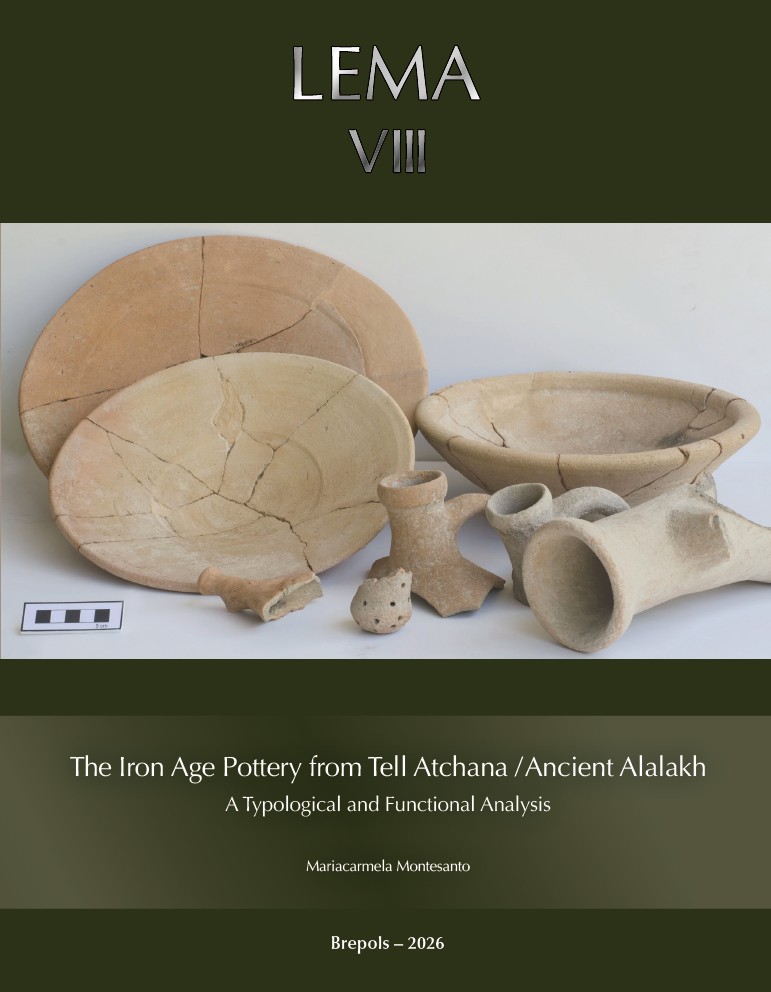 The Iron Age Pottery from Tell Atchana / Ancient Alalakh
A Typological and Functional Analysis
Volume 8
