
Staatliche Museen zu Berlin – Preußischer Kulturbesitz. Skulpturensammlung und Museum für Byzantinische Kunst. Bestandskataloge. Band 1: Textilien aus Ägypten
Teil 1: Textilien aus dem Vorbesitz Theodor Graf, Carl Schmidt und dem Ägyptischen Museum Berlin
By (author) Cäcilia Fluck By (author) Petra Linscheid By (author) Susanne Merz

Hardback (Published)
(October 2000)
ISBN: 9783895001321
8.9 x 12.4 inches
Price: $138.00
In stock
This catalogue is the first of three volumes presenting the (so far) unpublished part of the large collection of Late Antique to Early Islamic textiles from Egypt in the Museum für Byzantinische Kunst Berlin. Complete garments, cloth assemblages from burials, and rarities both in textile function and technique will be important objects for the further study of ancient textiles. <br/>A photo and a technical analysis accompany each of the 173 catalogue entries. The object description puts special emphasis on the function of the individual cloth. Introductory essays about origin, techniques, construction of garments, iconography and dating of the textiles, as well as an article about the dye analysis, summarize the various researches undertaken. Explanatory drawings, a glossary, a large bibliography and 16 colour plates make the catalogue pleasant to handle.
English summary: This catalogue is the first of three volumes presenting the ( so far ) unpublished part of the large collection of Late Antique to Early Islamic textiles from Egypt in the Museum fur Byzantinische Kunst Berlin. The volume includes, among others, acquisitions from the collection of Theodor Graf and textiles from Antinoopolis found by Carl Schmidt, the first excavator at that site. Complete garments, cloth assemblages from burials, and rarities both in textile function and technique will be important objects for the further study of ancient textiles. A photo and a technical analysis accompany each of the 173 catalogue entries. The object description puts special emphasis on the function of the individual cloth.Introductory essays about origin, techniques, construction of garments, iconography and dating of the textiles, as well as an article about the dye analysis, summarize the various researches undertaken. Explanatory drawings, a glossary, a large bibliography and 16 colour plates make the catalogue pleasant to handle. German description: Das Museum fur Byzantinische Kunst Berlin besitzt eine der weltweit bedeutendsten Sammlungen von spatantiken bis fruhislamzeitlichen Textilien aus Agypten. In einem dreibandigen Katalogwerk soll sukzessive der umfangreiche unpublizierte Bestand erfasst werden. Der vorliegende erste Teil enthalt unter anderem Erwerbungen aus dem Besitz des Textilsammlers Theodor Graf und Textilien aus der Stadt Antinoopolis, die der Koptologe Carl Schmidt gegen Ende des 19. Jahrhunderts dort fand. Vollstandige Kleidungsstucke, komplette textile Grabausstattungen sowie in funktionaler und technischer Hinsicht seltene Stucke liefern neue Erkenntnisse fur die weitere Erforschung antiker Textilien. Jeder der 173 Katalogbeitrage enthalt ein Photo, eine technische Analyse und eine ausfuhrliche Objektbeschreibung mit Kommentar. Einfuhrende Kapitel sind den textilen Techniken, der Herstellungsweise und Funktion der Textilien, der Ikonographie, der Datierung und der Herkunft gewidmet. Daruber hinaus bereichert ein Beitrag uber Farbanalysen die durchgefuhrten Untersuchungen. Erlauternde Skizzen, ein Glossar, eine umfassende Bibliographie und 16 Farbtafeln runden diesen Band ab, mit dem eine Reihe von Bestandskatalogen der Skulpturensammlung und des Museums fur Byzantinische Kunst Berlin eroffnet wird.
- By (author) Cäcilia Fluck
- By (author) Petra Linscheid
- By (author) Susanne Merz
„Compètent cet ouvrage abondamment illustré de photos en noir et blanc mais aussi de dessins, un glossaire technique (qui est le bienvenu), une abondante bibliographie, ainsi qu’une table de concordance entre les n° du catalogue et ceux de l’inventaire du musée. Sieze planches en couleurs d’excellente qualité ferment cet excellent catalogue. On ne peut qu’encourager les auteurs à poursuivre leurs recherches et à nous donner d’uatres livres de ce genre.“<br/><br/>Marguerite Rassart-Debergh<br/><br/>In: Latomus. 69 (2010) 2. S. 588-589.<br/><br/>------------------------<br/><br/>„The authors of this book are to be commended for their very thorough cataloguing of a difficult group of material, which included some textiles lost in World War II and known only from old records and photographs. While a great range of Coptic textiles is published here, many, apart from a few complete tunics and costume accessories, are in very fragmentary condition. They would be hard to understand without prior knowledge of more complete examples. The highly detailed and abbreviated technical descriptions will be accessible only to textile specialists. The bibliography is very complete and useful, while both the black-and-white and color photographs are very good.<br/>This book will be of interest primarily to those with some knowledge of Coptic textiles. It would be a valuable addition to a specialized or university library.“<br/><br/>In: Journal of Near Eastern Studies. 63 (2004). 1. S. 44-45.
—
Other Titles in this Series


 Das Tafelbild aus der Kathedrale von Trogir
Kunsttechnologische Studien zur Tafelmalerei Dalmatiens des 13. Jahrhunderts
 Byzantinische Malerei. Bildprogramme – Ikonographie – Stil
Symposion in Marburg vom 25. bis 29. Juli 1997
 Staatliche Museen zu Berlin – Preußischer Kulturbesitz. Skulpturensammlung und Museum für Byzantinische Kunst. Bestandskataloge
Band 2: Werke der Alltagskultur. Teil 1: Menasampullen


 Byzanz, der Westen und das »wahre« Kreuz
Die Geschichte einer Reliquie und ihrer künstlerischen Fassung in Byzanz und im Abendland

 Funktion und Nutzung der Krypta im Mittelalter
Heiligsprechung und Heiligenverehrung am Beispiel Italien


 Cilicia as Sacred Landscape in Late Antiquity
A Journey on the Trail of Apostles, Martyrs and Local Saints


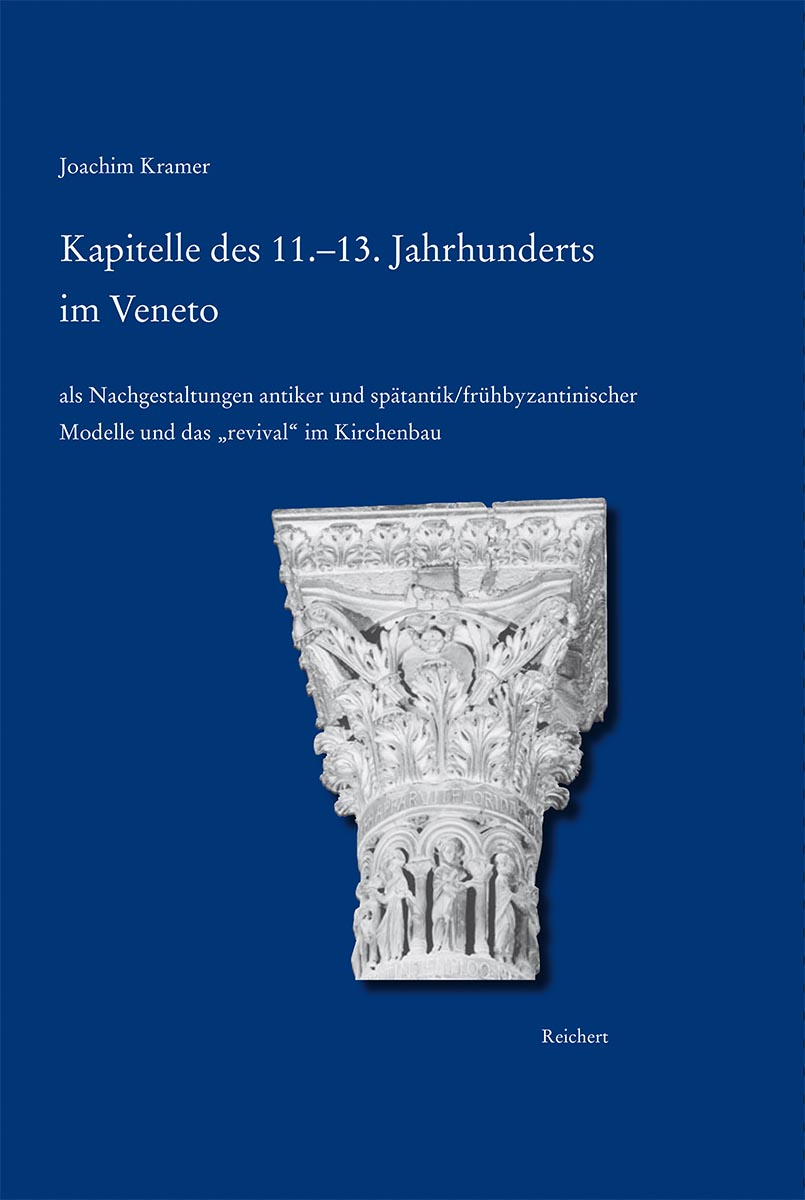 Kapitelle des 11.-13. Jahrhunderts im Veneto
als Nachgestaltungen antiker und spätantik/frühbyzantinischer Modelle und das „revival“ im Kirchenbau
 Die Christianisierung der spätrömischen Welt
Stadt, Land, Haus, Kirche und Kloster in frühchristlicher Zeit


 Flankenräume im mittelbyzantinischen Kirchenbau
Zur Befundsicherung, Rekonstruktion und Bedeutung einer verschwundenen architektonischen Form in Konstantinopel


Similar Books
 «Solazoxa festa, stradolze e stracomplia»
Festschrift für Raymund Wilhelm zum 65. Geburtstag mit Beiträgen zu Diskurstraditionen und mittelalterlicher Philologie
Volume 249
 A Collaborative Tapestry in Honour of Shirley Ann Brown / Une fresque brodée en l’honneur de Shirley Ann Brown
The Bayeux Tapestry Seen by her Colleagues and Friends / La Tapisserie de Bayeux vue par ses collègues et amis




 Balthasar Caymox of Nuremberg
Early Modern German Print Publishers: Popular Prints of the Seventeenth Century
 Behind the Scenes of Medieval Roofs
An Overview of the Roofing Systems of Italian Churches
Volume 90


 Cahiers de recherches médiévales et humanistes – Journal of Medieval and Humanistic Studies
Volume 51





 ENTANGLED AFRICA
Intra-African Relations Between Rain Forest and Mediterranean from Around 4,000 BCE to 1,500 CE



 Gold, Silver and Glass: Power Networks, Cultural Identities, Technology Transfers and Agency across the Old World (7th Century BC – 1st Century AD)
Proceedings of a Conference Held at the British Museum, 16–18 June 2023


 Innovation and Medieval Communities
The Circulation of Ideas and Practices in and out of the Town (1200-1500)
Volume 63
 John Dunstaple Reading Boethius
John Dunstaple’s Annotations to Boethius’s “De institutione musica” in the Manuscript Oxford, Corpus Christi College Library, MS 118
 Legal Visuality
Exegesis, Ambiguity, and Dissimulation of the Donation of Constantine in the Early Modern Period
 Listening to the Swan Song
More-than-Human Beings and Sounds in Literature and Culture Through the Ages


 Medieval Debates on Foreknowledge: Future Contingents, Prophecy, and Divination
Acts of the XXVII Annual Colloquium of the SIEPM, Trento 12-15 September 2023
Volume 31