
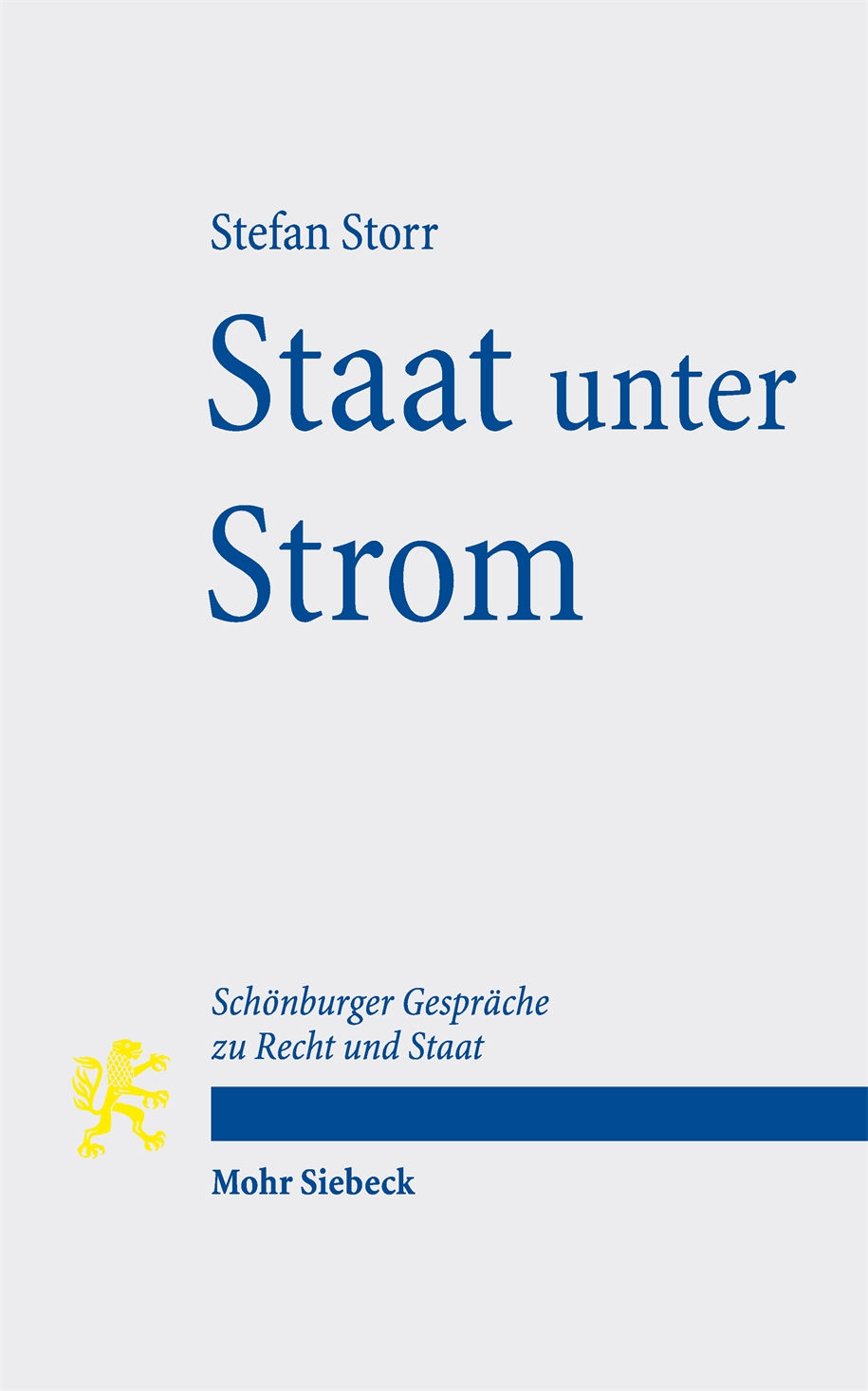
Staat unter Strom
Schönburger Gespräche zu Recht und Staat
By (author) Stefan Storr
Paperback (Published)
(September 2026)
ISBN: 9783162010315
4.49 x 7.17 inches
Price: $29.00
On back order
The state is responsible for securing an energy supply that sustains society, the economy, and public institutions, yet legal and practical limits constrain its role. Despite extensive regulation, its influence remains restricted, as responsibilities are shared among many actors and multiple objectives must be balanced.
The modern state is an energy state: energy supply, and electricity in particular, forms the technical foundation of our civilization and is indispensable for the functioning of society, the economy, and government. Ensuring an adequate energy supply is regarded as a core responsibility of the state and is considered part of the provision of essential public services, even though the concept itself remains imprecise and open to interpretation.
While the constitution grants the legislature broad discretion, European Union law comprehensively regulates the organization of the energy sectors in order to safeguard competition, advance the energy transition, and ensure security of supply. Nevertheless, the state remains “under pressure”: it must organize energy markets and deliver both security of supply and the energy transition, yet it encounters systemic, legal, and political obstacles in doing so. The stability requirements of network industries, the predominance of EU law, the independence of the regulatory authority, the federal allocation of powers, and the insulation of public enterprises from direct governmental control all contribute to a significant loss of steering capacity.
The new Austrian Electricity Industry Act reflects a trend toward greater state interventionism by imposing public-service obligations and policy objectives on all electricity companies. Even so, the state’s ability to direct these enterprises remains limited, as multiple objectives must be pursued simultaneously and a variety of actors with differing interests and responsibilities are involved. As a result, the conceptual coherence of market design is often weakened by political compromise.
I. Der moderne Staat ist ein Energie-Staat
1. Die Energieversorgung und das tägliche Brot - 2. Der überholte und doch weiterhin verwendete Begriff der Daseinsvorsorge - 3. Energieversorgung als Staatszweck und Staatsaufgabe: der staatsrechtliche Zugang - 4. Energieversorgung als Staatsaufgabe: der verfassungsrechtliche Zugang - 5. Energieversorgung als wichtiges öffentliches Interesse
II. Staatlicher Steuerungsverlust in der Energiewirtschaft am Beispiel der Elektrizitätswirtschaft
1. Staatlicher Steuerungsverlust durch den Regelungsgegenstand: Elektrizitätswirtschaftsrecht als Systemrecht und die Notwendigkeit von Systemstabilität - 2. Staatlicher Steuerungsverlust durch Prädominanz des Unionsrechts - 3. Staatlicher Steuerungsverlust durch Kompetenzdefizite - Die erhöhten Anforderungen an den Bundesgesetzgeber für die Überwindung fehlender Kompetenz -
4. Staatlicher Steuerungsverlust durch die Unabhängigkeit der Regulierungsbehörde - 5. Staatlicher Steuerungsverlust öffentlicher Energieversorgungsunternehmen - 6. Staatlicher Steuerungsverlust durch Einbindung und faktische Einflussnahme Privater auf die staatliche Willensbildung und Tätigkeit
III. Zusammenfassung
Stefan Storr (Von (Autor))
Born 1968; studied law; 1995 Second State Examination in Law; 1994 PhD (Jena); 2001 Habilitation (Jena); Professor at the Institute of Public Law and Political Science, University of Graz.
- By (author) Stefan Storr
Similar Books


 Balthasar Caymox of Nuremberg
Early Modern German Print Publishers: Popular Prints of the Seventeenth Century
 Constitutional Conflict as Judicial Civil Disobedience and Conscientious Objection
Reconceptualising National Constitutional Court Rulings in the European Union Legal Space

 Formulary apportionment in international tax law
An allocation method for the age of globalization and digitalization
Volume 210


 Hofmann oder Vorkämpfer der „philosophes“?
Deutsche Voltaire-Bildnisse und -Imaginationen im Zeitalter der Aufklärung

 Legal Unification through Case Law?
Supreme Courts and the Emergence of Uniform Law in the Modern Era
Volume 242

 The Documentation of Historical Facts in Trial Judgments of the International Criminal Court
A Constitutional Theory of International Criminal Proceedings
Volume 66


 Linguistic and Cultural Dynamics in a Frontier Society
New Perspectives on Northeastern Bavaria and Western Bohemia in the Early Middle Ages
Volume 9
 The Law of the International Civil Service
Institutional Law and Practice in International Organisations
 “Aktenzeichen XY … ungelöst”, Facebook und Co.
Chancen und Risiken der Einbeziehung der Öffentlichkeit in das strafprozessuale Ermittlungsverfahren
Volume 476
 “Das Grundgesetz ist unsere Leitkultur”
Eine verfassungsrechtliche und -theoretische Annäherung an die Gleichsetzung von Grundgesetz und Leitkultur
Volume 1595
 “Sachkunde” als Beweisquelle im Strafprozess
Defizite der Verteidigungsrechte bei der Gewinnung und Verwertung von außerjuristischem Erfahrungswissen
Volume 340

 (Bloß) symbolische Rechtsetzung
Eine interdisziplinäre Untersuchung der deutschen Glücksspielregulierung auf ihre funktionelle und symbolische Wirkung
 (Keine) Haftung für Produktfehler?
Eine Untersuchung des deutschen und neuseeländischen Rechts zum Ausgleich von Personenschäden durch fehlerhafte Produkte
 (Personen-)Gesellschaften im Erbschaftsteuerrecht
Vorgaben des Leistungsfähigkeitsprinzips für die Besteuerung. Zugleich eine kritische Auseinandersetzung mit § 2a ErbStG
 Aktionärsklagen in Deutschland und Hongkong
Rechtsdogmatik. Rechtsökonomik. Rechtsvergleich.
Volume 37
 Aktuelle Perspektiven für eine Europäische Sozialunion –
mit Bezügen zum Sozialversicherungsrecht
Volume 42
 Althochdeutsche Stabreimdichtungen
Hildebrandslied, Muspilli und kleinere Denkmaler. Von Grund auf neu ediert, mit Erschliessungshilfen versehen, ubersetzt und eingeleitet von Frank Schafer

 Anlasslose Finanzermittlungen zur Geldwäschebekämpfung
Automatisierte Überwachung in der Sicherheitsgesellschaft und ihre verfassungsrechtlichen Grenzen
Volume 12
 Arkane Algorithmen
Algorithmische Systeme als Handlungsform der Verwaltung und Rechtsschutzmöglichkeiten gegen diese
 Auf Gedeih und Verderb
Die Pestiziddebatte seit dem Kaiserreich zwischen Hunger, Profit und Massenmord


 Auskunftsansprüche und prozessuale Mitwirkungspflichten
Instrumente zur Bewältigung von Informationsungleichgewichten

 Becoming German American
Eine generationenübergreifende deutsche Migrationsgeschichte in Amerika nach 1945


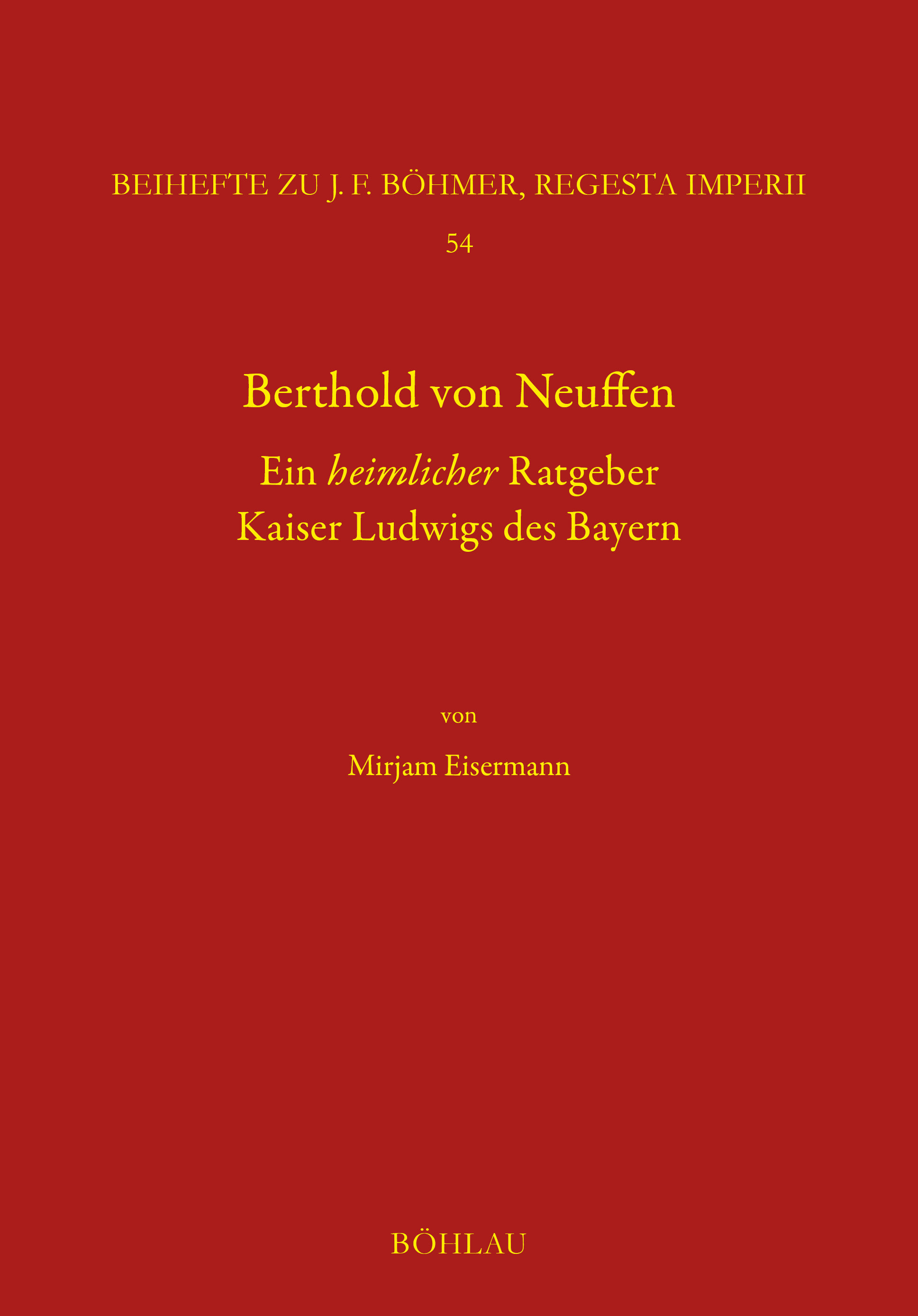 Berthold von Neuffen. Ein heimlicher Ratgeber Kaiser Ludwigs des Bayern
Forschungen zu Kaiser- und Papstgeschichte des Mittelalters. Beihefte zu J. F. Böhmer, Regesta Imperii
 Beschleunigung der Umweltverträglichkeitsprüfung und der Strategischen Umweltprüfung
Notwendigkeit einer behördlichen Vorprüfung im Einzelfall
Volume 221
