
Mundus primus
Die Geschichte der Welt und des Menschen von Adam bis Noach im Genesiskommentar Ephräms des Syrers
By (author) T. Kremer

This study may prove both Ephrem’s close proximity to rabbinic exegesis and his great originality. As a starting point for a specific Syriac interpretation tradition of the first book of the Bible, Ephrem’s commentary is highly interesting for patristic exegesis and inspiring for the theological interpretation of the primordial history and a lively dialogue with modern exegesis. German text.
Albeit famous as a composer of liturgical hymns, the exegetical works of Ephrem the Syrian are almost unknown. This monograph deals with Ephrem’s commentary on Genesis in which he provides a specific explanation of the biblical primordial history. His exegesis proves to be apologetic (refuting the positions of his main opponents Marcion, Bardaisan and Mani), ascetic and critical towards allegorical interpretations of an allusive type. By applying principles of a complex typology, he interprets the primordial events by relating them to particular contexts (cosmology, anthropology, ethics and eschatology). Thus he assumes that Gen 1:19:17 describes the contours of a first world (mundus primus), which is in a paradigmatic way a typological pre-image of the second world (mundus secundus) in which we live. According to Ephrem, with the landing of the Ark and God’s covenant with Noah, the history undergoes its decisive turning point. This study may prove both Ephrem’s close proximity to rabbinic exegesis and his great originality. As a starting point for a specific Syriac interpretation tradition of the first book of the Bible Ephrem’s commentary is highly interesting for patristic exegesis and inspiring for the theological interpretation of the primordial history and a lively dialogue with modern exegesis.
- By (author) T. Kremer
Other Titles in this Series
 Pseudo-Atanasio. Dialoghi IV e V sulla santa Trinità (testo greco con traduzione italiana, versione latina e armena)
Volume 634, 125


 Die Anbetung der Magier und die Taufe der Sasaniden. Zur Geistesgeschichte des iranischen Christentums in der Spätantike
Volume 621, 120
 From High Priest to Patriarch
History and Authority in the 'Ecclesiastical History' of Bar 'Ebroyo
Volume 688, 141

 The Homily of Zär’a Ya’eqob’s Mäshafä Berhan on the Rite of Baptism and Religious Instruction
T.
Volume 653, 114


 Catalogue of the Arabic Garshuni Manuscripts and Fragments of the Matenadaran (Yerevan)
Volume 708, 148


 The Feast of the Desert of Apa Shenoute
A Liturgical Procession from the White Monastery in Upper Egypt
Volume 681, 53

 The Homily of Zär’a Ya’eqob’s Mäshafä Berhan on the Rite of Baptism and Religious Instruction
V.
Volume 654, 115

 The Genesis Commentary by Step’anos of Siwnik’ (dub.)
Edition, Translation and Comments
Volume 695, 32



Similar Books
 ‘For You I Study, For You I Work, For You I Live, For You I Am Ready To Even Give My Life’
Essays in Honour of Francis (Frank) J Moloney, SDB

 A Connecting Polemic in the Medieval Mediterranean
The Correspondence of Leo III and ʿUmar II
Volume 6




 Ars Prophetica
Theology in the Poetry of Twentieth-Century Hebrew Poets Avraham Halfi, Shin Shalom, Amir Gilboa, and T. Carmi
 As Messianism Turns to Heresy
The Regenstein Chair Lectures On Lurianic Kabbalah and Shabbatai Tzevi at Hebrew Union College - Cincinnati
 Athanasius of Alexandria, Epistula ad episcopos Aegypti et Libyae
Old Slavonic Version and English Translation
Volume 261


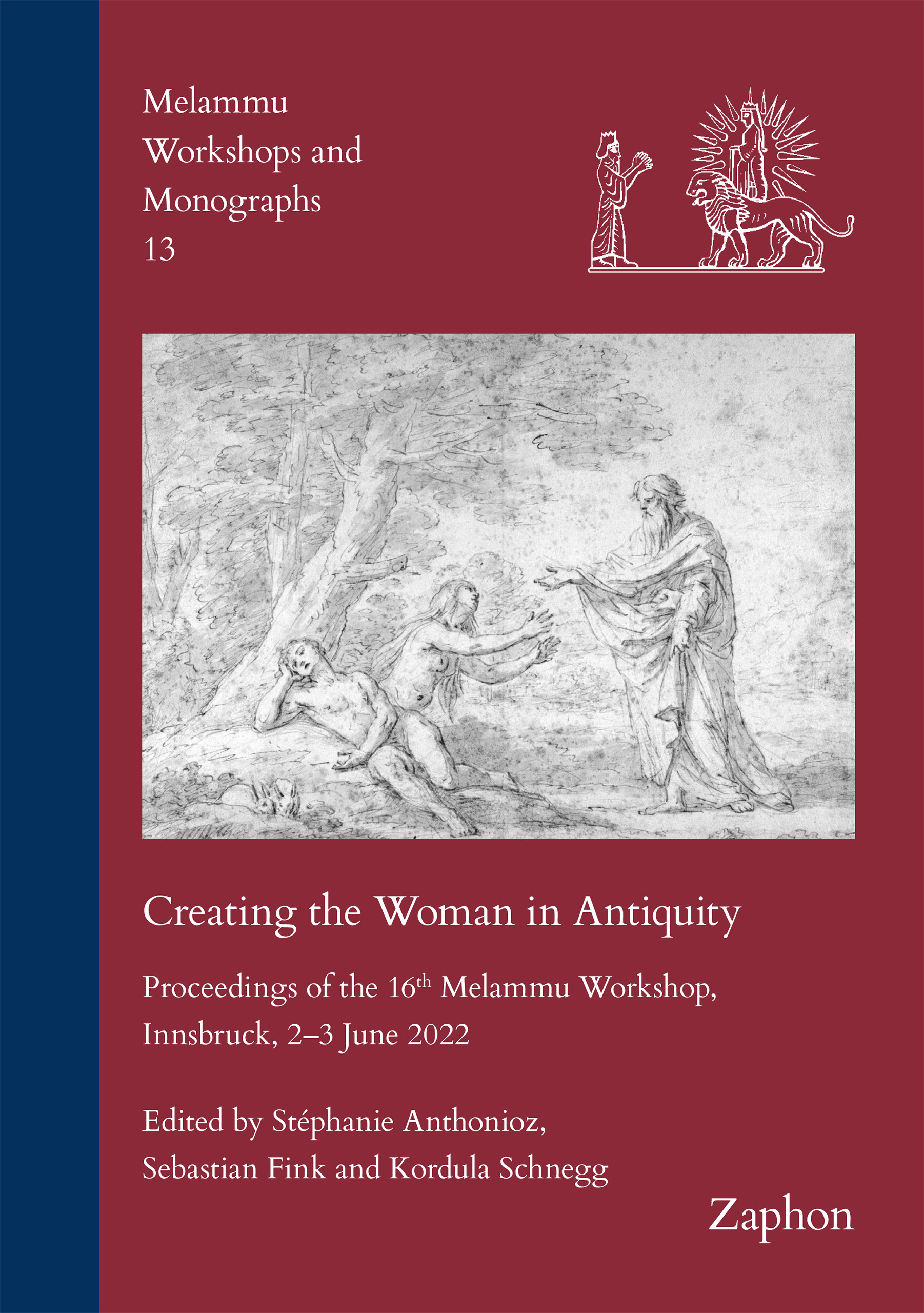 Creating the Woman in Antiquity
Proceedings of the 16th Melammu Workshop, Innsbruck, 2–3 June 2022
Volume 13
 Cyril of Alexandria’s Christological Exegesis
Explorations of Partitive Exegesis in the Dialogues on the Trinity
Volume 70

 Drunk the Potion, No Whit Charmed
The Doctrine of Pure and Perfect Souls from Iamblichus to Damascius


 Epiphanies of the Divine in the Septuagint and the New Testament
Fifth International Symposium of the Corpus Judaeo-Hellenisticum Novi Testamenti (CJHNT), 14-17 May 2015, Nottingham


 Extracanonical Traditions and the Holy Land
Texts, Rituals, and Material Culture in Late Antique Palestine
 Fear, Fear of God, God-Fearers
Philological and Historical Perspectives on the World of Ancient Judaism and Christianity
