
Messiah and the Throne
Jewish Merkabah Mysticism and Early Christian Exaltation Discourse
by Timo Eskola

Paperback (Out of print)
(July 2001)
ISBN: 9783161476419
Price: $88.00
On back order
Did Jewish throne mysticism, the so-called ‘merkabah mysticism’, influence the emergence and formation of the earliest exaltation Christology? The author presents resurrection Christology as a part of Jewish Christian merkabah tradition. Christ’s exaltation was described as a heavenly journey that culminated in his enthronement on the divine throne of glory. Christian writers did exploit the symbolic world, the images and metaphors of Second Temple Judaism. The exaltation discourse that they present, however, is completely new. A simple typological explanation is unable to explain the nature of early Christology. Christ was not depicted as a heavenly angelic figure or an exalted patriarch. He was described as the enthroned Son of God whose reign is eternal. By exploiting linguistic and literary methods Eskola reconstructs the narrative structure of christological statements. Several different narratives were discerned, each one of which expresses one form of a so-called Christian merkabah tradition. In the New Testament, Christ’s resurrection has been interpreted in terms of exaltation discourse, cultic discourse, and judicial discourse. Each one of these produced a different narrative about the exalted Christ. Further, the new approach sheds light for instance on the idea of the so-called adoptionist Christology. There was no concept of adoption in early Jewish Christian exaltation Christology. Exalted Christ on the throne of Glory was not considered merely as a pious Jew making a heavenly journey, but as the divine Savior of the world. The intertextual transformation of Jewish concepts underlined the Lordship of Christ as a heavenly king. The confessing of Christ as Lord realized simultaneously the core of traditional Jewish devotion – faith in and faithfulness to God as a heavenly King.
Timo Eskola, Born 1955; 1981 M.A. theology; 1982-92 Pastor in the Finnish Lutheran Church; 1987 B.A. literature; 1992 Dr. theol.; since 1992 New Testament Scholar at the Theological Institute of Finland in Helsinki; since 1998 Docent at the University of Helsinki.
- By (author) Timo Eskola
Other Titles in this Series
 Educating Early Christians through the Rhetoric of Hell
'Weeping and Gnashing of Teeth' as Paideia in Matthew and the Early Church
Volume 382


 Hebraisches Evangelium und synoptische Uberlieferung
Untersuchungen zum hebraischen Hintergrund der Evangelien
Volume 312
 The Offering of the Gentiles
Paul's Collection for Jerusalem in Its Chronological, Cultural, and Cultic Contexts
Volume 248


 Schopfungspoetik im Johannesevangelium
Sprachanalytische Untersuchungen zum Lebensmotiv. Kontexte und Normen neutestamentlicher Ethik / Contexts and Norms of New Testament Ethics. Band XVI
Volume 621

 Desire in Paul’s Undisputed Epistles
Semantic Observations on the Use of epithymeo, ho epithymetes, and epithymia in Roman Imperial Texts
Volume 539


 Wie Geschichten Geschichte schreiben
Fruhchristliche Literatur zwischen Faktualitat und Fiktionalitat
Volume 395

 Bodily Resurrection and Ethics in 1 Cor 15
Connecting Faith and Morality in the Context of Greco-Roman Mythology
Volume 360
 New Creation in Paul’s Letters
A Study of the Historical and Social Setting of a Pauline Concept
Volume 272


 The Origins of Pauline Pneumatology
The Eschatological Bestowal of the Spirit upon Gentiles in Judaism and in the Early Development of Paul's Theology
Volume 194
 Religious Experience of the Pneuma
Communication with the Spirit World in 1 Corinthians 12 and 14
Volume 230


 Jesus’ Fulfilment of the Torah and Prophets
Inherited Strategies and Torah Interpretation in Matthew's Gospel
Volume 594

 Zeit und Ethik im Johannesevangelium
Theoretische, methodische und exegetische Annaherung an die Gunst der Stunde. Kontexte und Normen neutestamentlicher Ethik / Contexts and Norms of New Testament Ethics
Volume 488

Similar Books



 Cyril of Alexandria’s Christological Exegesis
Explorations of Partitive Exegesis in the Dialogues on the Trinity
Volume 70


 Reformed Covenantal Eudaimonism
Wilhelmus à Brakel (1635–1711) on Highest Good, Virtue, and Law
Volume 87

 The Biblical Tale of Judah and Tamar in Fourteenth-Century Iran
A Judeo-Persian Versified Account by Shāhīn with Scholarly Edition, Annotated Translation and Persian Transliteration
Volume 94, 951

 The Therapeutae as the Best Paradigm for the Contemplative Life
A Contextual Reading of Philo of Alexandria's De Vita Contemplativa

 De Moïse à Jésus: une messianité en discussion
Une interprétation de Jean 6 à partir de la section narrative (vv. 1-25a)
Volume 244


 Die Sprache der Psalmen
Skizzierung eines lyrischen Prototyps der hebräischen Psalmen mithilfe von gattungs- und lyriktheoretischen Ansätzen
Volume 440

 Makrothymia im Neuen Testament
Semantik und Ethik einer vergessenen ethischen Norm. Kontexte und Normen neutestamentlicher Ethik / Contexts and Norms of New Testament Ethics. Band XV
 Parola di Dio, di uomo e di Re
L'assoluta verità della Bibbia nella dottrina cattolica di Bacchisio Raimondo Motzo


 Breaking New Ground in John
Imagery, Parables, Characters, Christology, and Ethics in the Fourth Gospel
Volume 531
 But the Wise Shall Understand
Reuse of Prophecies, Chronotope, and Merging of Eschatological Horizons in Daniel 10-12
 Creation Concepts and Creation Care
Perspectives from Early Judaism, Early Christianity, and Beyond. Kontexte und Normen neutestamentlicher Ethik / Contexts and Norms of New Testament Ethics XVII
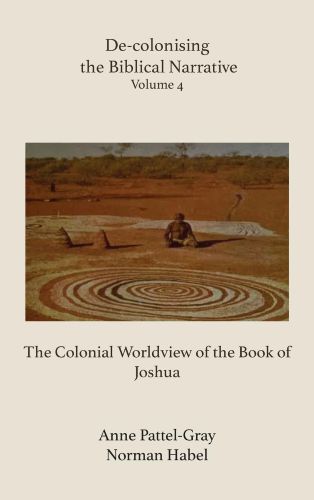 De-colonising the Biblical Narrative. Volume 4
The Colonial Worldview of the Book of Joshua
Volume 4


 Personified Mountains in Ancient Canonical Narratives
Spatial and Mythic Studies of Mesopotamian, Greek, and Hebrew Bible Landscapes
Volume 62
