
Goldfunde aus dem Artemision von Ephesos
by Andrea M Pulz, edited by Institut Osterreichisches Archaologisches

English summary: The gold objects derive from the excavations carried out between 1965 and 1994 in the Artemision of Ephesos by the Austrian Archaeological Institute. Most of the objects occurred in strata located under the Archaic kipteros and may thus be classified as originating from the second half of the seventh or the first half of the sixth century BC. They were deposited in the sanctuary as votive gifts. The vast majority are dress ornaments and jewellery, either worn directly on the body or sewn onto clothing such as appliques or pieces of sheet gold decorated with a variety of motives, spherical and drop-shaped pendants and beads (some of which look like fruit), pins with floral heads, fibulae (predominantly of Phrygian ‘Asia Minor’ type), brooches in the shape of birds of prey and boat-shaped earrings with, in some cases, elaborate decoration. There are also some figurines which are definitely worth of note such as anthropomorphic and zoomorphic statuettes. The Artemision is unique in the Archaic period with regard to the amount and variety of gold jewellery found there: No other sanctuary from this period has yielded a similar wealth of gold objects. By including an examination of most of the gold objects from the English excavations in the sanctuary (1904/05) it has been possible to add to the amount and variety of gold jewellery known to have exited. Published with funding from the Austrian Science Fund. German description: Aus den Grabungen 1965 bis 1994 im Artemision von Ephesos durch das Osterreichische Archaologische Institut (Leitung: A. Bammer) stammen 703 Goldobjekte, die als Votivgaben im Heiligtum niedergelegt wurden. Sie sind zeitlich in die zweite Halfte des 7. bis in die erste Halfte des 6. Jahrhunderts v. Chr. einzuordnen. Den grossten Prozentsatz machen Trachtzubehor und Schmuckstucke aus, die sich in direkt am Korper getragenem oder aber an der Kleidung o. a. befestigtem Schmuck einteilen lassen. Es uberwiegen Appliken oder Plattchen mit unterschiedlichen Motiven, schiffchenformige Ohrringe, teilweise mit zusatzlichen Verzierungen, kugel- und tropfenformige Anhanger und Perlen, die mitunter an Fruchte erinnern, Nadeln mit blutenartigen Kopfen, Fibeln, die hauptsachlich dem phrygischen “Asia Minor”-Typus entsprechen, “raubvogelformige” Broschen sowie einige figurliche Objekte (anthropo- und zoomorphe Statuetten). Die vielfaltigen Formen und Motive der vorgestellten Goldobjekte beziehen sich grossteils auf bestimmte Kategorien der Fauna und Flora, die mit der hier verehrten Gottheit in Verbindung gebracht werden konnen. Die Vielzahl und -falt an Goldschmuck aus dem Artemision der archaischen Epoche ist einzigartig, gibt es doch kein anderes zeitgleiches Heiligtum mit einer vergleichbaren Funddichte an Goldobjekten. Durch das Einbeziehen der Funde aus den englischen Grabungen im Heiligtum (1904/05) in die Auswertung und Interpretation konnte das Formenspektrum deutlich erweitert und die damit verbundenen Fragestellungen wie die Bedeutung der Goldfunde fur den Kult konkretisiert werden. Gedruckt mit Unterstutzung des Fonds zur Forderung der wissenschaftlichen Forschung
- By (author) Andrea M Pulz
- Edited by Institut Osterreichisches Archaologisches
Other Titles in this Series

 Das Mausoleum von Belevi
Archaologische Untersuchungen zu Chronologie, Ausstattung und Stiftung
Volume 45810

 Hanghaus 2 in Ephesos Die Wohneinheit 6 Baubefund, Ausstattung, Funde
Baubefund, Ausstattung, Funde
Volume 45878
 Amber for Artemis
Amber Finds from the Artemision at Ephesos. With Contributions by Silvia Alaura, Laura Ambrosini, Marco Bonechi, Vanora Estridge, Sarjit Kaur, Tripta Kaur, Michael Kerschner, Alessandro Naso, Martina Ott, Caroline Posch, Serena Privitera, Andrea M. P
Volume 12.7
 Das Grabhaus 1/08 in der Hafennekropole von Ephesos
Ergebnisse der anthropologischen und palaopathologischen Untersuchung kaiserzeitlich-spatantiker Kollektivgraber
Volume 1


Similar Books

 Caesar’s Visions and Impact on the Roman Empire
Revisiting the Archaeological and Historical Record of the 40s BC
Volume 2


 Etruscan and Roman Hellenistic Anatomical ex votos
Reassessing Popular Religious Expressions in Central Italy
Volume 8


 Invisible Labour in Antiquity
Visualizing Obscure Work in the Ancient Mediterannean and West Asia
Volume 1
 Late Antique villae in the Balkans (3rd–7th c. AD): Current Research Questions and Perspectives
HAEMUS Companion to the Late Antique Balkans 1
Volume 4


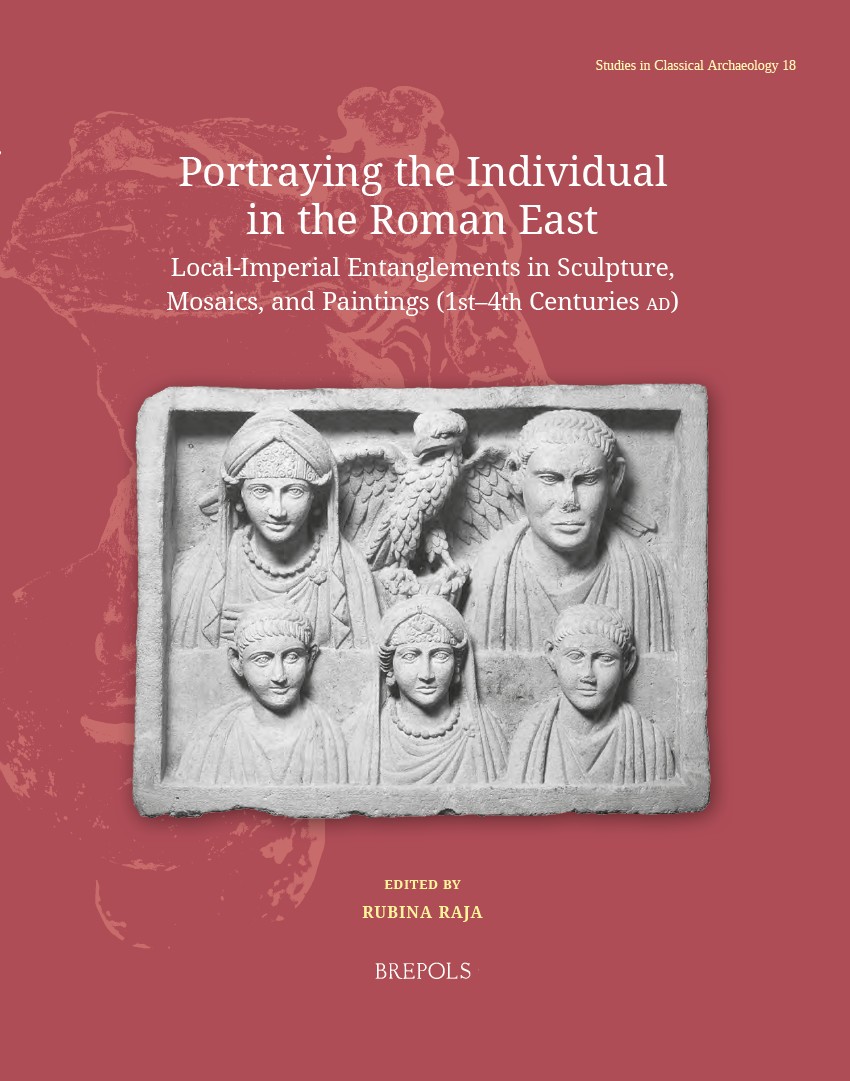 Portraying the Individual in the Roman East
Local–Imperial Entanglements in Sculpture, Mosaics, and Paintings (First–Fourth Centuries AD)
Volume 18

 Small Worlds and Relational Agencies: Local Societies in Early Medieval Iberia
Pequeños mundos y Agencias relacionales: Sociedades locales altomedievales en la Península Ibérica

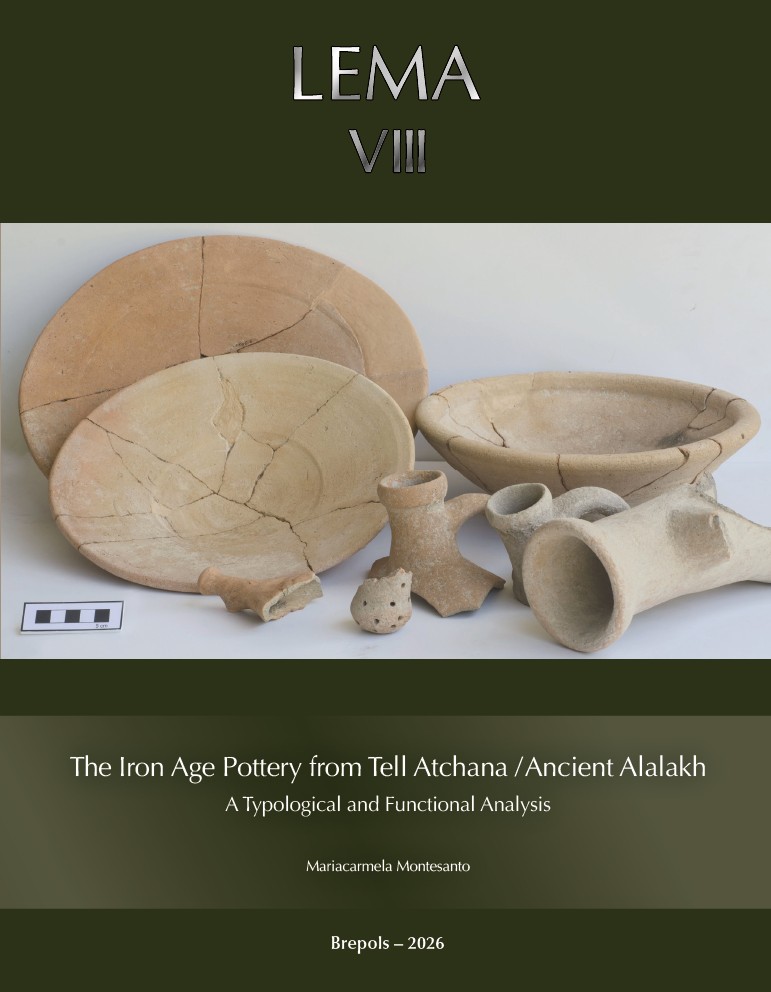 The Iron Age Pottery from Tell Atchana / Ancient Alalakh
A Typological and Functional Analysis
Volume 8

 Writing in the Church of the Nativity in Bethlehem
Inscription and Graffiti in a Multilingual and Multigraphic Perspective
Volume 45


 Atlante tematico di topografia antica 36-2026
Urbanistica e monumenti, porti, Roma. Ricerche sui monti Aurunci
Volume 36
 Cerámica común romana y ciclo haliéutico
Análisis de los contextos de las cetariae de Iulia Traducta

 Nuove scoperte e progressi nelle metodologie di rilievo e analisi dell’arte rupestre post-paleolitica in Italia
New discoveries and progress in the tracing and analysis methodologies of the post-Paleolithic rock art in Italy


 A Dramatic Event in Late Roman Florence
The Anomalous Burial Site Discovered beneath the Uffizi Gallery

 Alexander the Great and the Campaign of Gaugamela
New Research on Topography and Chronology. IAMNI 1 (Italian Archaeological Mission to Northern Iraq)
Volume 53


 Ceramic Finds in Context (Roman to Early Islamic Times)
Final Publications from the Danish-German Jerash Northwest Quarter Project VII
Volume 13