
Hanghaus 2 in Ephesos Die Wohneinheit 6 Baubefund, Ausstattung, Funde
Baubefund, Ausstattung, Funde
edited by Hilke Thur and Elisabeth Rathmayr

English summary: Since the erection of the new protective roof of Terrace House 2 and its opening to tourists shortly afterwards, it has been one of the main attractions of antique Ephesos. Terrace House 2 is a big insula housing seven dwelling units built in the type of peristyle houses. The privileged status of the owners of Dwelling Unit 6 can already be hinted at the central location of the house and its entrance directly from Curetes Street, a main thoroughfare and processional way of the city. Fortunately, the home owner of Dwelling Unit 6, Gaius Flavius Furius Aptus, is known by inscriptions. He was responsible for the generous rebuilding of Dwelling Unit 6 in the building periods II (120 AD) and III (mid 2nd century AD), including big and lavishly decorated halls, which were used for banquets and celebrations (Marble Hall 31, Apsidal Hall 8). Gaius Flavius Furius Aptus not only held municipal offices, but was also priest of Dionysos Oreios Bakchios pro poleos. In this capacity, he opened his house for meetings of the Dionysos association, over which he presided. This is mainly indicated by the absence of private rooms in the house; albeit connecting doors between Dwelling Unit 6 and Dwelling Units 4 and 7 give evidence that these three houses belonged to the family of Gaius Flavius Furius Aptus. Following the publication concept of the Ephesian Terrace Houses, the publication of Dwelling Unit 6 provides a detailed description of the architecture, the reconstruction of the building periods, the water supply and drainage, the marble decor of the walls and floors, the wall paintings, stucco work, mosaics, sculpture, small finds, ceramic, glass and coin finds as well as the analysis of the archaeozoological remains; moreover, the numerous graffiti on the wall paintings giving a direct insight into everyday life are discussed as well as the extensive restoration work of Marble Hall 31, which has been undertaken in recent years. The publication also includes an analysis of the pre-use of the area, whereby as a new result a peristyle house can be assumed already in late Hellenistic times. The volume also provides a CD, containing visualisations of certain rooms as well as building and floor plans.German description: Die sieben Wohneinheiten des Hanghauses 2 im Bautypus von grossen Peristylhausern bilden seit der Uberdachung mit einem Schutzbau und der Offnung fur Besucher eine der touristischen Hauptattraktionen des Ruinengelandes von Ephesos. Der privilegierte Status der Bewohner der hier vorgelegten Wohneinheit 6 wird bereits durch die zentrale Lage und den direkten Eingang vom embolos (Kuretenstrasse) angezeigt. Glucklicherweise ist ihr Eigentumer Gaius Flavius Furius Aptus durch Inschriften bekannt. Er ist als Bauherr fur den grosszugigen Ausbau des Hauses in den Bauphasen II (120 n. Chr.) und III (ca. 150 n. Chr.) mit geraumigen, mit Marmor luxurios ausgestatteten Fest- und Bankettsalen verantwortlich. Er bekleidete nicht nur hohe stadtische Amter, sondern war auch Priester des Dionysos Oreios Bakchios pro poleos. Als Priester und Vorstand stellte er sein palastartiges Stadthaus als Versammlungsort fur diesen Dionysosverein zur Verfugung, wofur neben vielen anderen Hinweisen vor allem das Fehlen von privat genutzten Raumen spricht. Jedoch wird durch Turverbindungen zu den benachbarten Wohneinheiten 4 und 7, in denen diese Raumfunktionen vorhanden waren, angezeigt, dass die Wohneinheit 6 zusammen mit diesen Wohneinheiten im Besitz der Familie des Gaius Flavius Furius Aptus stand. Dem Konzept der Publikation der Hanghauser in Ephesos folgend, werden in dem reich illustrierten Band, dem auch eine CD mit Visualisierungen und Planen beigegeben ist, der Baubefund mit den Bauphasen, der Architektur und den Wasserinstallationen, die Ausstattung mit den Marmorwand- und -bodenverkleidungen, der Wandmalerei, den Stuckdekorationen und den Mosaiken ebenso wie die Funde mit den Skulpturen, der Keramik, den Kleinfunden, dem Glas und den Munzen sowie den archaozoologischen Funden vorgelegt; daruber hinaus werden auch die Graffiti vorgestellt, die einen unmittelbaren Einblick ins Alltagsleben gewahren und sich in grosser Zahl auf den Wandmalereien befinden. Ein weiterer Abschnitt behandelt die Restaurierungen der Marmorvertafelungen im Marmorsaal 31. Daruber hinaus ergab die kontextuelle Analyse der in der Wohneinheit 6 durchgefuhrten Grabungen zusammen mit den daraus stammenden Funden, dass auf dem Areal dieses Hauses bereits in spathellenistischer Zeit ein Hofhaus an der Kuretenstrasse vorhanden war.
- Edited by Elisabeth Rathmayr
- Edited by Hilke Thur
Other Titles in this Series


 Das Mausoleum von Belevi
Archaologische Untersuchungen zu Chronologie, Ausstattung und Stiftung
Volume 45810

 Amber for Artemis
Amber Finds from the Artemision at Ephesos. With Contributions by Silvia Alaura, Laura Ambrosini, Marco Bonechi, Vanora Estridge, Sarjit Kaur, Tripta Kaur, Michael Kerschner, Alessandro Naso, Martina Ott, Caroline Posch, Serena Privitera, Andrea M. P
Volume 12.7
 Das Grabhaus 1/08 in der Hafennekropole von Ephesos
Ergebnisse der anthropologischen und palaopathologischen Untersuchung kaiserzeitlich-spatantiker Kollektivgraber
Volume 1
Similar Books


 Caesar’s Visions and Impact on the Roman Empire
Revisiting the Archaeological and Historical Record of the 40s BC
Volume 2

 Connecting the Dots: Counting, Writing, and the Beginnings of Civilization
The Secret Lives of Clay Tokens: A Memoir


 Etruscan and Roman Hellenistic Anatomical ex votos
Reassessing Popular Religious Expressions in Central Italy
Volume 8


 Ḫattušaš utnē išḫameški
Hittite and Other Ancient Near Eastern Studies Presented to Piotr Taracha on the Occasion of His 65th Birthday


 Invisible Labour in Antiquity
Visualizing Obscure Work in the Ancient Mediterannean and West Asia
Volume 1
 Late Antique villae in the Balkans (3rd–7th c. AD): Current Research Questions and Perspectives
HAEMUS Companion to the Late Antique Balkans 1
Volume 4

 New Research on Old Collections in Southwest Asian Archaeology
Proceedings of the Workshop Held at the British Museum, London, 31 July – 2 August, 2023
 Old Aramaic Inscriptions and their Contexts
An Epigraphic, Archaeological, and Historical Synthesis
Volume 63


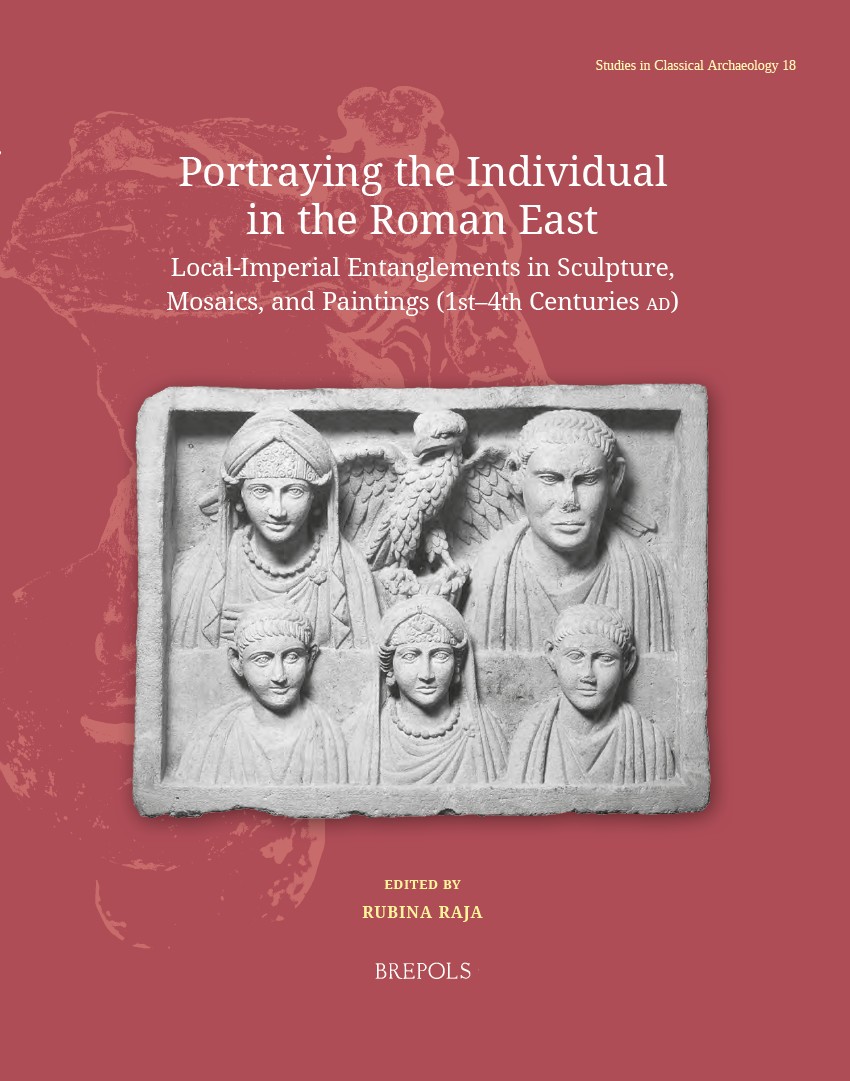 Portraying the Individual in the Roman East
Local–Imperial Entanglements in Sculpture, Mosaics, and Paintings (First–Fourth Centuries AD)
Volume 18
 Punning in Odd or Elegant Constructions in Jeremiah
The Convergence of Linguistics, Rhetoric, and Textuality in the Hebrew Text of Jeremiah

 Shame in the Worlds of the Hebrew Bible and Akkadian Texts
A Linguistic Study and Its Implications
Volume 33
 Small Worlds and Relational Agencies: Local Societies in Early Medieval Iberia
Pequeños mundos y Agencias relacionales: Sociedades locales altomedievales en la Península Ibérica
 Telling Contexts
Archaeological and Textual Studies in Honor of Elizabeth Bloch-Smith and Mark S. Smith
 The Body
Lived, Cultured, Adorned: Essays on Dress and the Body in the Bible and Ancient Near East in Honor of Nili S. Fox
 The Discourse of Rites
Shaping and Reshaping the (Counter-)Priestly Rituals Conducted Outside the Tabernacle

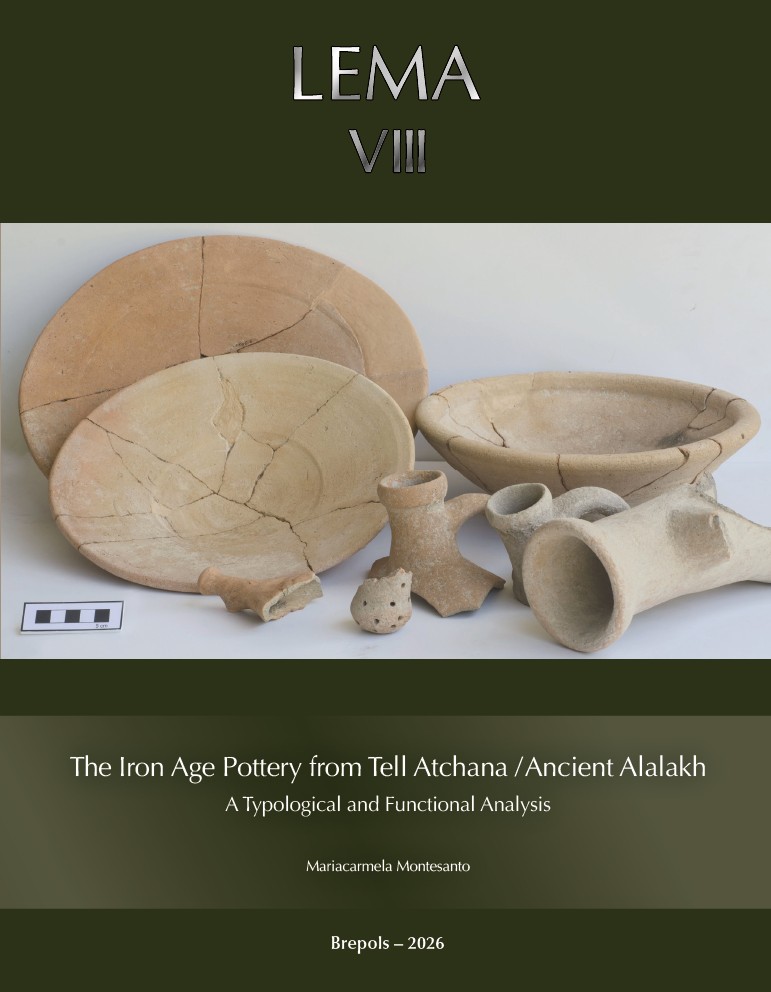 The Iron Age Pottery from Tell Atchana / Ancient Alalakh
A Typological and Functional Analysis
Volume 8



 Writing in the Church of the Nativity in Bethlehem
Inscription and Graffiti in a Multilingual and Multigraphic Perspective
Volume 45