
Amber for Artemis
Amber Finds from the Artemision at Ephesos. With Contributions by Silvia Alaura, Laura Ambrosini, Marco Bonechi, Vanora Estridge, Sarjit Kaur, Tripta Kaur, Michael Kerschner, Alessandro Naso, Martina Ott, Caroline Posch, Serena Privitera, Andrea M. P
edited by Alessandro Naso

English summary: Nearly 700 individual amber objects were unearthed during the British and Austrian excavations in the Artemision of Ephesos, the majority of which were found in the centre of the sanctuary. During the reconstruction of the first temple for Artemis (Naos 1), a hoard consecrated around 650 to 640 BC was deposited there as a building sacrifice and contained gold jewellery and amber along with other valuable objects. The amber from the Artemision represents the largest find complex of this material in the entire Eastern Mediterranean region. It includes carved figures, beads, pendants, inlays and pinheads, but also unworked amber. The forms and types of the individual objects find their closest parallels above all in Italy, where amber from the Baltic was traded since the Bronze Age. Archaeometric investigations prove that the Ephesian finds were also made from Baltic raw material. A large number of similar individual parts contained in the hoard indicate that a magnificent piece of jewellery had also been laid down there. It seems that this elaborate piece of jewellery, made of small pieces, was a wide girdle offered to the goddess Artemis as the protector of women in labour. This girdle can be used to establish a connection with Southern Italy, where the colony of Siris offered itself as a mediator of amber jewellery of the Oinotrian type. All forms considered together prove the existence of a workshop in the Artemision in the 7th century BC that produced also amber jewellery. German description: Bei den britischen und osterreichischen Ausgrabungen im Artemision von Ephesos wurden fast 700 Objekte aus Bernstein gefunden, der Grossteil im Zentrum des Heiligtums. Wahrend des Wiederaufbaus des ersten Artemis-Tempels (Naos 1) wurde ein um 650 bis 640 v. Chr. geweihter Hort als Bauopfer deponiert, der neben anderen wertvollen Gegenstanden auch Goldschmuck und Bernstein enthielt. Der Bernstein aus dem Artemision stellt den grossten Fundkomplex dieses Materials im gesamten ostlichen Mittelmeerraum dar und umfasst geschnitzte Figuren, Perlen, Anhanger, Intarsien und Nadelkopfe, aber auch unbearbeiteten Bernstein. Die Formen und Typen der einzelnen Objekte finden ihre engsten Parallelen vor allem in Italien, wo Bernstein aus dem Baltikum seit der Bronzezeit gehandelt wurde. Archaometrische Untersuchungen belegen, dass auch die ephesischen Funde aus baltischem Rohmaterial hergestellt wurden. Viele einander ahnliche Einzelteile im Hortfund deuten darauf hin, dass in ihm auch ein prachtiges Schmuckstuck niedergelegt worden war. Bei diesem scheint es sich um einen breiten Gurtel gehandelt zu haben, welcher der Gottin Artemis in ihrer Funktion als Beschutzerin gebarender Frauen dargebracht worden war. Anhand des Gurtels kann eine Verbindung zu Suditalien ausgemacht werden, wo sich die Kolonie Siris als Vermittlerin von Bernsteinschmuck des oinotrischen Typs anbietet. Betrachtet man alle im Artemision gefundenen Formen, lasst sich fur das Heiligtum eine Werkstatt erschliessen, die im 7. Jahrhundert v. Chr. auch Bernsteinschmuck herstellte.
- Edited by Alessandro Naso
Other Titles in this Series

 Hanghaus 2 in Ephesos Die Wohneinheit 6 Baubefund, Ausstattung, Funde
Baubefund, Ausstattung, Funde
Volume 45878
 Das Grabhaus 1/08 in der Hafennekropole von Ephesos
Ergebnisse der anthropologischen und palaopathologischen Untersuchung kaiserzeitlich-spatantiker Kollektivgraber
Volume 1


 Das Mausoleum von Belevi
Archaologische Untersuchungen zu Chronologie, Ausstattung und Stiftung
Volume 45810
Similar Books

 Caesar’s Visions and Impact on the Roman Empire
Revisiting the Archaeological and Historical Record of the 40s BC
Volume 2


 Etruscan and Roman Hellenistic Anatomical ex votos
Reassessing Popular Religious Expressions in Central Italy
Volume 8


 Invisible Labour in Antiquity
Visualizing Obscure Work in the Ancient Mediterannean and West Asia
Volume 1
 Late Antique villae in the Balkans (3rd–7th c. AD): Current Research Questions and Perspectives
HAEMUS Companion to the Late Antique Balkans 1
Volume 4


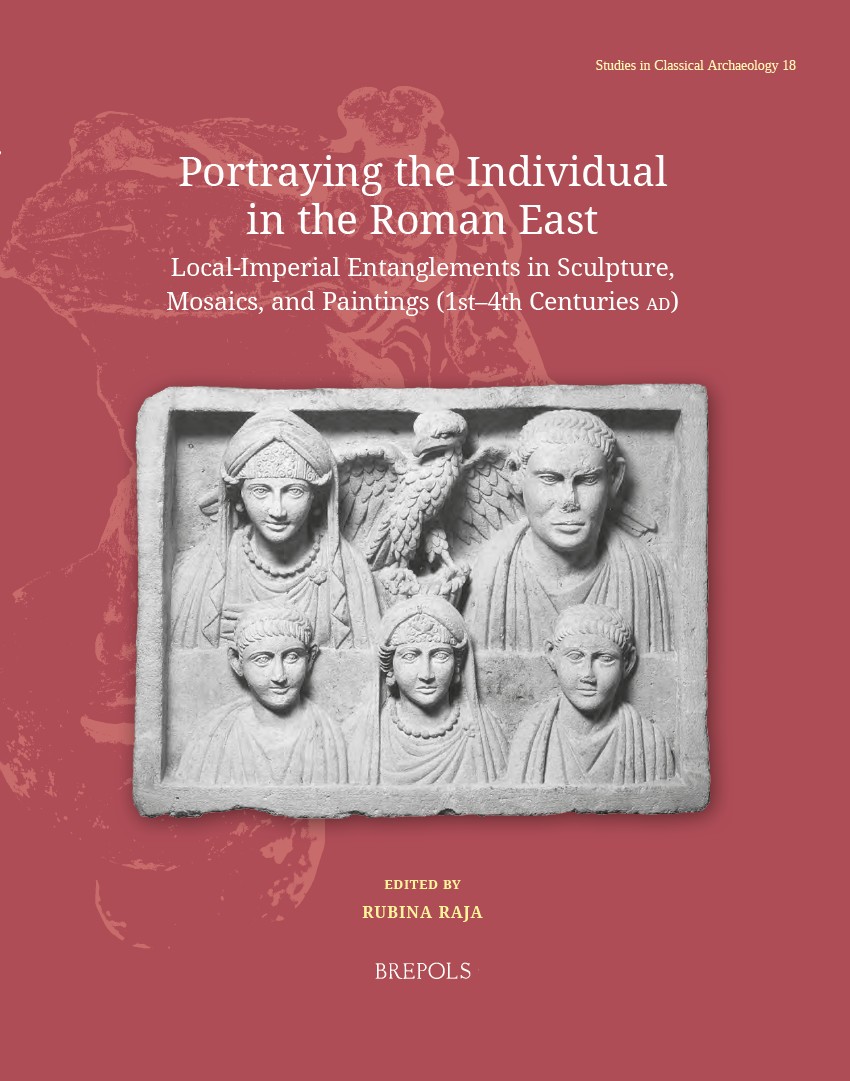 Portraying the Individual in the Roman East
Local–Imperial Entanglements in Sculpture, Mosaics, and Paintings (First–Fourth Centuries AD)
Volume 18

 Small Worlds and Relational Agencies: Local Societies in Early Medieval Iberia
Pequeños mundos y Agencias relacionales: Sociedades locales altomedievales en la Península Ibérica

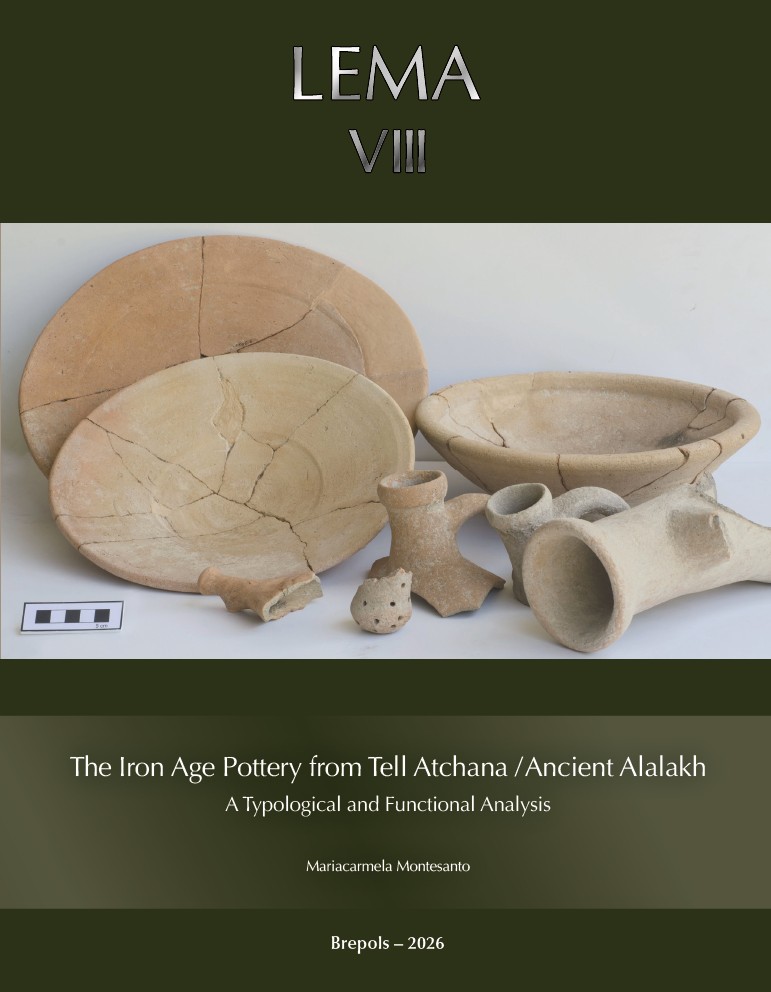 The Iron Age Pottery from Tell Atchana / Ancient Alalakh
A Typological and Functional Analysis
Volume 8

 Writing in the Church of the Nativity in Bethlehem
Inscription and Graffiti in a Multilingual and Multigraphic Perspective
Volume 45


 Atlante tematico di topografia antica 36-2026
Urbanistica e monumenti, porti, Roma. Ricerche sui monti Aurunci
Volume 36
 Cerámica común romana y ciclo haliéutico
Análisis de los contextos de las cetariae de Iulia Traducta

 Nuove scoperte e progressi nelle metodologie di rilievo e analisi dell’arte rupestre post-paleolitica in Italia
New discoveries and progress in the tracing and analysis methodologies of the post-Paleolithic rock art in Italy


 A Dramatic Event in Late Roman Florence
The Anomalous Burial Site Discovered beneath the Uffizi Gallery

 Alexander the Great and the Campaign of Gaugamela
New Research on Topography and Chronology. IAMNI 1 (Italian Archaeological Mission to Northern Iraq)
Volume 53


 Ceramic Finds in Context (Roman to Early Islamic Times)
Final Publications from the Danish-German Jerash Northwest Quarter Project VII
Volume 13